BVI Fishing Guide: Fishing on a Charter Yacht

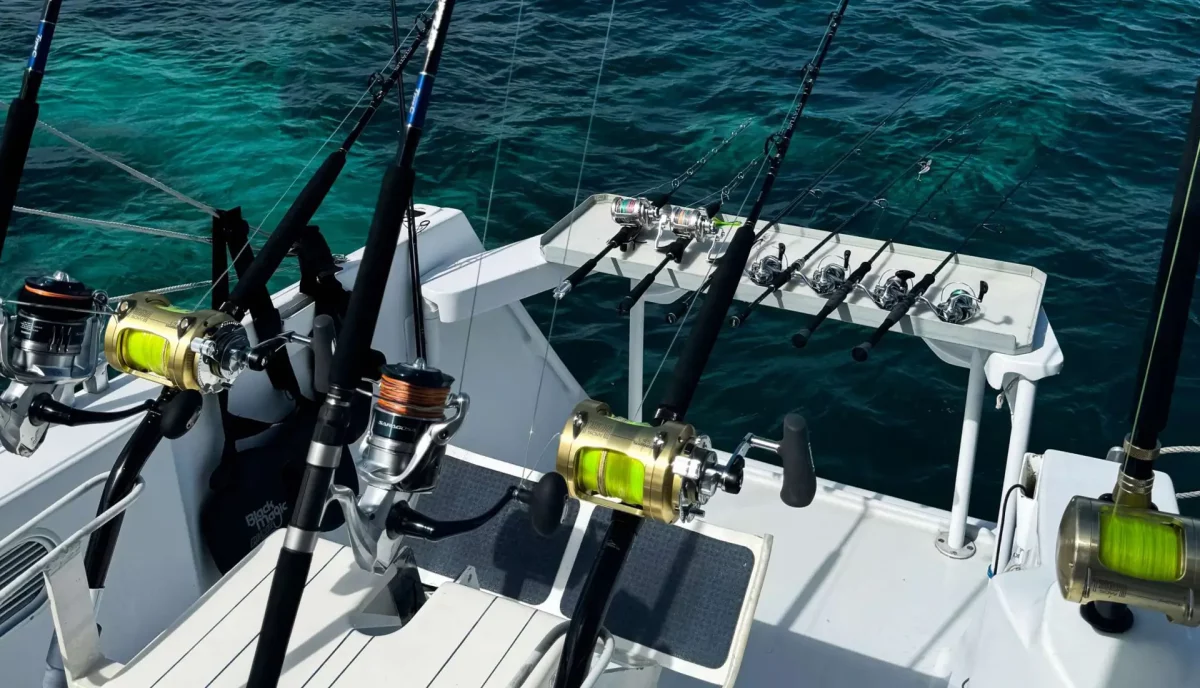
Fishing rods mounted on the stern of a luxury yacht in the British Virgin Islands, ready for offshore trolling.
Many Virgin Islands yachts carry premium trolling gear, ideal for catching mahi-mahi, wahoo, and tuna.

The British Virgin Islands sit at a geological crossroads that happens to make them one of the finest fishing destinations in the Caribbean. Shallow turquoise water surrounding the islands drops away dramatically into thousand-foot depths just miles offshore — and that transition zone is where the fishing gets serious. Whether you’re after a sailfish at the North Drop, a mahi-mahi on the way to Anegada, a tarpon off the back of the boat at midnight, or a bonefish stalked on a flat near Anegada, the BVI delivers. And there’s no better platform for any of it than a crewed charter yacht.

This guide covers everything you need to know before you cast a line — from regulations and licenses to the best spots, species, techniques, and a few hard-won tips from decades of fishing these waters.

Why the BVI Is One of the Caribbean's Premier Fishing Destinations

The Caribbean islands were shaped by tectonic plate movement along the edge of the Caribbean plate. That ancient geological event created what makes the BVI so productive for fishing: shallow water immediately surrounding the islands, which drops away within just a few miles to depths of several thousand feet. Those dramatic underwater slopes create powerful upwelling currents that push cold, nutrient-rich water to the surface. Nutrients attract baitfish. Baitfish attract everything else.

The result is a compact cruising ground where you can anchor in a protected bay for the night, troll productively between islands during the day, and reach world-class offshore grounds without a long run offshore. The famous North Drop — the underwater ledge running between St. Thomas and Anegada — is recognised as one of the premier billfish areas in the Atlantic. The South Drop offers similar action on the other side of the island chain.

Add to this over 300 fish species in BVI waters, a network of reefs, wrecks, and seagrass flats, and the ability to fish from the comfort of your own private yacht, and the BVI stands in a category of its own.

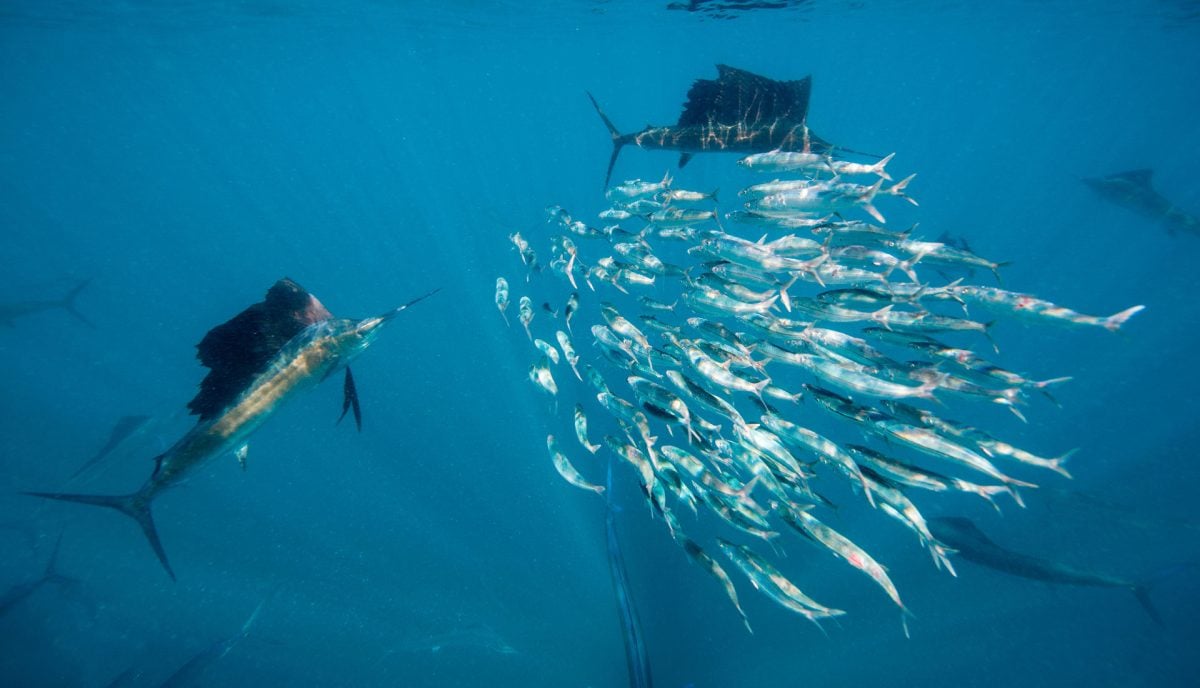
Sailfish hunting a bait ball underwater in the British Virgin Islands.

You Don't Have to Be a Serious Angler

One of the things we love most about fishing from a charter yacht is how naturally it fits into the week — for every kind of guest. Dropping a line off the stern while anchored in a calm bay, watching the lights attract silversides after dark, or simply riding along while someone else fights the fish — these are genuinely memorable moments even for guests who’ve never fished before.

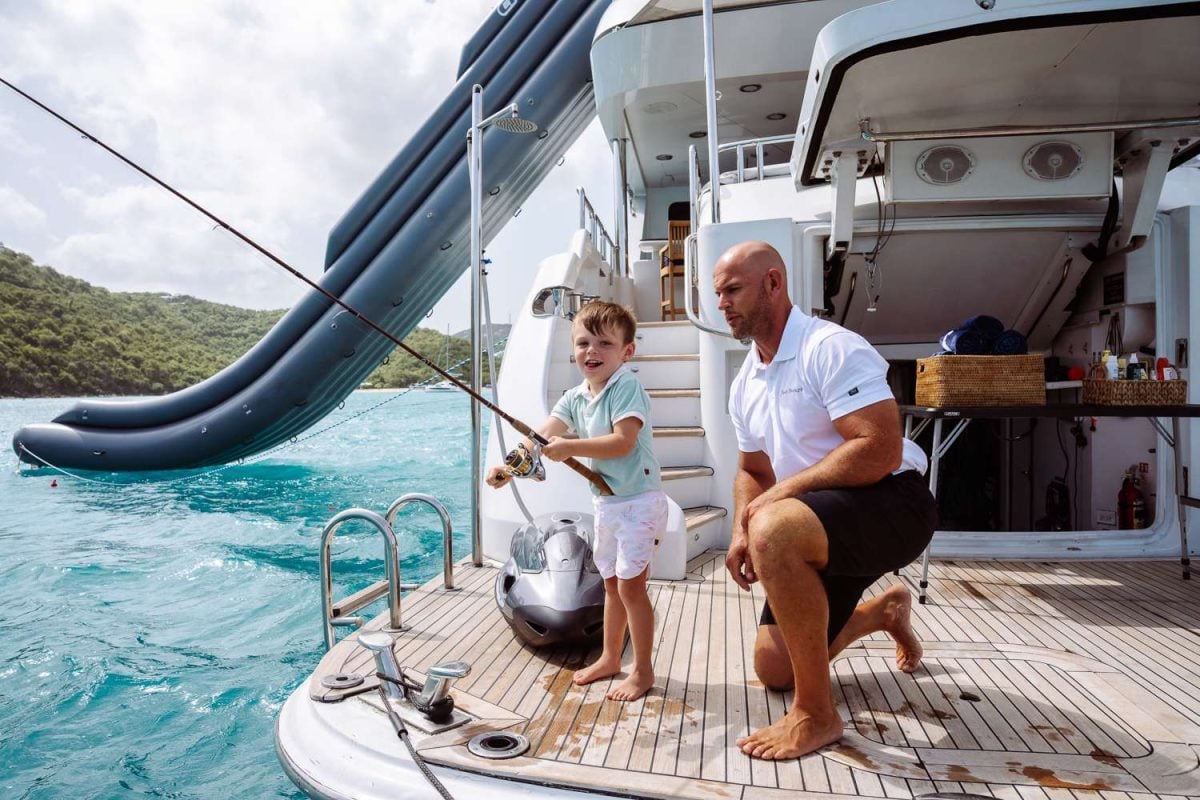
Father and young son fishing together off the stern of a luxury charter yacht in the British Virgin Islands
Fishing on a BVI charter isn't just for serious anglers — it's one of the most memorable moments for families and young guests

The captains and crew on Epic’s fleet know these waters intimately. They’ll rig the rods, handle the gear, identify what you’ve caught, advise on what’s safe to eat, and make the whole experience feel effortless. If fishing is your primary focus for the week, tell us when you’re booking — we’ll match you with a yacht that has dedicated fishing stations, outriggers, and a captain who fishes seriously. If you’d like fishing as one element of a broader charter week, that works too.

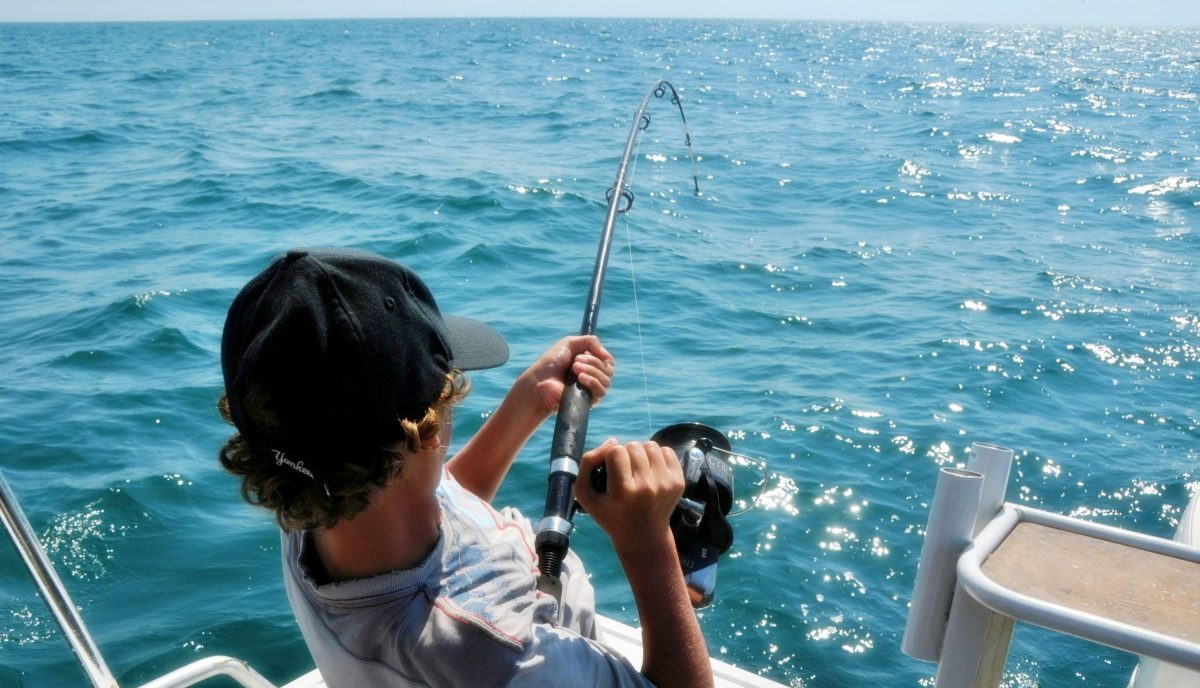
Angler fishing from the stern of a charter yacht in the sparkling turquoise waters of the British Virgin Islands
Whether you're an experienced angler or picking up a rod for the first time, fishing from your charter yacht is one of the great simple pleasures of a BVI week

BVI Fishing Regulations: What You Need to Know

Fishing in the BVI from a boat requires the vessel to be registered as a fishing vessel with the Department of Conservation and Fisheries. Most crewed charter yachts hold this registration already — confirm with us at booking. Anyone 18 or older must hold a valid fishing licence while fishing from a vessel in BVI waters. We can arrange this in advance for your group.

If you’re fishing from land, there are no restrictions.

Closed seasons to know:

  • Margate: 1 January – 31 March
  • Red Hind: 1 March – 31 May
  • Nassau Grouper: 31 July – 31 October
  • Lobster: 15 August – 31 October
  • Queen Conch: 15 August – 31 October

Lobster and conch may only be taken by BVI residents — visitors cannot collect either, even in open season. Spearfishing is also restricted to locals only.

If your charter includes time in the USVI, the rules differ. Licences are separate, spearfishing regulations are more permissive for visitors, and lobster is accessible to non-residents with the correct permit. Your crew will guide you through the specifics for wherever you’re anchored.

Catch and release is encouraged for most sportfish, and your crew will always advise on what’s safe to keep and eat. See our ciguatera section below before cooking anything caught on the reef.

Species Guide: What's in the Water

Offshore pelagic (the North and South Drops)

Blue marlin, white marlin, sailfish, yellowfin tuna, wahoo, and mahi-mahi are the headline catches offshore. The North Drop in particular has a serious reputation for blue marlin, and the runs can be spectacular. Tuna and mahi-mahi are more consistent catches for most charter guests fishing the offshore grounds.

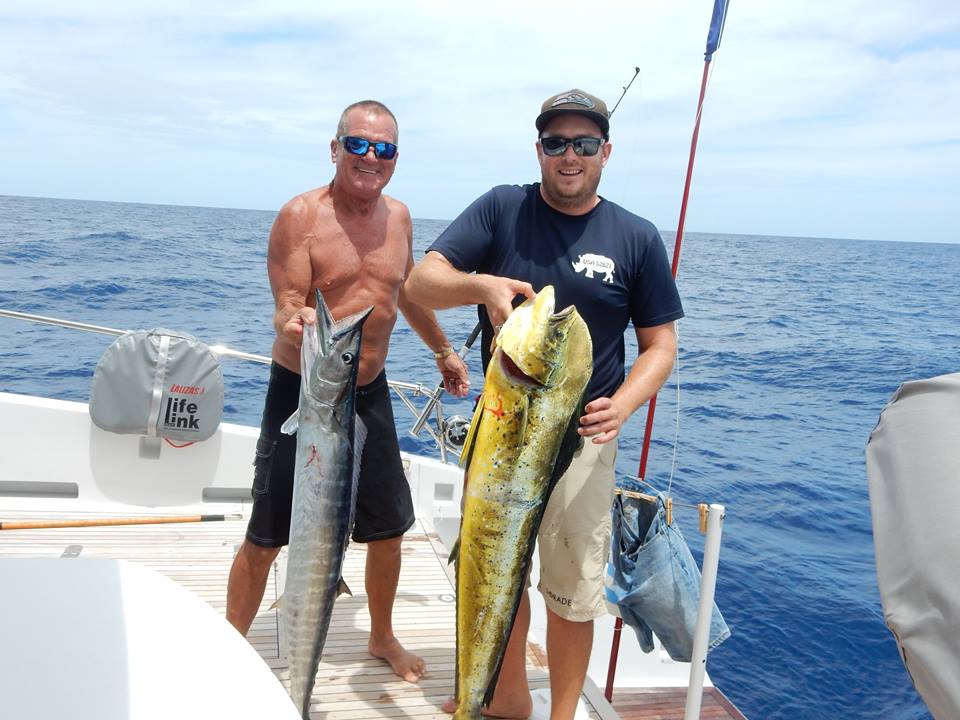
Two anglers holding a wahoo and mahi-mahi caught aboard catamaran Skimmer in the British Virgin Islands
A wahoo and mahi-mahi from a single outing — the BVI regularly delivers mixed bags like this when trolling between islands

Trolling between islands

This is where most charter guests do most of their fishing — a line trailing behind the yacht while sailing between anchorages. At slow speeds (2–3 knots) near headlands and rocky outcrops, expect mackerel, larger yellowtail snapper, jacks, and barracuda. At higher trolling speeds (5–7 knots) in open water, mahi-mahi, wahoo, kingfish, and tuna come onto the lures. The run across to Anegada is particularly productive.

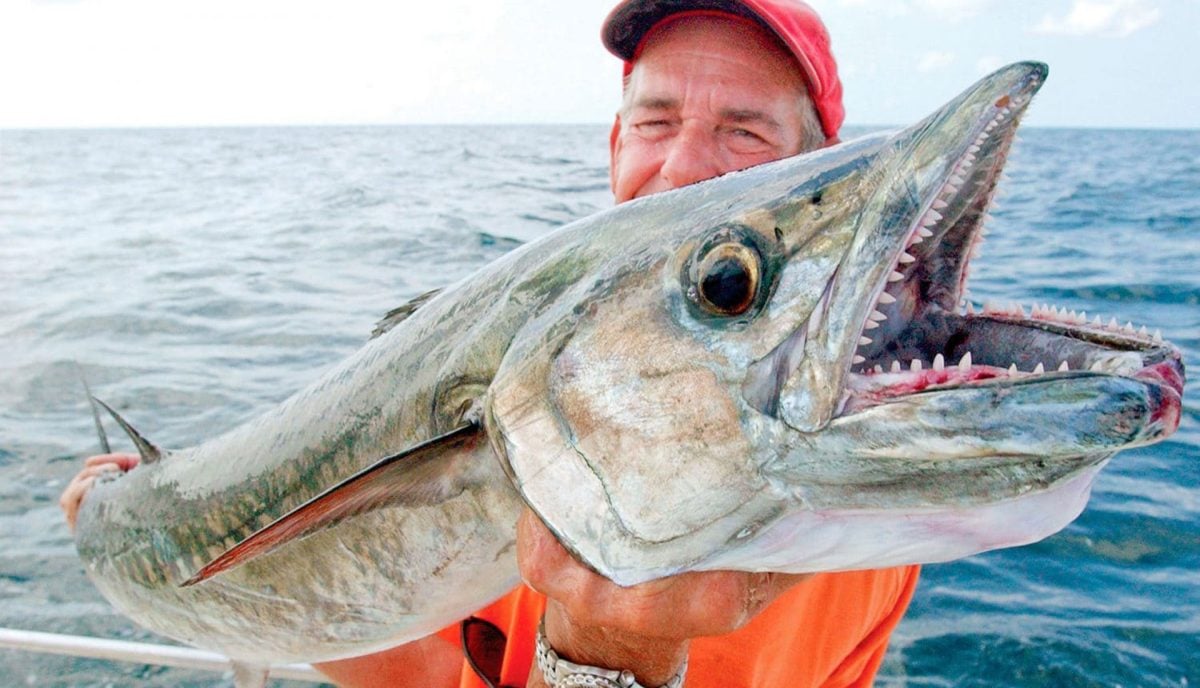
Angler holding a large kingfish on a yacht in the Virgin Islands.
Kingfish are a favourite inshore catch in the BVI — they fight hard and eat well

Inshore and reef:
Around anchorages and reef edges, light tackle fishing produces snappers, groupers, triggerfish, Spanish mackerel, and bar jacks. These are perfect for family fishing — easy to manage on lighter gear, and rewarding for younger guests. Several species from reef fishing require ciguatera consideration before eating (see below).

Flats:
Bonefish, tarpon, and permit on the seagrass flats, particularly around Anegada and select spots on Virgin Gorda. This is fly fishing territory — see the bonefishing section below.

Night fishing:
Some of the most memorable fishing on a BVI charter happens after dark. Turn on the boat lights, watch the silversides gather at the surface, and you’re set up for tarpon. See the tarpon section below.

Trolling from Your Charter Yacht: Tips from the Back Deck

Trailing a line while sailing the BVI is one of the simple pleasures of the week, and with the right setup it’s genuinely productive. Here’s what works:

Lure selection:
Rigged ballyhoo — with or without a plastic skirt — is the standard and for good reason. Feather jigs in blue/white or green/yellow are consistent producers. Silver spoons work well too. On slower sailing days, bibbed lures like Rapalas shine. Bring a selection of lures, hooks, trace wire, and ball-bearing swivels — the ball-bearing type is worth the extra cost for trolling under load.

Speed matters:
Slow trolling at 2–3 knots near headlands, rocky points, and bottom structure produces inshore species. Heading out into open water, increase to 5–7 knots for pelagic fish. Bottom structure is always worth a pass — ask your captain to route over features like Tow Rock, the Chikuzen wreck (on the run back from Anegada to Jost Van Dyke), or the pinnacles off Brewers Bay.

The rule to remember:
99% of the fish are in 1% of the ocean. Structure, current lines, colour changes, and bait activity are the signals — your captain will know them.

Offshore — the Drops:
For serious big-game fishing, the North Drop and South Drop are the destinations. Both are reachable from the main island chain and put you in range of marlin, sailfish, wahoo, and tuna. If this is a priority for your week, let us know — we’ll make sure your yacht is rigged for it and your itinerary allows for the run.

Night Tarpon Fishing: One of the BVI's Best Kept Secrets

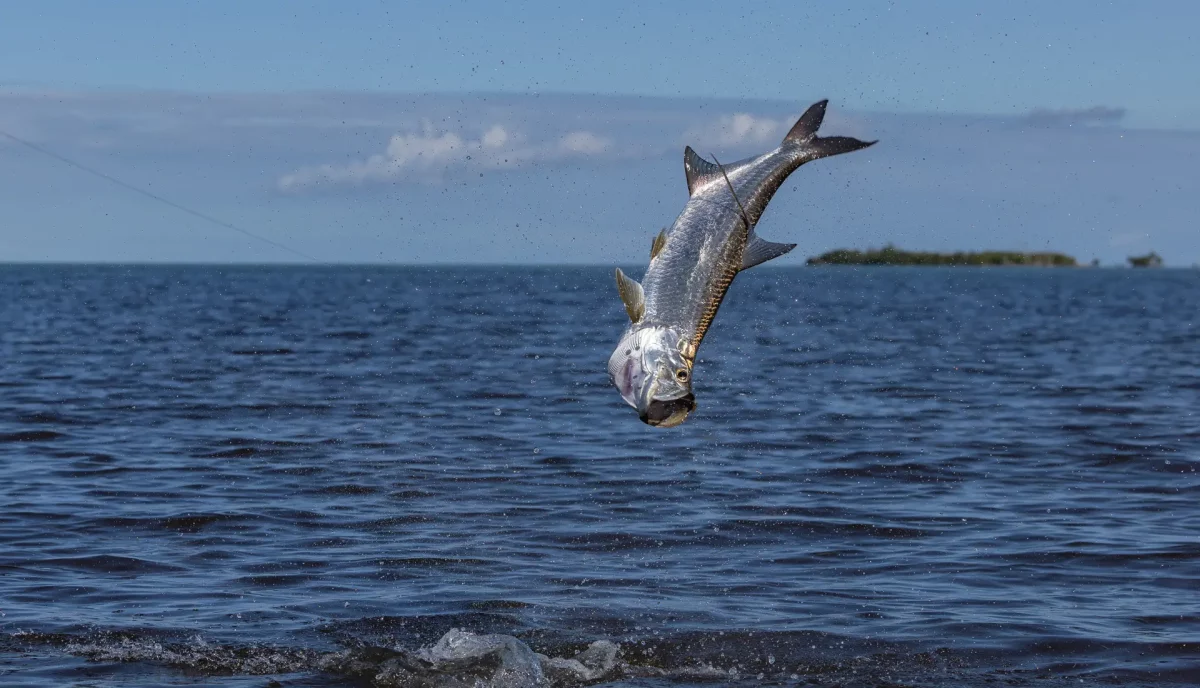
Atlantic tarpon leaping out of the water during a fishing charter in the Caribbean
The Atlantic tarpon is one of the great sport fish of the Caribbean — powerful, acrobatic, and completely addictive

Atlantic tarpon are one of the great catch-and-release sport fish of the BVI, and they’re most accessible from your charter yacht — no day boat required. Light up the boat brightly as the sun goes down, and the silversides will gather at the surface in the light. The tarpon follow.

Where to find tarpon in the BVI:
West End on Tortola, Marina Cay, North Sound, Sandy Spit, and the Great Harbours at both Peter Island and Jost Van Dyke are reliable spots. At Jost Van Dyke’s Great Harbour specifically, the tarpon feed on small sprats rather than silversides — worth noting for bait collection.

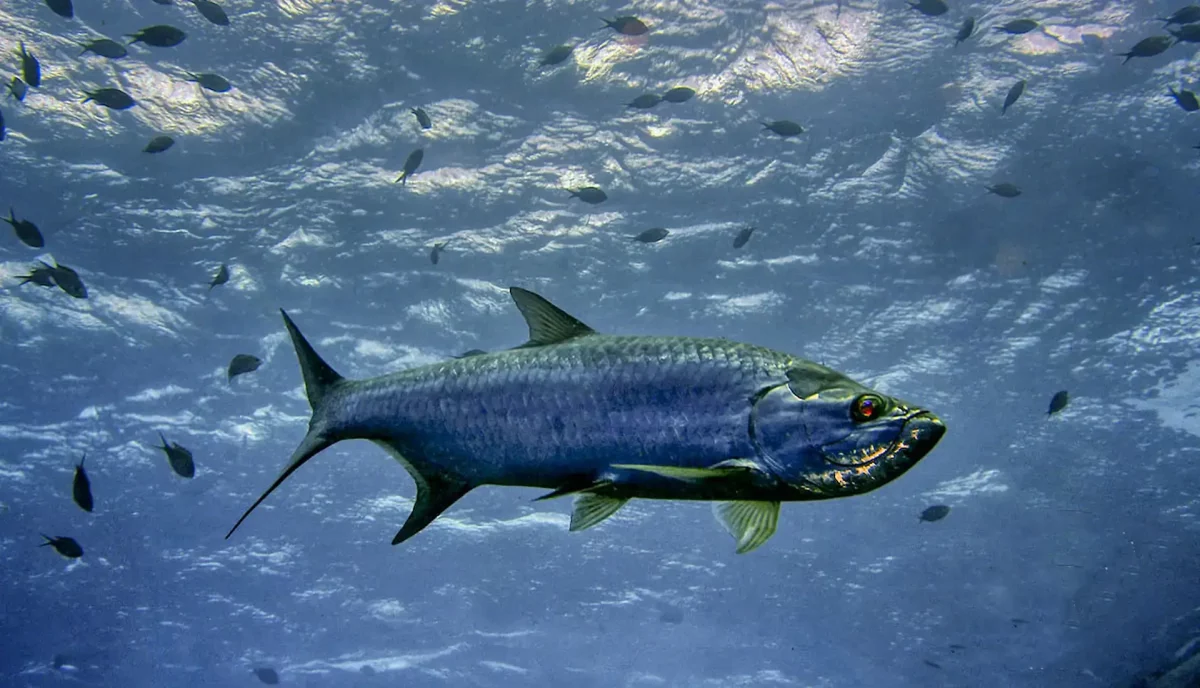
Atlantic tarpon swimming in the clear blue waters off Anegada in the British Virgin Islands
The Atlantic tarpon — one of the great sport fish of the BVI, hunted at night with silversides for bait

Gear and technique:
Use around 15-pound line, doubled for the last few feet. A small #6 or #8 hook — red, with thick steel — tied to the doubled end. Collect silversides with a pasta strainer or small net using a fast scooping motion toward the tail. Hook the bait through both eye sockets to keep it swimming naturally. In calm conditions no weight is needed; in wind, a small split shot 5 feet above the hook keeps the line stable.

Position your bait about 10 feet deeper than the depth the tarpon are cruising — you want them to look down at it, not up, so the hook stays hidden. They’ll circle in the lights without striking, then streak through suddenly and gulp a mouthful. When you feel the take, don’t strike hard — you’re only going to lip-hook it.

Fighting tarpon:
When hooked, a tarpon will take off fast and leap clear of the water — sometimes five or six times. The moment it breaks the surface, your rod tip must go up and you must crank line furiously. Any slack during a leap will throw the hook. Keep patience — a tarpon that hasn’t run for 10–15 minutes isn’t tired yet. Work it away from the boat and anchor line if possible.

Landing and release:
Tarpon have tiny teeth. With a gloved hand, slip four fingers into the mouth and the thumb under the jaw. With the other hand, support the fish by the gill opening. Remove the hook, take your photo, and slip it back. These are magnificent fish — treat them accordingly.

For the full deep-dive on tarpon technique, see our dedicated Tarpon Fishing in the BVI guide.

Bonefishing in the BVI: Anegada and Beyond

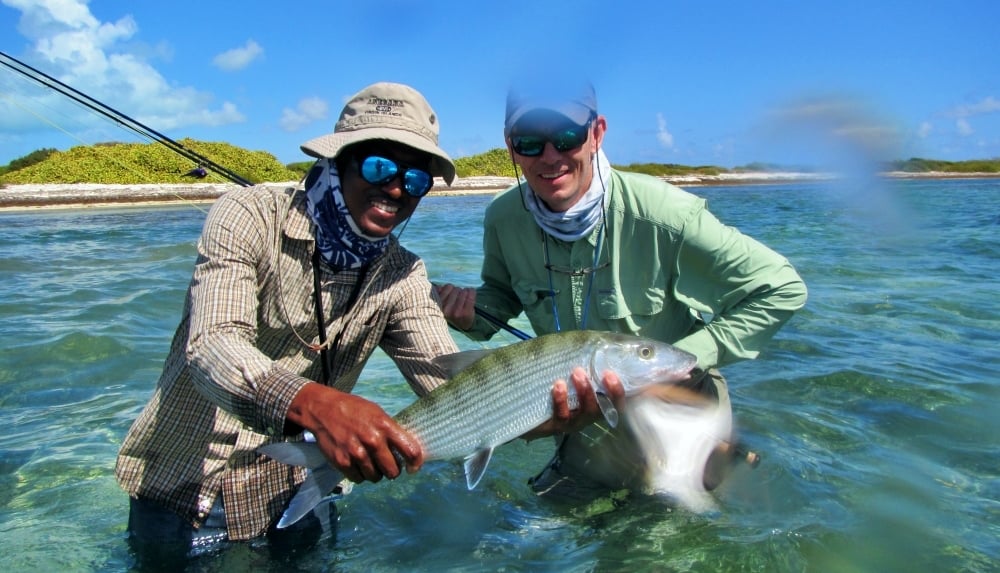
Angler and local guide holding a bonefish on the shallow flats near Anegada in the British Virgin Islands

Bonefishing is a different world from trolling offshore — it demands stealth, patience, and precision, and the reward is one of the most electrifying runs in saltwater fishing. A bonefish that looks barely larger than your forearm will strip line off the reel faster than almost anything you’ve caught.

The BVI’s best bonefishing is centred on Anegada, whose shallow barrier reef and seagrass flats are among the finest in the Caribbean. Nutmeg Point, Bones Bay, and Setting Point on the south end are the standout locations. A local guide is not optional here — they spot fish before you do, read the flat, and know where the fish are moving at any given tide. Sly and Garfield at the Anegada Reef Hotel are both excellent.

Other productive BVI flats:

  • Virgin Gorda (Deep Bay/North Sound): A good flat just to the right exiting the channel between Saba Rock and Bitter End. Also the right side of the Oil Nut Bay dock.
  • Great Camanoe (Cam Bay): Large seagrass flat on the east side — anchor the yacht, dinghy to the flat.
  • Scrub Island: Wade onto the flat reef facing north, behind the marina.
  • Beef Island: Near the airport bridge, shallow reefs on the right near Surfsong Resort.

The technique: Move slowly and quietly. Polarised sunglasses are non-negotiable. You’ll cast where the guide points — often at what looks like nothing — and then twitch the line gently. When the take comes, lift the rod upward (not sideways — bonefish mouths are on the underside). Hold on.

Epic can arrange a guided bonefishing excursion as part of your charter week. Ask us at booking.

Ciguatera Poisoning: The One Thing Every BVI Fisherman Needs to Know

Ciguatera is a toxin that accumulates in certain reef fish through the food chain, originating in microscopic dinoflagellates that live on coral and algae. It’s odourless, tasteless, and not destroyed by cooking. Symptoms range from gastrointestinal illness to neurological effects that can persist for months.

This is not a reason to stop fishing — it’s a reason to fish smart.

The simple BVI rule: Fish caught on the north side of the island chain are generally safe. Fish caught on the south side — in or around the Sir Francis Drake Channel — carry a higher risk and should be evaluated carefully before eating.

Always avoid eating:

  • Great Barracuda (high risk, from anywhere)
  • Horse Eye Jack, Bar Jack, Blackjack, Greater Amberjack (high risk)
  • Dog Snapper, Rock Hind, Red Grouper, Yellowfin Grouper (high risk to frequent)

Generally safe pelagic species (offshore fish that don’t feed on reef): Mahi-mahi, wahoo, tuna, marlin, and sailfish are all excellent to eat and carry no meaningful ciguatera risk. These are the ones to target if eating your catch is a priority.

When in doubt, ask your captain. They know these waters and will steer you right. Your crew will never serve you a fish they’re not confident about.

For the complete species-by-species reference guide with photos, see our Ciguatera Poisoning in the BVI guide — an 88-species resource compiled from decades of commercial catches in the Virgin Islands.

How to Plan a BVI Fishing Charter with Epic

Whether fishing is the centrepiece of your week or a highlight among many, we’ll build the right trip around it. A few things to decide before you book:

Dedicated fishing yacht vs. fishing-friendly yacht: Some yachts on our fleet are set up specifically for serious anglers — outriggers, fighting chairs, rod storage, live bait wells, full trolling spreads. Others carry gear and fish happily but aren’t purpose-built. Tell us your priorities and we’ll match you accordingly.

Day boat add-ons: For deep-sea fishing that goes well beyond what a charter yacht can reach — extended offshore runs for marlin, or shallow-water fishing on a dedicated skiff — we can arrange day boat excursions from Red Hook in the USVI or through local operators in the BVI. These work well as a single day within a broader itinerary.

Gear: Most airlines allow rods and reels as checked baggage. Many guests prefer to travel light and use the yacht’s onboard gear — or arrange premium rental through Richardson Rigging in Road Town or BVI Watersports. Talk to us and we’ll sort the details.

The honest truth: Fishing in the BVI is genuinely good, but it’s fishing — the ocean doesn’t always cooperate. What we can guarantee is the right platform, the right crew knowledge, and an itinerary that puts you in the right places at the right times. The rest is between you and the fish.

Ready to Plan Your BVI Fishing Charter?

We’ve been putting anglers on fish in the British Virgin Islands for over 30 years. Whether you want a week built entirely around the rods or just want to have a line in the water between anchorages, we’ll make it happen.

Contact us to start planning — or browse our BVI charter fleet to find a yacht that fits your group and your fishing ambitions.

Travel Agents
Scroll to Top

Looking for more options?

Our main collection features a hand-picked selection of truly exceptional yachts — chosen for their quality, crew, and overall charter experience. If you’d like to explore a broader range of yachts across additional destinations, you can view our full worldwide charter portfolio.