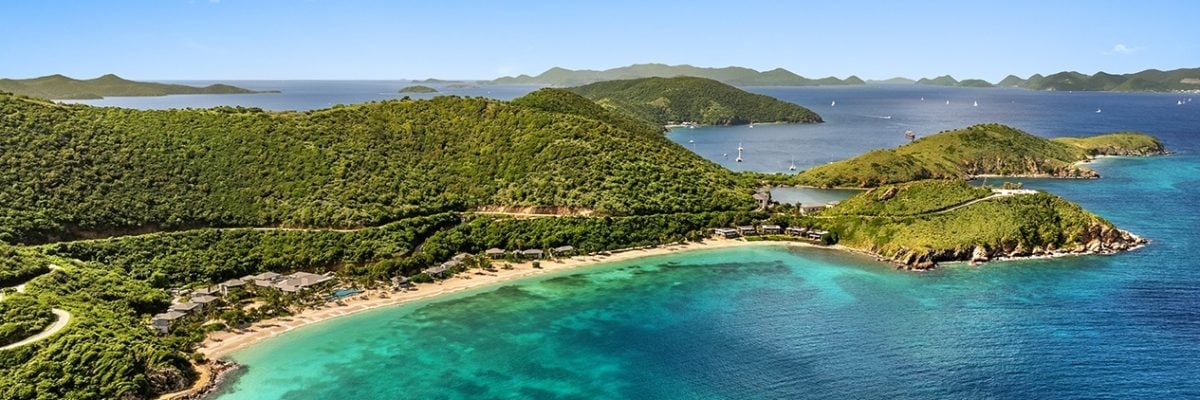
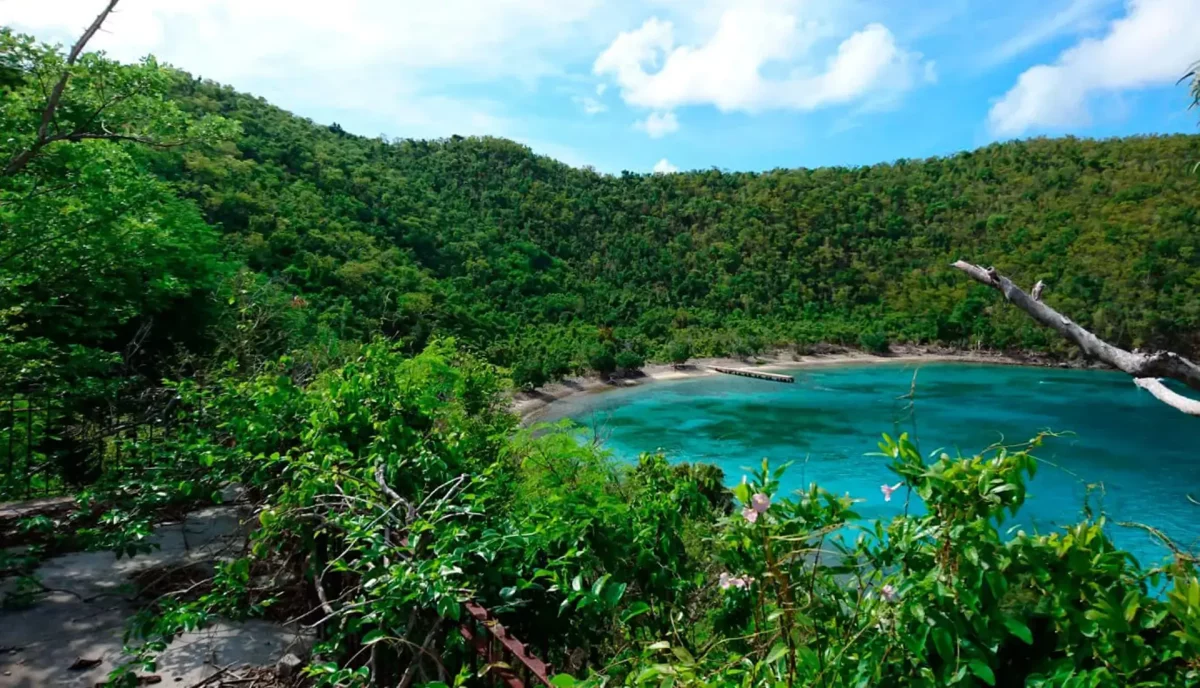
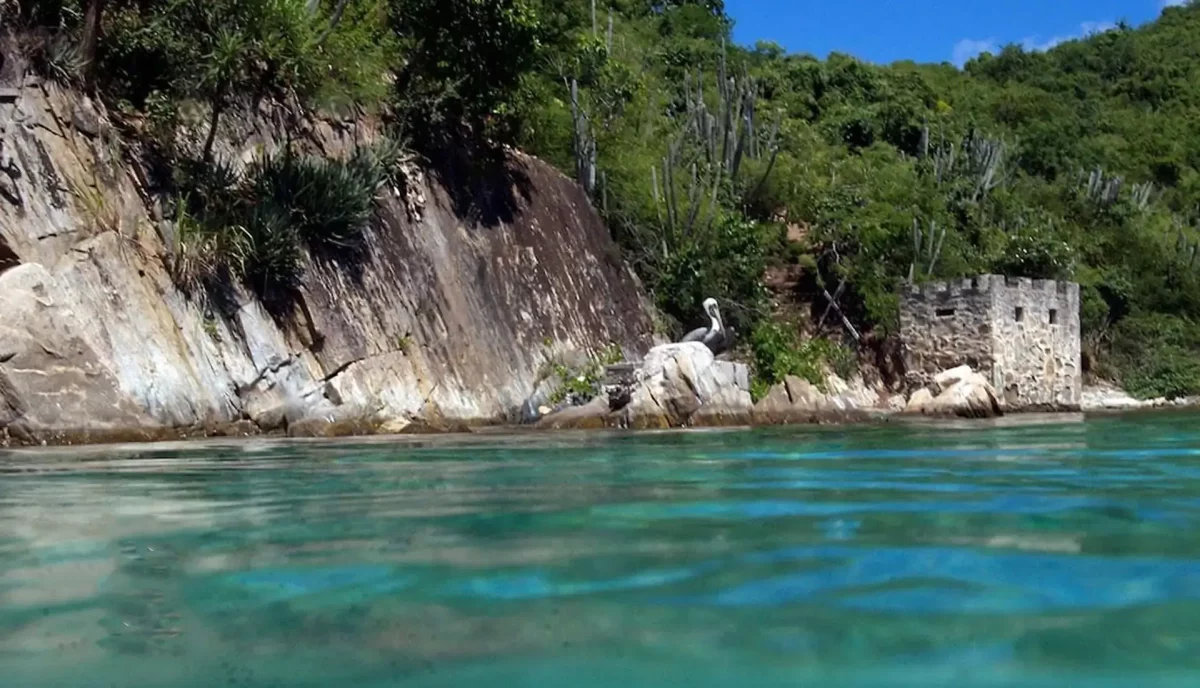

Peter Island BVI is the largest private island in the British Virgin Islands, and after years of post-hurricane reconstruction, it has reopened as one of the Caribbean’s premier luxury destinations. Whether you’re visiting by charter yacht or staying at the resort, this stunning island offers pristine beaches, excellent snorkeling, and a fascinating history spanning centuries.
Current Resort Status & Facilities
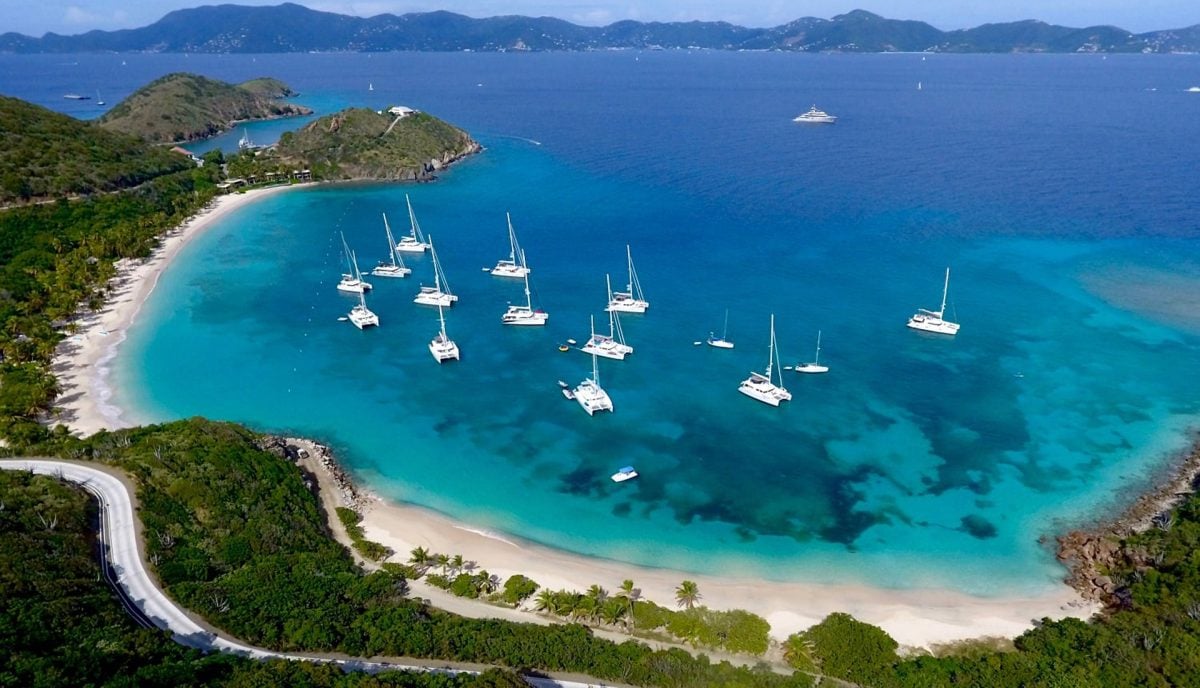
Accommodations: All 52 guest rooms and suites are now located at Deadman’s Beach, including beachfront rooms, junior suites, and two luxury villas (Falcon’s Nest and Hawk’s Nest).
Dining: Two main venues serve guests:
The Drake Steakhouse: Fine beachfront dining offering surf-and-turf in a sophisticated atmosphere
The Drunken Pelican: A casual bar and grill at the Yacht Club, serving inventive dishes and craft cocktails
Yacht Club & Marina: The enhanced Peter Island Yacht Club now accommodates superyachts up to 200 feet, featuring a swimming pool, pickleball and basketball courts, and the Drunken Pelican bar.
Spa: The 10,000-square-foot Seaside Spa at Big Reef Bay features seven treatment rooms, a fitness center, yoga sanctuary, and an oceanfront hot tub.
Access for Charter Yacht Guests
Mooring and Docking: Charter yachts can book mooring balls in Deadman’s Bay online. Marina guests in slips typically receive automatic access to resort facilities like the pool; guests on mooring balls or at anchor may be subject to a daily usage fee (approximately $50 per person) for pool access—only if you want to use the resort amenities.
Public Beaches: While all beaches are public up to the high-tide line, the resort requests that non-guests dinghy to the eastern end of Deadman’s Beach to minimize impact on resort guests.
Transportation: The resort provides multiple daily ferry transfers from Tortola for resort guests.
The resort is a member of Preferred Hotels & Resorts’ Legend Collection and remains open year-round. Reservations can be made directly through the official Peter Island website.
Anchorages Around Peter Island


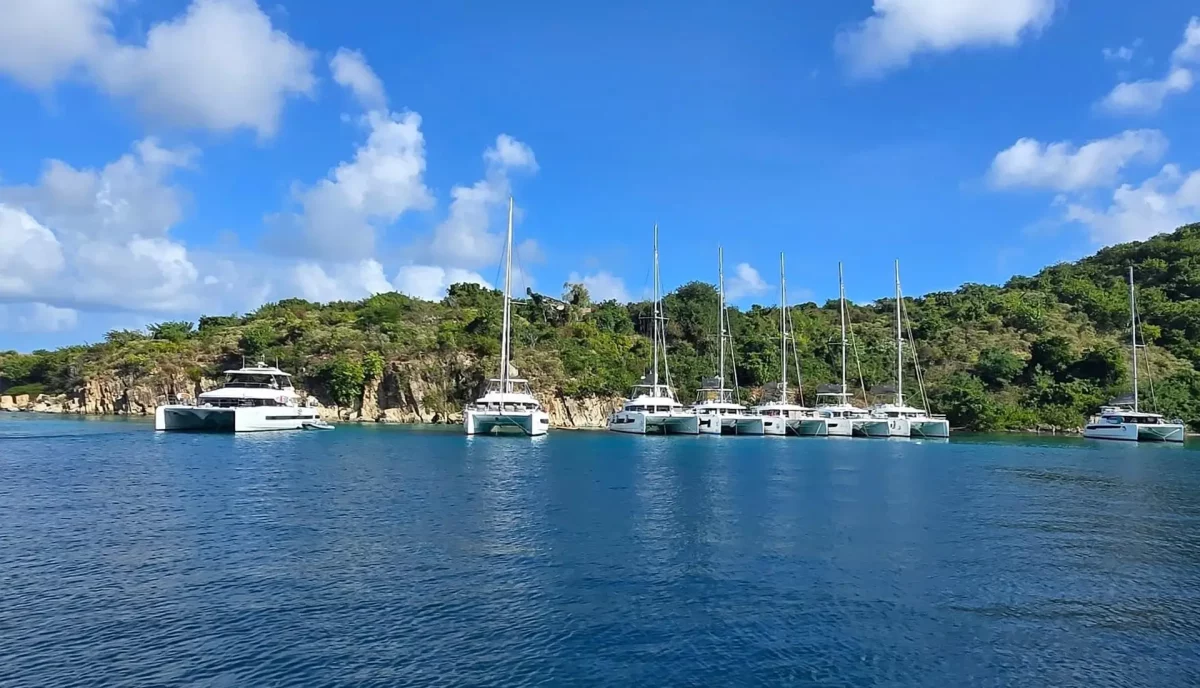
If you’re heading to the BVI for your yacht charter, chances are you’ll spend at least one night at an anchorage here. Peter Island offers some of the most diverse and protected harbors in the British Virgin Islands.
Dead Man’s Bay and Little Dead Man’s Bay
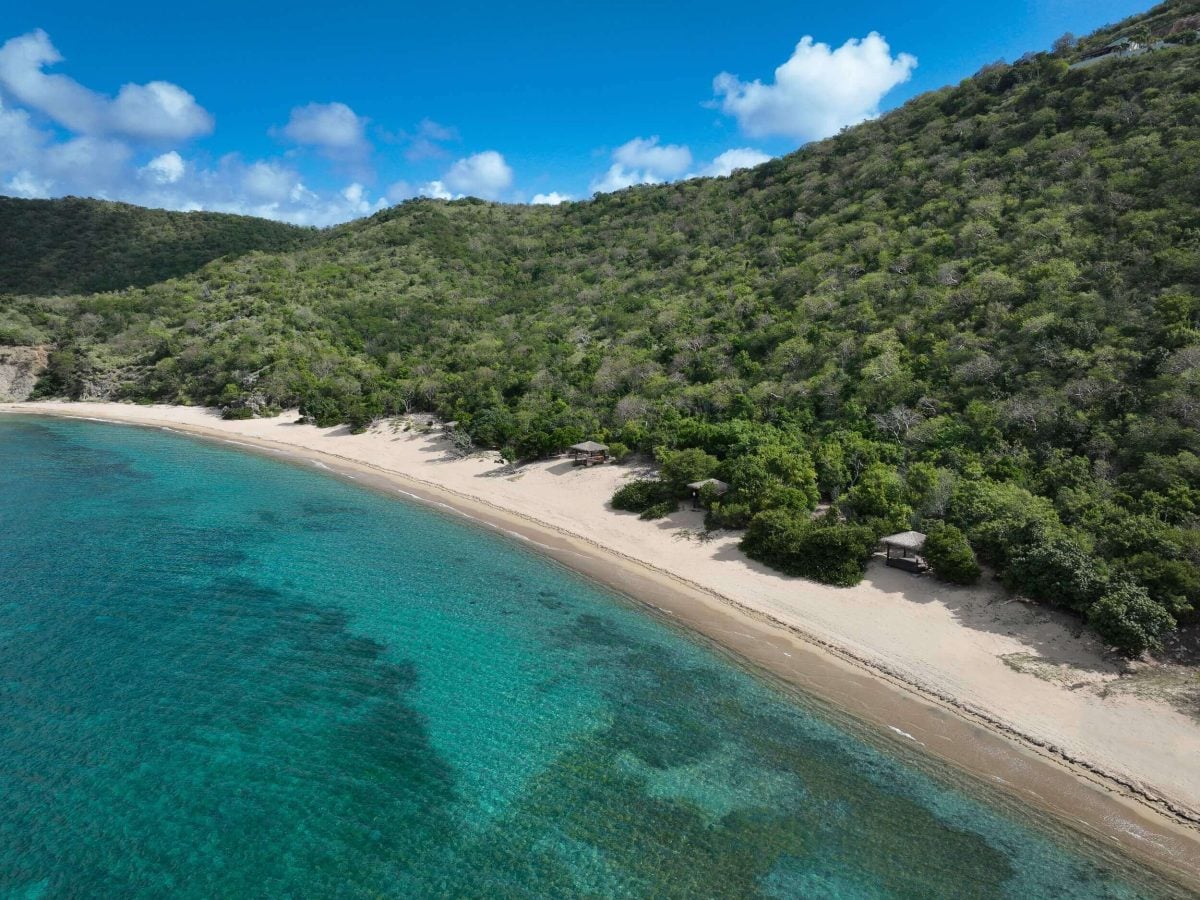
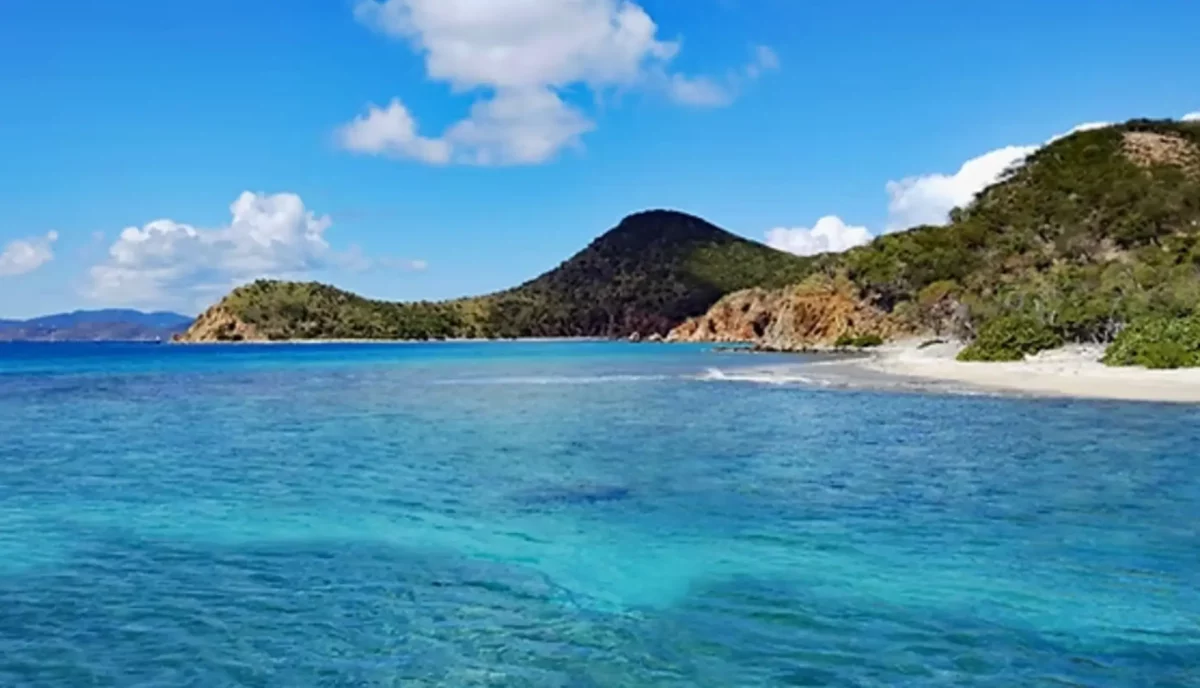
Legend has it that Deadman’s Beach was named after marooned pirates who were shipwrecked on Dead Chest Island, possibly discovering hidden treasure. This mile-long stretch of pristine white sand, turquoise waters, and palm trees captures the essence of Peter Island. Perfect for snorkeling, sunbathing, or simply relaxing, it’s also an excellent starting point for hiking to the end of the island.


White Bay
Nestled opposite the renowned Norman Island, White Bay Beach embodies the essence of a dream destination. This tranquil haven entices with its soft sands, thriving coral reefs, and the captivating sight of sea turtles and eagle rays gracefully navigating the turquoise waters.
The captain will anchor near the beach for easy access. A steep trail with spectacular views leads toward the end of the island where guests can relax in colorful Adirondack chairs and immerse themselves in the idyllic charm of this remarkable location. Both romantic and rejuvenating, this beach promises to leave a lasting impression.


Great Harbour
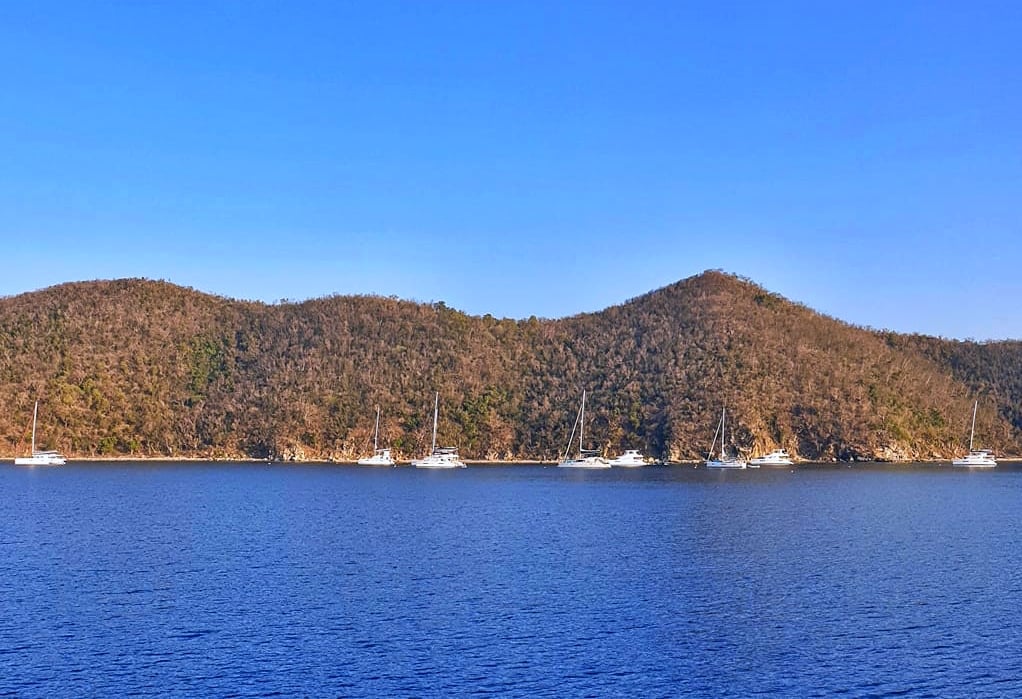
Great Harbour is a large bay that welcomes charter yachts, offering excellent anchoring opportunities on its eastern shore and ample mooring spots. Its depth and direct channel access ensure easy entry. The eastern shore, with depths ranging from 30 to 35 feet, is perfect for anchoring. The central area plunges to 80 feet, making it unsuitable for anchoring but ideal for mooring. The western side also boasts a prime mooring location.
Snorkelers will find the reefs teeming with marine life. Great Harbour is conveniently close to Ocean’s Seven Beach club, Sprat Bay, and the yacht marina, all within walking distance.
This historic harbor served as a coaling station in 1855 when cholera frequently struck the largest coaling station on St Thomas. The RMS Rhone, the premier wreck dive in the Caribbean, was anchored here in Great Harbor in October 1867 when a spar fell and killed the Chief Officer. The ship later foundered off Black Rock on Salt Island during the devastating 1867 hurricane. The ruins of the coaling station and a Great House can still be found in the area by those in the know.


Little Harbour
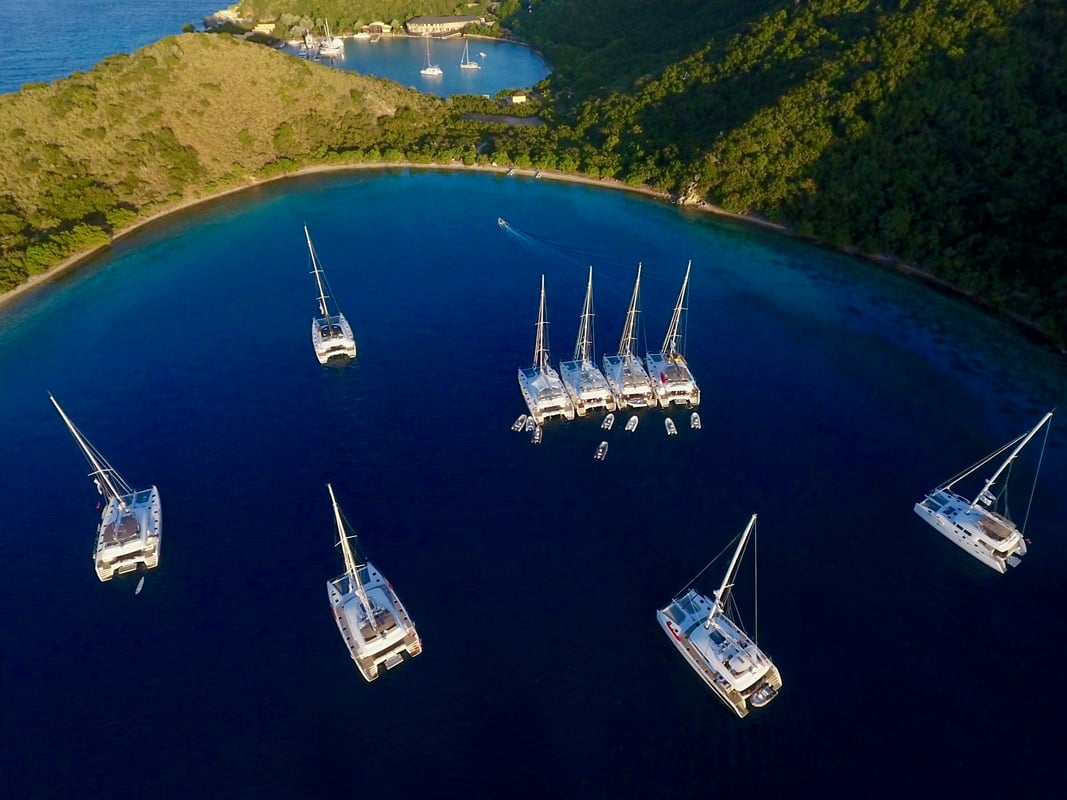
Little Harbour on Peter Island is widely considered one of the most tranquil and secluded anchorages in the British Virgin Islands. This deep, protected bight on the northwest side of Peter Island lacks the expansive white sand beaches found elsewhere, but it makes up for it with:
Blissful Solitude: Often favored by crewed charters and experienced sailors looking to escape the crowds
Turtle Sightings: One of the best spots in the BVI for spotting sea turtles grazing on the seagrass
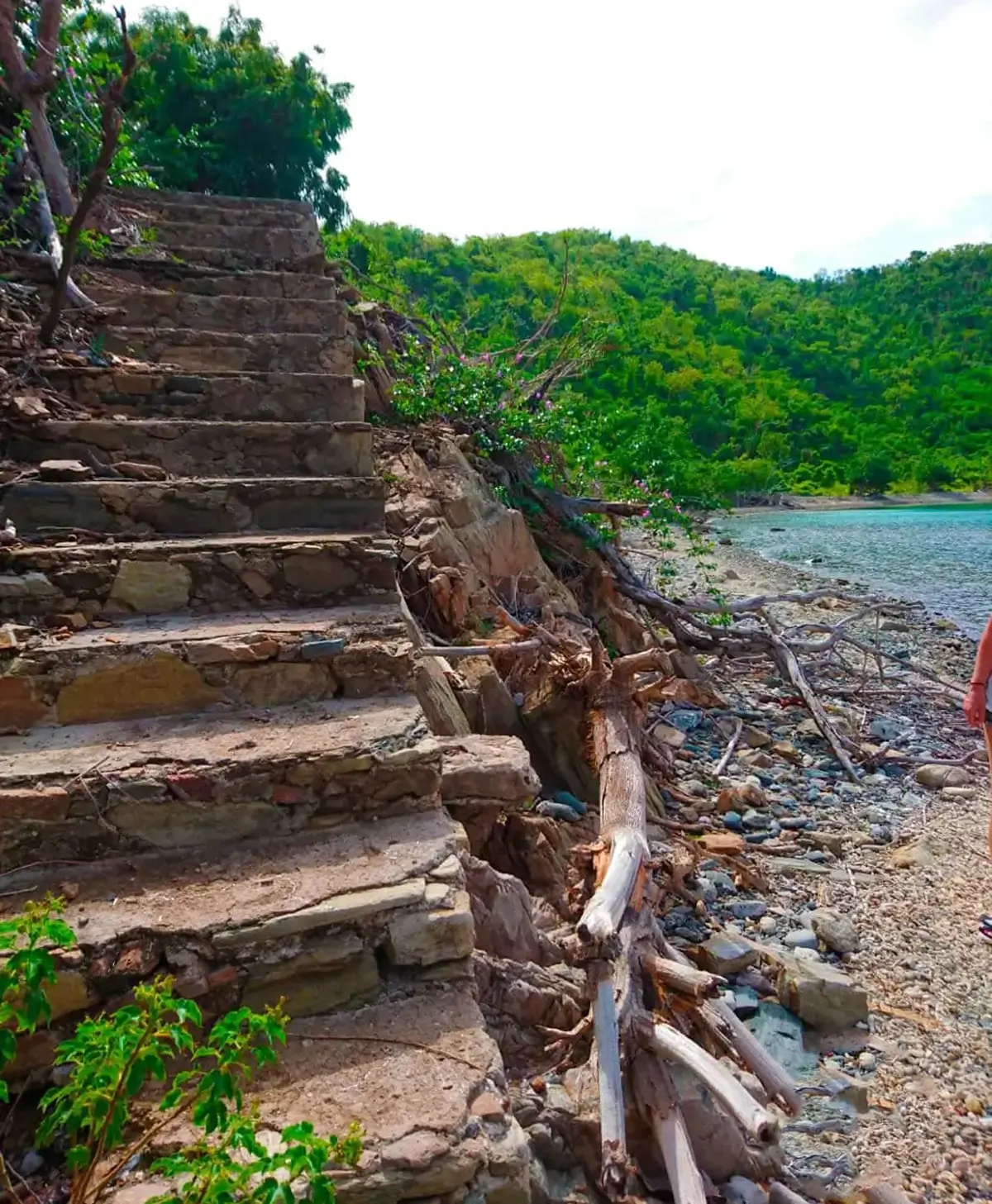
Historic Ruins: You can explore the remains of the Percy Chubb house (an old estate built in the 1960s) and ruins from an earlier tobacco operation dating to the 1920s


Key Bay
Only experienced captains may anchor in this bay, and only when weather conditions are right.
Located on the southern coast of Peter Island, Key Bay provides a serene and secluded anchorage for those seeking tranquility. This small bay can accommodate only 2–3 vessels. The approach is from the southwest, with vessels advised to approach the northeast corner. Depths are around 15 feet, with sandy patches interspersed with seagrass and coral, so careful anchoring is essential.
Important: Avoid anchoring near dive balls—they’re designated for diving purposes, not overnight use. Additionally, with any wind out of the south, avoid this anchorage, as the swell can wrap around Key Cay, resulting in a rough night.
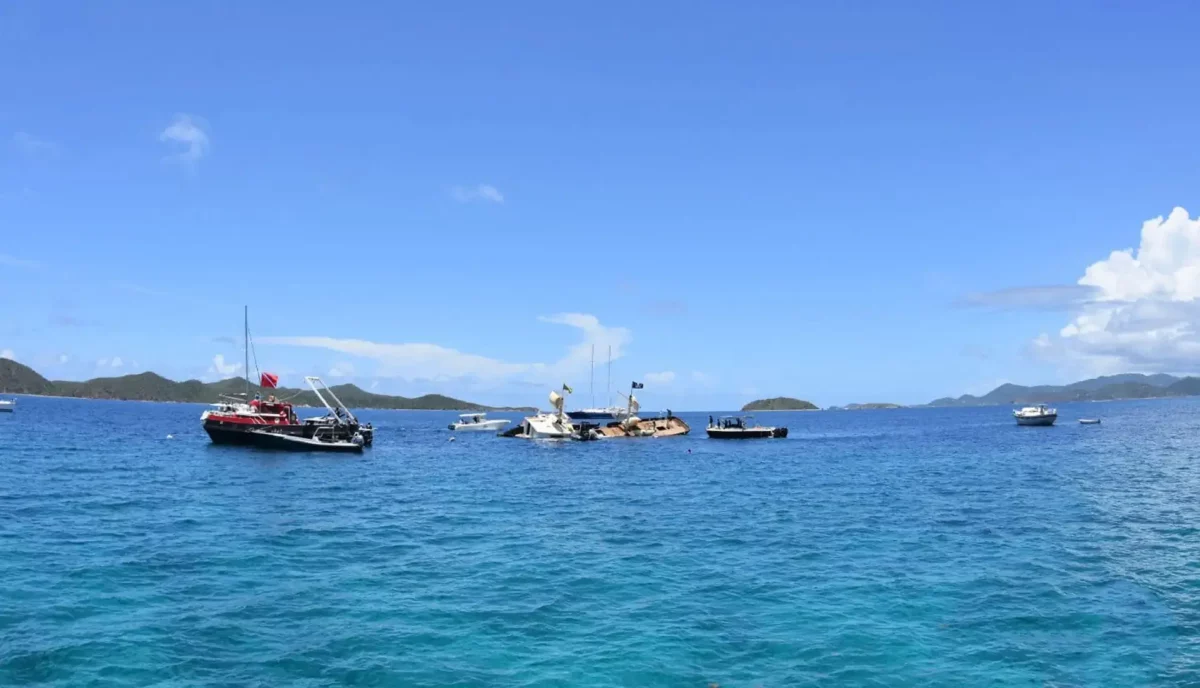
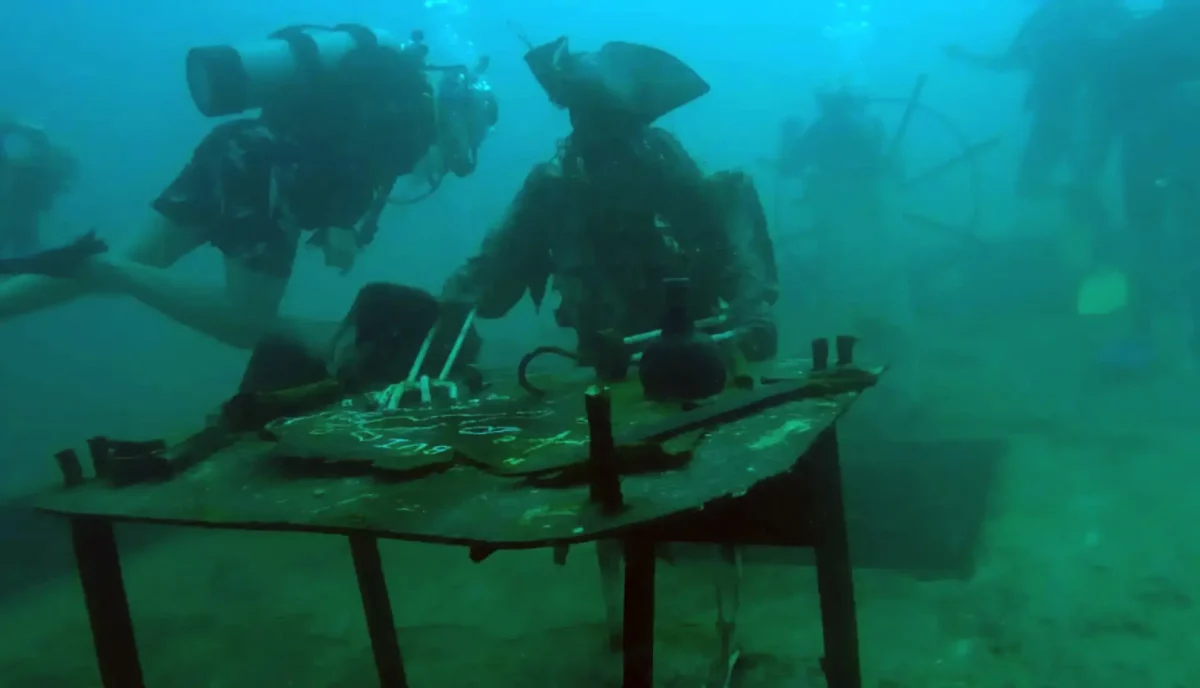
The bay is renowned for its excellent snorkeling and diving. In 2019, the Willy T, a legendary floating bar, was intentionally sunk near Key Bay to create an artificial reef. The top mast is approximately 30 feet tall, making it visible to snorkelers. Beyond the Reef requests a $5 donation for utilizing their mooring ball, which supports local children’s swim programs.
Ashore, the beach is rocky and unsuitable for landing, as it is private property. However, the bay’s secluded nature and the opportunity to explore the sunken Willy T make it a unique and memorable stop.


The legendary Willy T: from floating bar to artificial reef at Key Bay, Peter Island
The History of Peter Island
Peter Island BVI has quite the history! Learning about the island’s fascinating past adds immeasurably to the enjoyment of your yacht charter vacation.
Early Colonial Period: Brandenburg’s Brief Occupation
In the 17th century, Brandenburg—a small German state with Berlin as its capital—needed a base in the Indies for their slave trading operations. They were allies of the Danes and were given the right to establish a plantation and warehouse on St Thomas in the USVI, but they never developed the estate, which created friction.
In 1690, they occupied uninhabited Peter Island, hoping to build a large settlement. They constructed several forts and slave pens on the island. However, Peter Island proved unsuitable for sugar cane cultivation, and in the mid-1700s, a few planters with small numbers of enslaved workers left Tortola for Peter Island to plant cotton. Cotton proved moderately more successful, and the operation expanded somewhat.
Who Was Peter Island BVI Named After?
Pieter Adriensen gave his name to the island. Pieter’s brother was Abraham Adriensen, the Patron of Tortola under the Dutch West India Company in the early 1700s.
The Romance of John Bethell and Princess
In the 1770s, John Bethell was a planter on Peter Island. In a dusty English attic, papers were discovered telling remarkable stories of island life.
John had come to Tortola from Barbados in his early twenties and married an older woman. Shortly after their marriage, she discovered that he was having an affair with a beautiful mulatto woman called Princess. The wife promptly sold Princess to a planter on Peter Island.
When John came into his inheritance, he purchased the plantation on Peter Island and freed his beloved Princess. Their story remains one of the island’s most enduring romantic legends.


Island Life in the Early 1800s
The first religion on Peter Island was Methodist, and by 1796, preachers visited the island regularly.
In 1806, a visitor (Captain Thomas Southey) provided a vivid description of island life. He described Peter Island as “a kind of Robinson Crusoe spot, where a man ought to be a farmer, doctor, carpenter, fisherman, planter, everything himself.”
The owner’s house was simple—only a ground floor with a shingle roof projecting 6 to 8 feet beyond the sides. There wasn’t a pane of glass in the house, only shutters for the apertures. The drawing room contained an eclectic mix: ears of Indian corn tied up in the center, a fishing net draped on a chair, a spyglass, a fowling piece, and pictures of the four seasons. The entire library consisted of a prayer book, the World Almanac, and one volume of the Naval Chronicle.
Around the house roamed an abundance of goats, turkeys, fowls, a bull, cow, pigs, dogs, and a cat.
The end of the slave era marked a decline, and afterward, Peter Island returned to its primitive state.
The Tobacco Era and Little Harbour
In the early 1920s, small tobacco plantations were established, and the palm trees at Deadman’s Bay were planted during this period.
A gentleman named Brunial Bruce grew tobacco on the island and operated a small cigarette and cigar company in Little Harbor, exporting products to Anguilla, Antigua, and other down-island locations.
In 1930, retired British Diplomat John Brudenell-Bruce built a reasonably large house on Peter Island. He lived a simple life on the island and in the 1950s became a member of the Legislative Council (LEGCO), moving to Tortola. His daughter opened the first gift shop in Tortola in the early ’60s, now known as Little Denmark.
When Brudenell-Bruce lost market share in his tobacco business, he sold his land and buildings to Mr. Percy Chubb in the early 1960s. The Chubb family spent part of every winter at Little Harbour.


A Note from the Chubb Family
I received this email from one of Mr. Chubb’s sons with corrections to earlier accounts:
“We watched its popularity, and the popularity of charter sailing, grow from one or two boats a night to thirty or forty ships overnight. Despite the occasionally tiresome disturbance of our peace, we derived a good deal of pleasure watching and hearing from the house on the top of the hill as amateurs trying to anchor in a harbor with swirling winds banged into each other and cursed.
But Dad never ‘retired there,’ and there was no discord in the family about the sale. There was a lot of sadness because it was a remarkable place to be able to stay. It was expensive to maintain, though, as one might imagine, and none of the kids could take it on.
Besides the cost, my mother felt that she was getting too old, and her friends were getting too old to have the only medical access be by boat from Road Town in case there was a problem. The last Christmas we spent there was in 1985.
Thanks for the chance to revisit what was a paradise for me in my teens and twenties.”


Fishing and Agriculture in the 20th Century
Mr. O’Neal from Tortola started buying land on Peter Island around the 1920s and offered employment to residents who raised sheep, cows, and goats for export. He also cultivated bananas, tania, cassava, and potatoes that were shipped to Tortola and exported to St Thomas.
By the 1950s, the LaFontaine family from Canada built the Sprat Bay fishing business into quite a large operation. You could see many seaplanes landing in Great Harbor from all over the Caribbean to buy fish.
Conrad Smith later owned those 15 acres at Sprat Bay. Though blind, he still tied up tenders from large yachts on shore and made a dollar or two as guests walked over to Peter Island Resort. Conrad lived in the old LaFontaine house, with the date in the cement reading June 17th, 1958. Conrad passed away recently. On the west side of Sprat Bay, there are also the ruins of a small church and graveyard.
Peter Island Resort: From Vision to Reality
Torolf Smedvig, a Norwegian millionaire who owned the largest sardine packing plant in Norway and oil explorations in Oklahoma, purchased 500 acres of land in 1968 for $950,000—his piece of paradise.
With so little infrastructure in the BVI at that time, it made sense to have the chalets prefabricated in Norway. In 1969, two ships arrived carrying thousands of tons of prefabricated buildings, house trailers, concrete, lumber, plumbing supplies, tractors, earthmovers, cranes, and more. Accompanying all this were 20 Norwegian craftsmen and workers, who would work alongside about 30 island workers.
They dredged Sprat Bay to make it deeper and reclaimed land for the resort. All the A-frames, the pool, the lobby, bar, dining room, and hotel offices were built on reclaimed land. The A-frames took only about ten days to assemble on-site.
Water cisterns had been built all over the island, but water still had to be barged in from Puerto Rico!
In 1977, Mr. Smedvig’s health was failing, and he returned home to Norway, dying shortly after.
Peter Island Resort was purchased by two gentlemen who had founded AMWAY Corporation in the States: Mr. DeVos and Mr. Van Andel. They invested significantly more time and money into bringing the resort to its full potential.


Hurricanes: Hugo and Irma
Peter Island Resort took a direct hit from Hurricane Hugo in 1989. All the flagpoles were gone after the storm’s 130 mph winds. Hugo blew away the 600-foot seawall, and giant breakwater boulders hurled themselves into the swimming pool—two barracuda even found themselves swimming in the pool! Deadman’s Bay had all but vanished, temporarily reclaimed by the Caribbean Sea.
Peter Island Resort took another devastating hit from Hurricane Irma in 2017. The resort remained closed for reconstruction until its triumphant reopening on December 1st, 2024.
Peter Island BVI Today
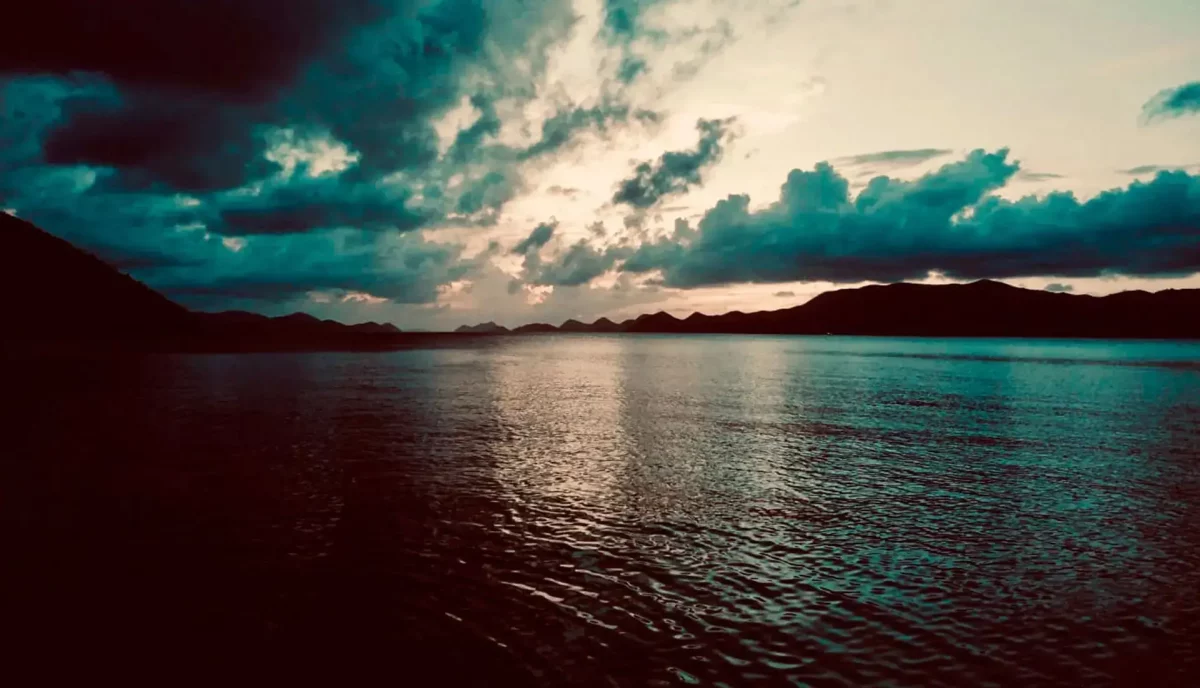
After years of meticulous reconstruction, Peter Island Resort has reopened as one of the Caribbean’s premier luxury destinations. The island remains perfect for your luxury yacht vacation—one of the largest islands in the British Virgin Islands with limited land-based infrastructure, ensuring excellent snorkeling, SCUBA diving, and water sports opportunities. The views throughout the area are magnificent.
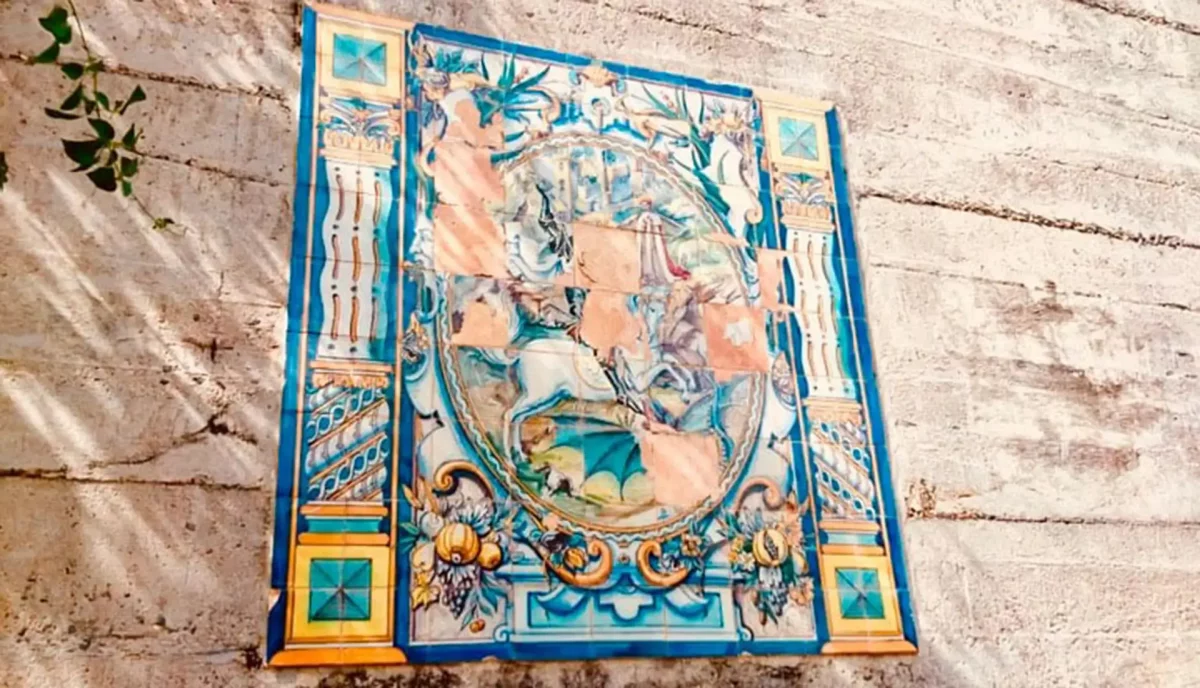
The hurricanes thinned out most of the foliage, bringing to light new ruins for adventurous guests to explore, adding another layer to the island’s rich history.


How to Book a Peter Island Yacht Charter
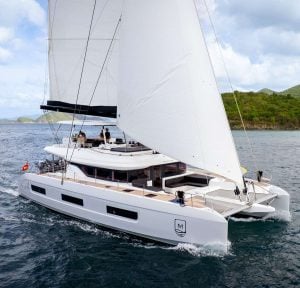
Interested in exploring Peter Island and the British Virgin Islands aboard a luxury crewed yacht? We specialize in personally vetted yachts and can help you design the perfect Caribbean vacation.
Check out our sample BVI itinerary to see how Peter Island fits into the perfect week of island hopping.
Questions? Contact us at [email protected] or call +1 (954) 271-3005.
Epic is a leader in booking crewed charter yacht vacations. Follow us on Instagram and Facebook.