
Not all charter yachts offer the same SCUBA capability, and not all groups want the same diving experience. Some groups want to build their entire week around diving — two dives a day, compressor onboard, divemaster on crew. Others have two divers and eight non-divers and just want a couple of dives worked into an otherwise relaxed charter week. Others haven’t decided yet.
This guide breaks down the three main options — dedicated SCUBA charter yachts, casual diving on a standard charter, and rendezvous diving — so you can match your group to the right setup before you book.
We have run scuba yacht charters in the BVI and Caribbean for nearly 20 years, including underwater photography courses with National Geographic photographers and research trips for marine biologists. We know the options, the vessels, and the trade-offs.
Option 1 — The Dedicated Scuba Charter Yacht
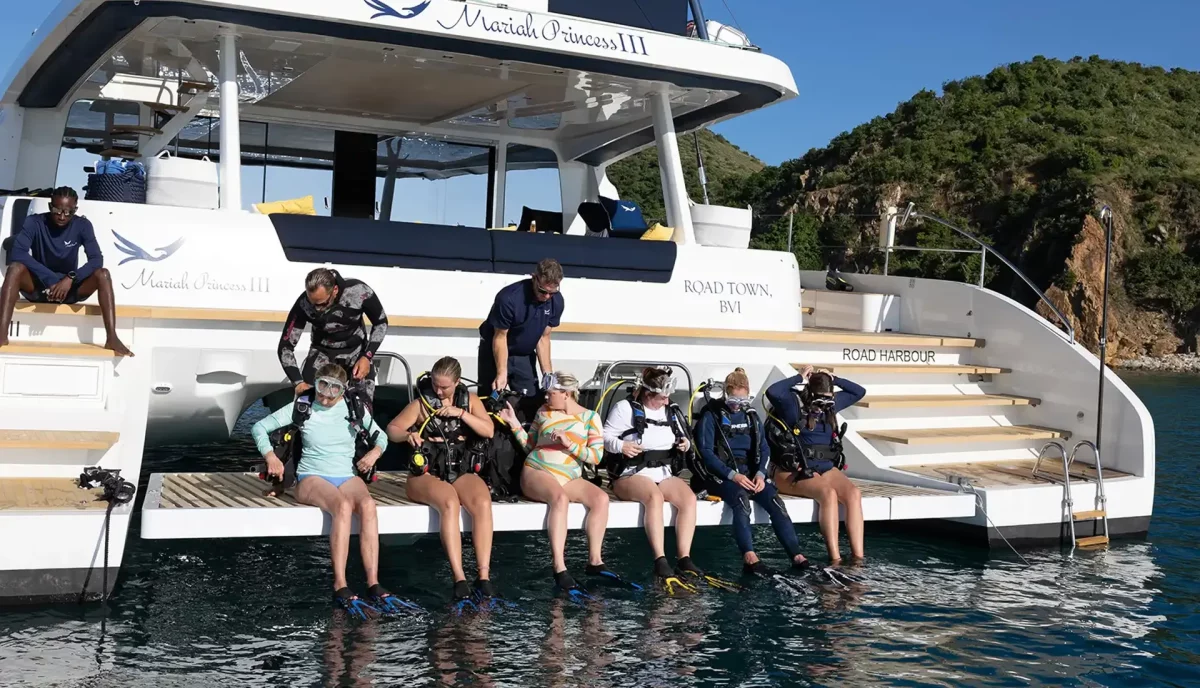
A dedicated scuba charter yacht is built around diving. It carries an onboard air compressor, multiple tanks, full rental gear, and a certified Divemaster or Instructor as a permanent crew member. The itinerary is planned around the dive sites. The day is structured around getting in the water.
How the Day Runs
The typical routine on a dedicated dive charter: breakfast, then a morning dive. Relocate to a comfortable anchorage for lunch and a surface interval. Afternoon dive. Move to the evening anchorage — often positioned for a night dive if the group wants one. Pre-breakfast dives are common for certified divers once the captain is comfortable with their abilities.
Night diving in the BVI is excellent. Octopus, lobster, spotted morays hunting the reef, and bioluminescence in the water column on a dark night. If this is something your group wants, a dedicated dive charter is the way to get it.
The Honest Advice on Dive Frequency
Plan for one to two dives per day and three to five dives over a week. It sounds conservative for a dedicated dive charter, but consider the alternative: two dives every day means you spend most of your charter diving, eating, or waiting for surface intervals. The BVI has beaches, beach bars, sailing, snorkelling, lobster dinners, and sunsets. One quality dive a day — sometimes two — gives you the underwater experience you came for and leaves room for everything else that makes the BVI what it is.
We have seen groups commit to maximum diving and come away exhausted and slightly disappointed that they didn’t see more of the islands. We have never seen a group wish they had dived more and snorkelled less at the Baths.
Who This Is For
Dedicated scuba charter yachts work best for:
Groups where everyone dives — or where non-divers are happy snorkelling the same sites while divers are below. The itinerary is dive-focused and the pace reflects that.
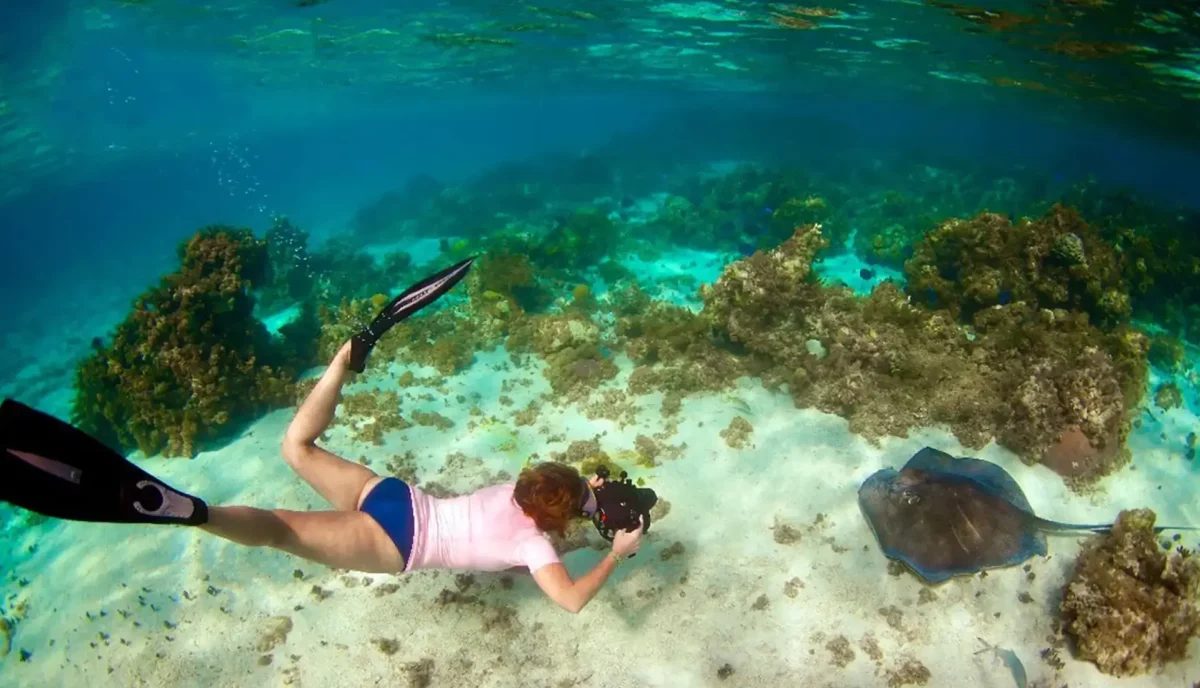
Groups with serious underwater photography interests. Having a divemaster on crew who knows the sites means you can plan specifically for the macro sites, the wrecks, the night dives.
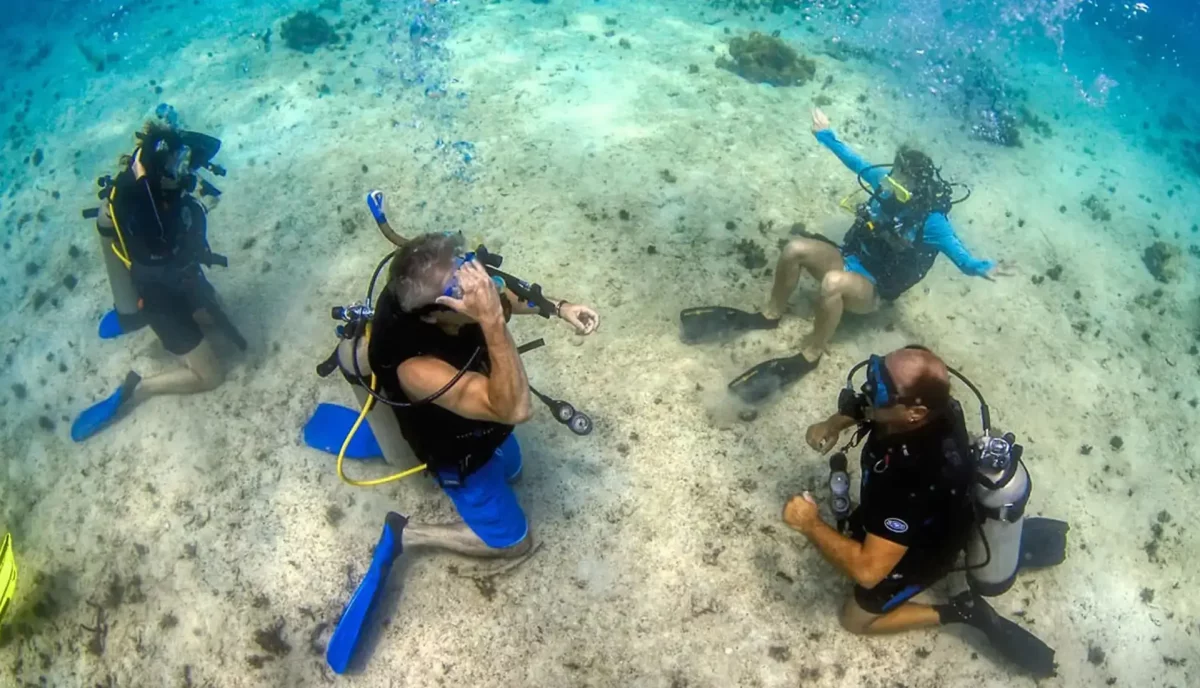
Groups wanting certification or skills upgrade. You need an Instructor onboard (not just a Divemaster) for open water certification. Check with us and we will confirm the crew qualifications for any vessel you are considering.
Scuba yachts accommodate anywhere from two passengers to twenty depending on the vessel. Let us know your group size and we will match you accordingly.


Option 2 — Casual Diving on a Standard Charter Yacht
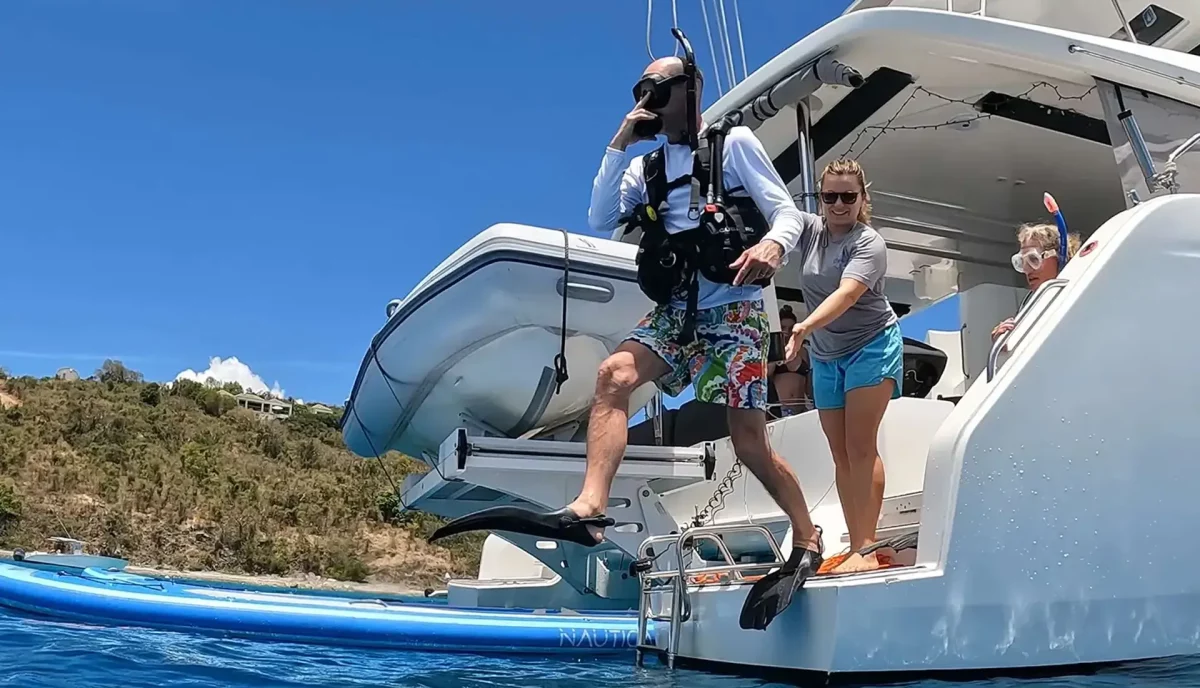
Most crewed charter yachts in the BVI can accommodate some diving even without an onboard compressor. These yachts typically carry one tank per diver, refilled at a dock or beach bar ashore during a lunch stop.
How It Works
Your captain identifies a dive site close to an island with a fill station. You dive in the morning, the tanks get refilled over lunch ashore, and the afternoon is free for sailing, swimming, or exploring. Night diving is generally not available on this type of charter.
The air fill stop ashore has a natural upside — it usually turns into lunch, a wander around a new island, and an encounter with local colour that never appears on any itinerary. Some of the best afternoons we have heard about on charter started as a tank refill stop.
What to Expect
Most standard charter yachts can accommodate one to four dives over a week. The sites need to be close to a fill station, which shapes the itinerary somewhat — but the main BVI dive sites are all within reach of Tortola, Virgin Gorda, Cooper Island, or Norman Island fill points.
This setup works well when the group has a mix of divers and non-divers. Divers get their dives in; everyone else gets beaches, kayaking, paddleboarding, and rum punches at the Soggy Dollar. Nobody’s schedule is built around the dive.
Who This Is For
Casual diving on a standard charter is the right choice when:
Your group is mixed — some divers, some not — and you don’t want the charter itinerary to be dive-focused. One or two dives over the week is plenty.
You want to try diving without committing to a dedicated dive vessel. The BVI’s warm, clear, shallow reef sites are ideal for casual dives.
Budget matters. Dedicated scuba charter yachts carry a premium for the compressor, the tanks, and the dive crew. A standard charter with casual diving is a more economical way to get some dives in.
Option 3 — Rendezvous Diving
Rendezvous diving is when a local dive operation meets your charter yacht at anchor, takes your divers to the site, and returns them to the boat. The rest of your group stays on the yacht and does whatever they like.
How It Works
Your captain contacts a local operator — Blue Water Divers, Dive BVI, and Commercial Diving are among the established names in the BVI — and arranges a pickup at your anchorage or at the dive site itself. The divemaster knows the local sites intimately. They know where the nurse sharks sleep, where the octopus hides, and what time of day the eagle rays come through. That local knowledge has genuine value.
In many cases the dive boat can meet you directly at the site. Non-divers can snorkel the same location and watch the divers below — it becomes a shared experience rather than a split itinerary.
The Hidden Advantage
Local dive professionals spend every working day on the same sites. The divemaster who has dived the Indians 400 times is going to show you things that a charter crew member who dives it occasionally will miss. If maximising what you see underwater matters to you, rendezvous diving with a specialist operator is worth considering even on a dedicated dive charter — particularly for a site like the Chikuzen where the fish life is so dense that an experienced local guide genuinely adds to the experience.
Who This Is For
Rendezvous diving works well when:
Only one or two people in your group want to dive. There is no reason to book a dedicated dive charter — and pay for one — when most of your group has no interest in diving.
Your preferred yacht doesn’t offer onboard scuba. You can book the vessel that best fits your group and arrange diving separately.
You want the local expertise. BVI dive operators know their sites in a way that most charter crew cannot match for sheer frequency of dives.


Getting Certified on Charter
You can complete your open water certification on a charter yacht — but the right way to do it is to front-load the classroom and confined water work before you leave home.
Complete the theory and pool sessions through your local dive shop or via PADI eLearning before you arrive. When you get to the BVI, you need only four open water dives to finish the certification. In warm, clear Caribbean water, those four dives are a pleasure rather than a chore — no cold, no wetsuit, no visibility issues.
Trying to complete the full certification start-to-finish aboard the yacht while the rest of your group is swimming and sailing is difficult for everyone. The instructor’s time is split, the other guests wait, and the confined water sessions are awkward on a moving boat. Do the prep at home and use the BVI for the open water component.
You will need a yacht with a certified Instructor on crew — not just a Divemaster — to sign off on the open water qualification. Tell us that certification is part of your plan and we will match you to the right vessel.


Quick Comparison
Dedicated Scuba Charter
- Compressor onboard: Yes
- Divemaster/Instructor on crew: Yes
- Night diving: Usually available
- Dives per week: 3–10
- Best for: Groups where everyone dives; underwater photographers, certification
Casual Diving
- Compressor onboard: No — tanks refilled ashore
- Divemaster/Instructor on crew: Usually.
- Night diving: Rarely available
- Dives per week: 1–4
- Best for: Mixed groups; adding a few dives to a sailing holiday
Rendezvous Diving
- Compressor onboard: Not applicable
- Divemaster/Instructor on crew: Local operator provides
- Night diving: Depends on operator
- Dives per week: As many as arranged
- Best for: 1–2 divers in a larger non-diving group; local expert knowledge
How We Match You to the Right Charter
When a group contacts us about a scuba charter, we ask a few straightforward questions: How many in the group dive? What certification levels? How important is diving relative to everything else you want to do? Are there non-divers and what do they want from the week? What is the budget range?
From those answers we can recommend the right vessel type, confirm the crew qualifications, and structure an itinerary that gives the divers what they came for without sacrificing the rest of the trip.
We operated SCUBA charters in the BVI and Caribbean for nearly 20 years. Our team holds PADI and NAUI certifications at Instructor and Divemaster level. We ran specialist trips including underwater photography courses led by National Geographic photographers and research trips for marine biologists. Whatever your group’s diving goals, we have done something similar before.
Kerry Hucul is a yacht charter specialist with Epic Yacht Charters and a PADI/NAUI certified Instructor with more than 5,000 dives logged in the British Virgin Islands, Caribbean, Galapagos and North America. I have matched divers to charter yachts for 20 years.