Best Snorkeling Spots in the BVI — A Charter Insider’s Guide
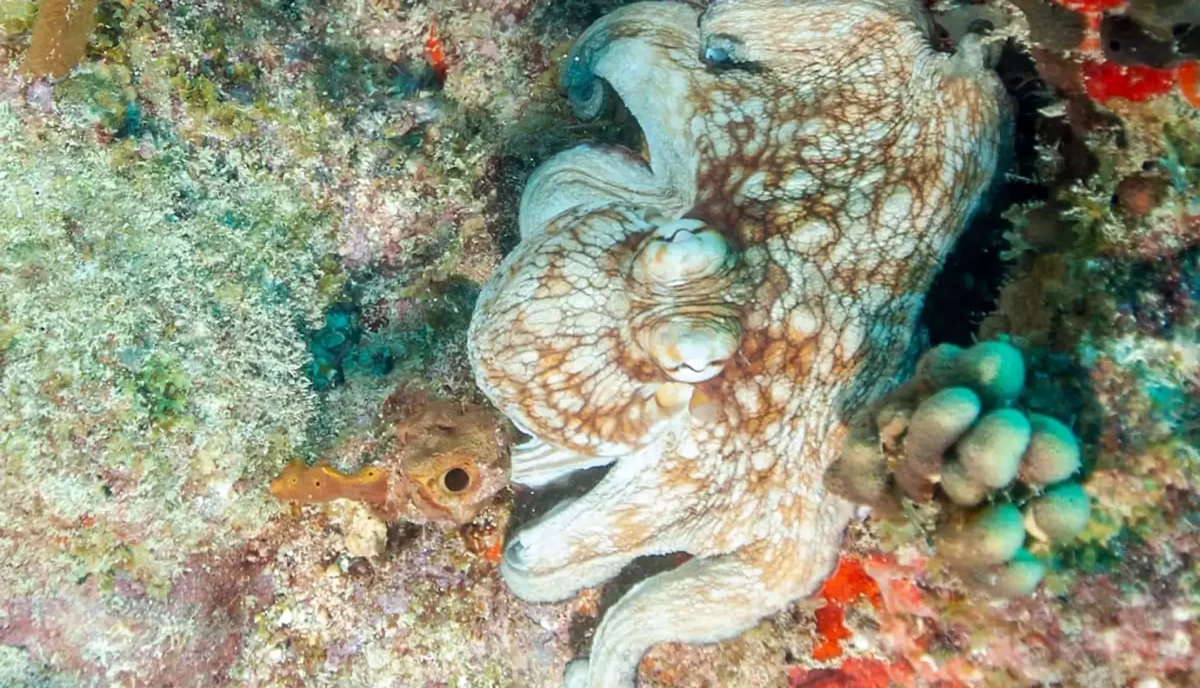
Snorkeling BVI- Salt Island's rocky shoreline is riddled with octopus lairs — once you know what to look for, you'll spot them everywhere.
Favorite snorkeling BVI spots are subjective — I’ll be the first to admit that. But after thirty years and more than five thousand dives in the waters of the British Virgin Islands, I’ve developed some strong opinions about where the good stuff actually is. Not where the guidebooks send you. Where I personally go, and where I take guests who want to see something worth remembering. Some of these spots are on every charter itinerary in the BVI. Others you’ll only reach on a private crewed yacht with someone who knows the water. All of them are worth your time. Here’s my honest guide to the best snorkeling in the BVI.
Salt Island — My Favorite in the BVI
I’ll lead with this one because Salt Island is my absolute favorite snorkeling in the territory, and I don’t think it gets nearly the credit it deserves. Most people who stop at Salt Island are there for the RMS Rhone — the famous 1867 shipwreck that sits in 15 to 70 feet of water off Black Point. The Rhone is a spectacular dive, but the snorkeling along the shoreline surrounding the wreck is genuinely extraordinary in its own right. The reef runs right to the rocky coastline. You slip off the stern and you’re in it immediately. What makes Salt Island special to me is the density of life along that shoreline. I find more octopus lairs here than anywhere else I snorkel in the BVI — they tuck into the crevices in the rocks, and once you know what to look for, you’ll spot them constantly. The swell line just under the water and along the shore is littered with old sea glass from hundreds of years ago. If you look out into the distance while snorkeling, the whole shoreline has squid. On the right day, you might swim past an odd shark or two. Turtles and conch are common. It’s one of those places where you can stay in the water for three hours and still feel like you haven’t covered everything. The wreck itself is also worth a look from the surface on calm days. When you reach the stern, you’ll see the propeller — there’s a large pole sitting at about 25 feet that strong free-divers can reach to inspect the small crabs living there. The shaft runs into 70 feet of water where you can sometimes see additional structure on a clear day with no current. Depth: 5 to 70 feet (excellent snorkeling 5–25 feet along the shore) Access:Private yacht mooring
The reef at Salt Island runs right to the shoreline — no long surface swim required, just slip off the stern and you're there.
The Caves and The Indians — Norman Island
Norman Island has more excellent snorkeling packed into a small area than almost anywhere else in the BVI. I usually recommend guests plan an afternoon here and work their way around.
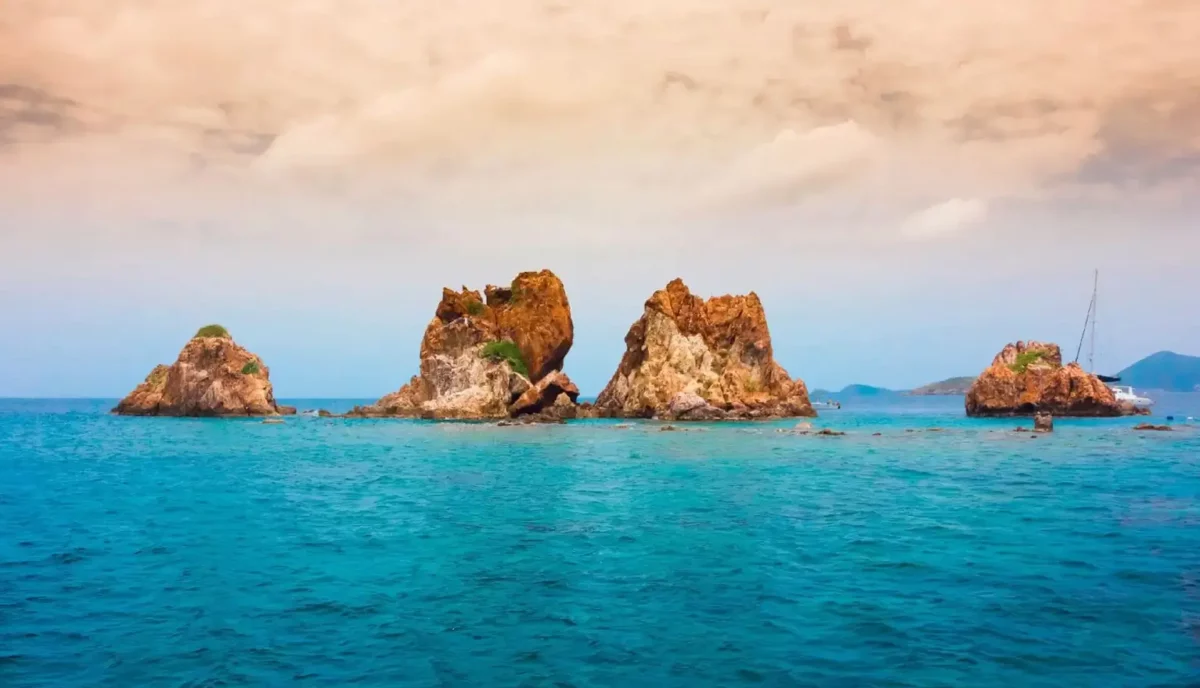
The Indians are a must. Four dramatic rock pinnacles rise out of the Sir Francis Drake Channel off the western tip of Norman, and the underwater world around them is extraordinary — coral gardens, canyon systems, schools of reef fish, and regular turtle sightings. The light is best for underwater photography in the morning. You can swim around all four pinnacles, pass through some of them, and find a small cave on the shallower side. Depth runs from 5 to 55 feet, making it excellent for snorkelers of all abilities.
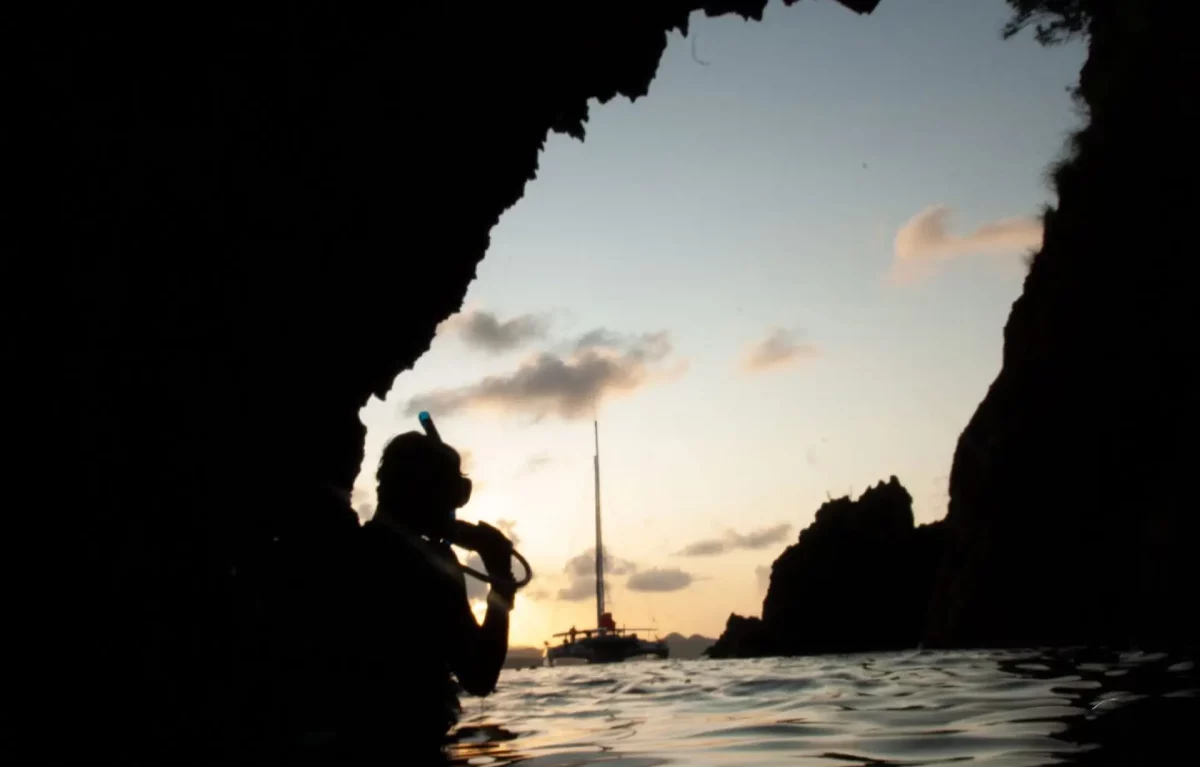
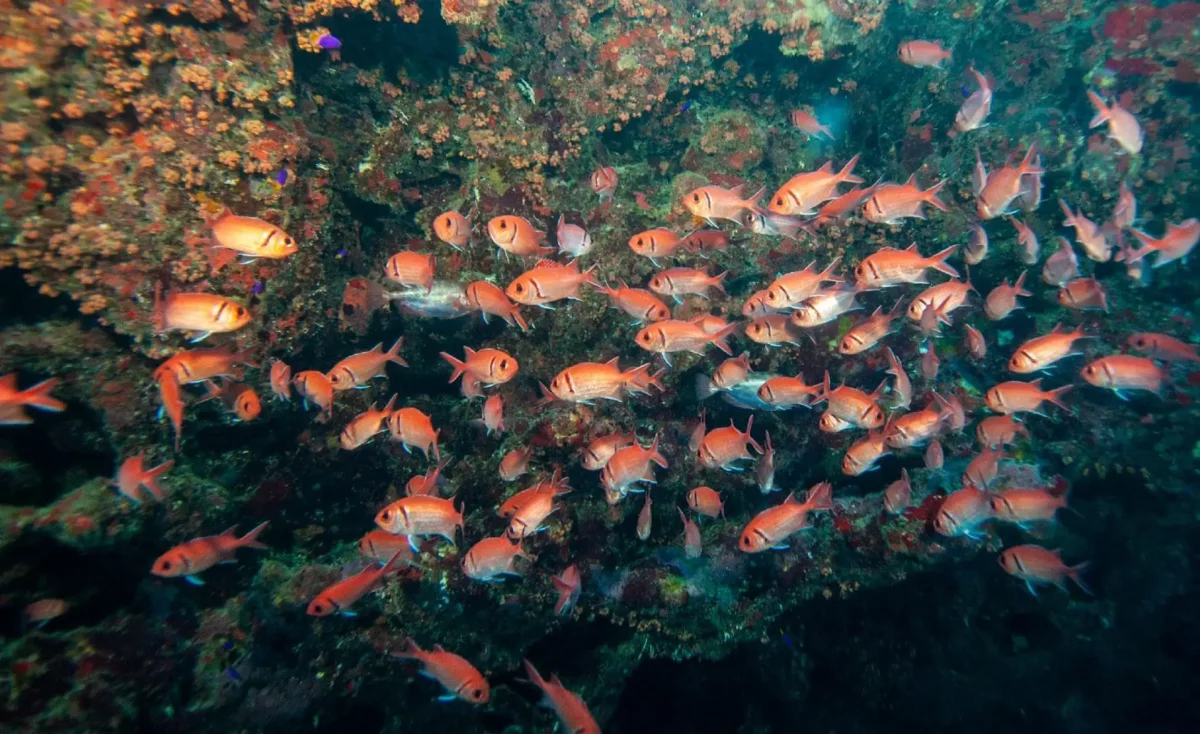
The Caves are a different experience entirely. Located at Treasure Point before the entrance to the Bight, three shallow sea caves allow you to swim in and turn around — the largest cave will let you look straight up at dramatic rock formations with a clear view through to the open water. I won’t pretend the Caves are as pristine as they once were; heavy tourist traffic has taken its toll on the coral closer to the entrances. But the atmosphere is unlike anything else in the BVI, particularly at dusk with your yacht anchored in the bay behind you. And the glassy sweepers and soldierfish packed into the darker interior sections are genuinely spectacular — walls of copper-colored fish from floor to ceiling.
If you’re at Norman Island and want something with less traffic, go to Angelfish Reef at the tip of Privateer Bay, or work your way around the point to the outside of the reef. It just keeps getting better the further you go. Money Bay, on the eastern side of Norman, is one of my top five anchorages in the BVI — when the water is flat, I’ll snorkel there for hours where no one else goes. Benures Bay, at the east end of the island, has some of the healthiest coral and fish life of any anchorage in the territory.
Depth (Indians): 5 to 55 feet Depth (Caves): 10 to 35 feet Access: National Parks Trust mooring balls
The Indians announce themselves from a distance — four dramatic pinnacles rising straight out of the Sir Francis Drake Channel.
The Caves at sunset — there is genuinely nowhere else in the BVI quite like this moment.
Cooper Island — Cistern Point
Cistern Point on Cooper Island is excellent for sheer volume of tropical fish. It’s a large rock on the right side of Manchioneel Bay — your crew can take you by tender to the park buoys, or you can swim from the yacht. What I like about Cistern Point is the topography. Because it’s a rock, you can snorkel all the way around it and come up on the exposed side. In the shallower areas you’ll find an abundance of reef fish. Venture around to the deeper end and the boulders get larger — that’s where you start seeing barracuda and nurse sharks in the overhangs, along with spiny lobsters tucked into the crevices. If you snorkel the seagrass around the mooring balls in the bay, you’ll regularly see stingrays and turtles. Hallsover Bay, around to where the dive wrecks sit, is generally excellent as well — this area is sometimes called Wreck Alley. Mooring balls by the wrecks are usually calm enough to pick up and explore. Depth: 15 to 40 feet Access: Private yacht or tender from Cooper Island Beach Club
Ginger Island — North Side
This one is only possible on very flat days, which is part of what makes it special. On days when there’s genuinely no sea running, we’ll go around to the north side of Ginger Island and anchor just outside Ginger Sound to snorkel the reef. The fish life here is extraordinary — there are hundreds of juvenile barracuda schooling in the shallows, moving as one enormous silver mass through the water. It’s one of the most dramatic snorkeling experiences in the BVI and it sees a fraction of the traffic of the more famous sites because you can only reach it by private yacht and only when conditions allow. There’s also a mooring ball on the north side in the protected waters, and the south bay at Ginger is a reliable alternative on days with more swell. Depth: 10 to 30 feet Access: Private yacht only; flat conditions required for north side
Ginger Island's north side is famous for this — hundreds of juvenile barracuda moving as one through the shallows
Eustatia Reef — Virgin Gorda North Sound
Eustatia Reef sits at the northeastern tip of Virgin Gorda just outside Oil Nut Bay, and it’s one of the most intact reef systems in the BVI. I typically find the fish life healthy and consistent here, with a maximum depth of around 30 feet — excellent for snorkelers who want to free-dive down to the reef structure. The added intrigue here is the six old anchors scattered across the reef. These were placed decades ago by Bert Kilbride — the legendary BVI conservationist and salvager from Anegada who spent his life on Horseshoe Reef. Finding all six is a good reason to take your time and cover the whole area. Only accessible by yacht, Eustatia Reef rewards guests who make the effort to get there. The combination of healthy coral, strong fish populations, and those antique anchors makes it genuinely unlike anywhere else in the BVI. Depth: 10 to 30 feet Access: Private yacht only
Eustatia Reef sits at the northeastern tip of Virgin Gorda — remote, pristine, and well worth the sail.
Mountain Point and the Baths — Virgin Gorda
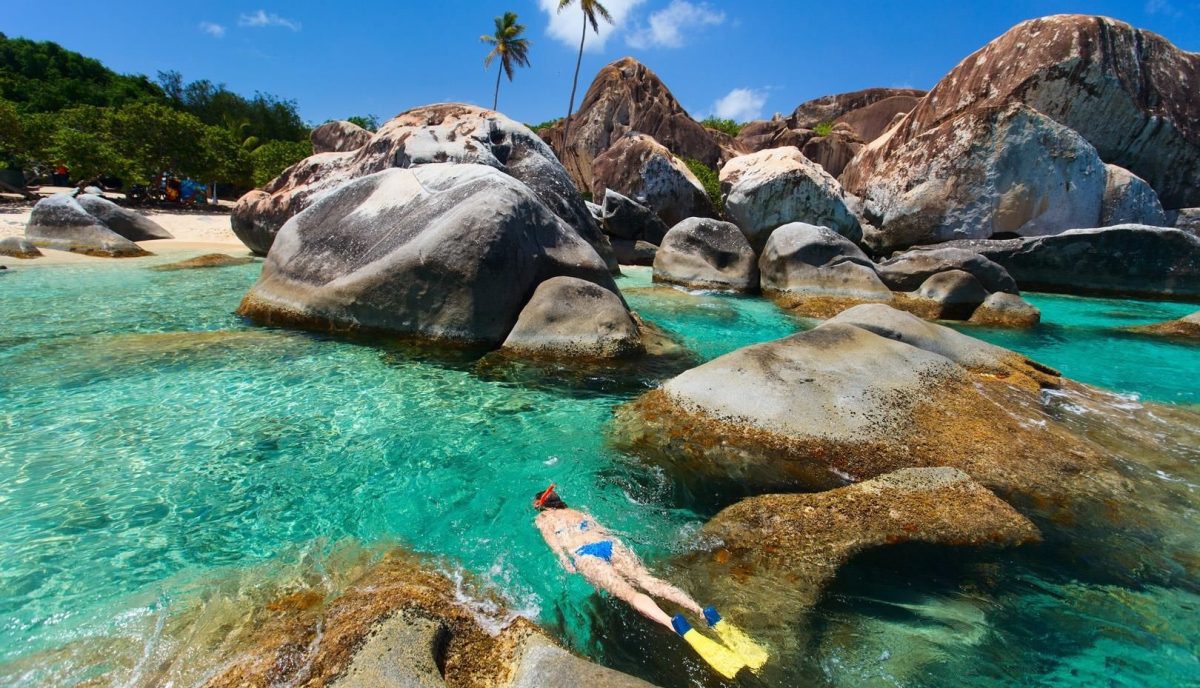
Mountain Point is halfway up Virgin Gorda and a popular anchorage with crewed yachts. The snorkeling out to the point is excellent with varying topography — rocky ledges, open sand patches, and a couple of small caves you can duck into on flat days. It’s a large, protected anchorage with a lot of options. The Baths are one of the most iconic spots in the BVI, and the underwater section between the giant granite boulders is genuinely beautiful — the maze of caves, tunnels, and pools created by those boulders extends underwater as well as above it. You can peek into the grottos for nurse sharks and watch parrotfish, blue tangs, and schools of smaller reef fish work the coral. The Baths is crowded during the day; I’d recommend arriving early or late afternoon. If you want a quieter version of the Baths experience, stop at Fallen Jerusalem on your approach to Virgin Gorda. Similar boulder formations, similar snorkeling conditions, a fraction of the people. Depth (Baths): 15 to 30 feet Access: National Parks Trust mooring
North Side Tortola and Jost Van Dyke
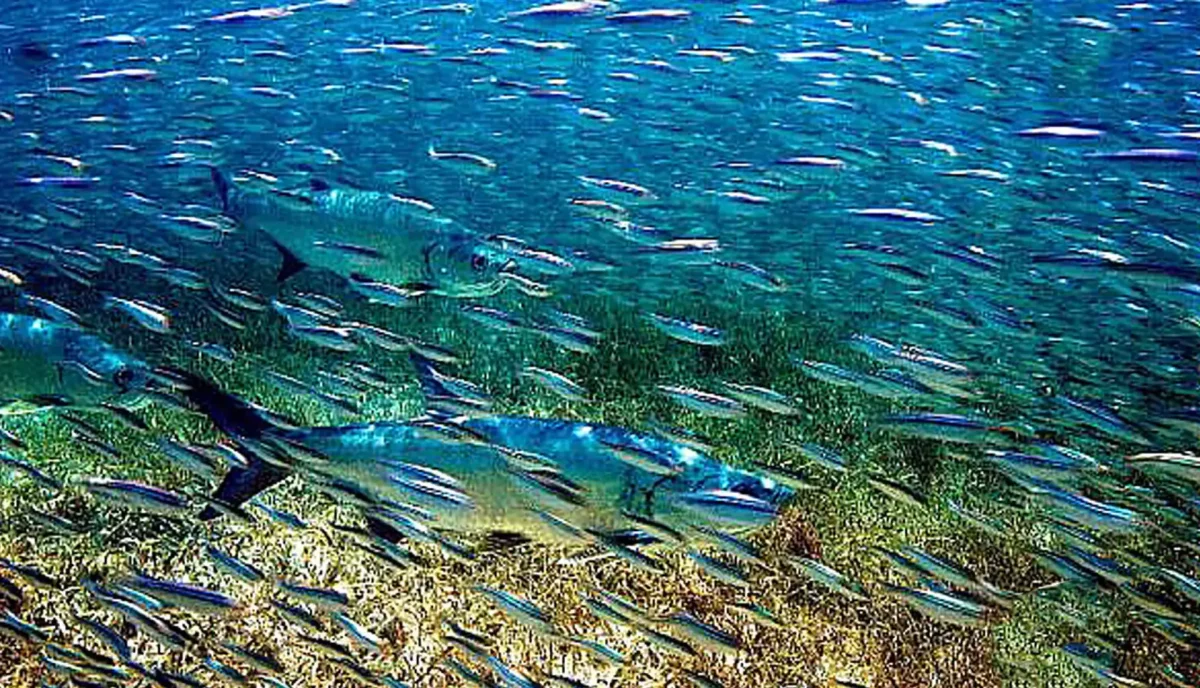
The north side of Tortola and the waters around Jost Van Dyke offer some excellent snorkeling that many charter guests overlook in favor of the better-known southern BVI spots. Guana Island — Muskmelon Bay and Monkey Point are two of my favorites in this area. Monkey Point has great schools of fish, diving birds, and Tarpon — it can be busy with mooring balls, but the snorkeling is consistent. Muskmelon Bay, on Guana Island, is typically off-limits to bareboaters and offers some of my favorite snorkeling in the northern BVI: bird nesting colonies, enormous schools of fish, and Tarpon. A note of caution — as of mid-2024, Monkey Point has suffered a significant decline in fish and coral life, so temper expectations there accordingly. Brewers Bay on the north side of Tortola near Cane Garden Bay is excellent when conditions allow — if the swell is up it will be too cloudy to bother, but on flat days you have a large anchorage with good snorkeling out where the dive buoys sit on each point. Around Diamond Cay on Jost Van Dyke, there are good numbers of Tarpon. I find the water can be murky here depending on conditions, but on clear days it’s worth the time. Depth: Variable 10 to 35 feet depending on site Access: Private yacht; north side sites weather-dependent
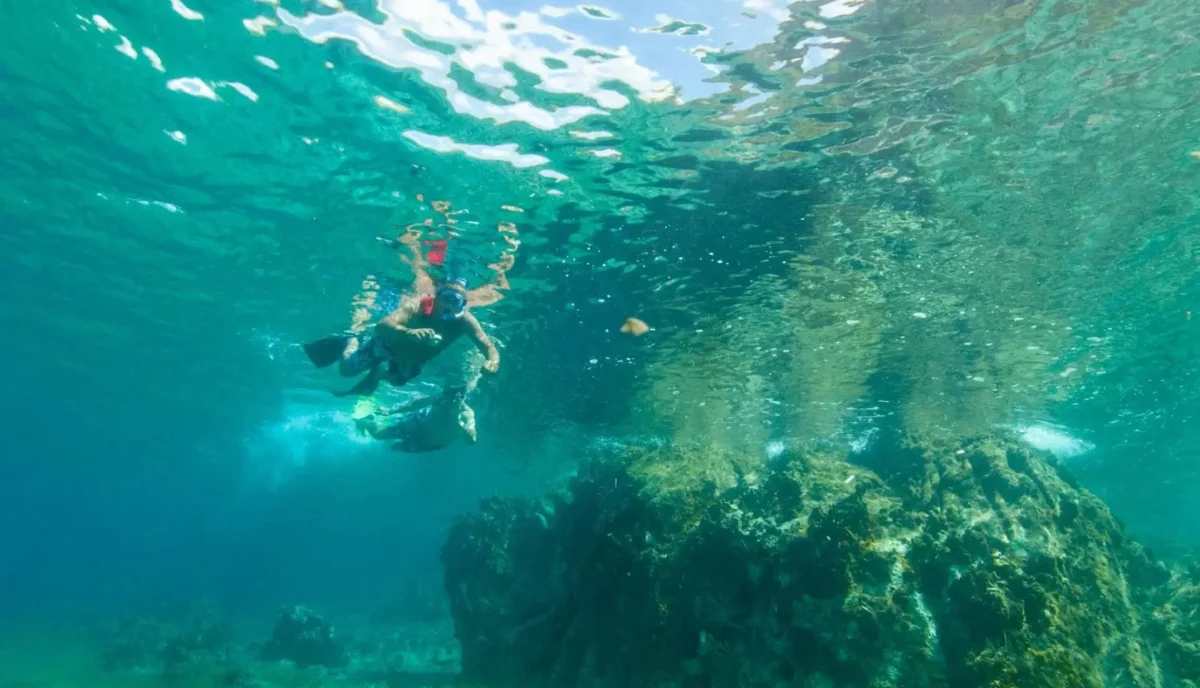
Snorkeling at the Baths on Virgin Gorda in the BVI
Peter Island — White Bay and Eagle Rays
Peter Island has a few snorkeling spots worth knowing about, with one standout. Little Harbor on the south side of Peter is calm and reliable — the coral isn’t exceptional, but it’s where I consistently see interesting fish: squid, turtles, and occasionally dolphins. White Bay on the west side of Peter Island is where I’d send anyone specifically hoping to see an eagle ray. The rocky points at either end of the bay hold juvenile fish in volume, and White Bay has given me more consistent eagle ray sightings than any other spot in the BVI. There’s no guarantee — that’s the nature of wildlife — but if you’re going to find one snorkeling in the BVI, White Bay gives you the best odds. Great Harbor used to be excellent snorkeling but hasn’t fully recovered from the 2017 hurricanes. I’d skip it in favor of White Bay. Depth: 10 to 35 feet Access: Private yacht mooring
Anegada and Horseshoe Reef
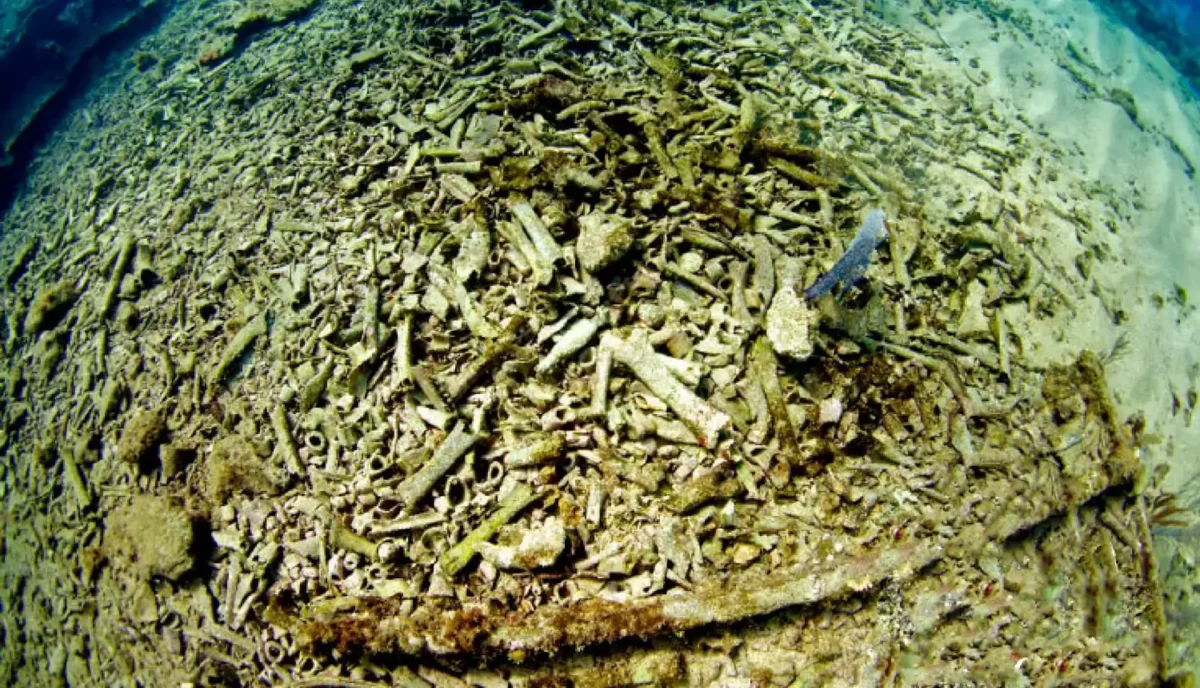
Anegada is a destination unto itself, and the snorkeling here is unlike anything else in the BVI. Loblolly Bay offers easy, beautiful snorkeling over large reef sections in gin-clear water, with a sandy beach entry. Look for stingrays in the sand, schools of ballyhoo near the surface, soft coral, and sergeant major fish swarming the coral heads. On calm days, the outside of the reef offers some of the largest conch I’ve ever seen in the BVI. The real prize — if you can get there — is the Rocus Wreck on Horseshoe Reef. Horseshoe Reef is the largest barrier reef in the Caribbean, and the Rocus is a shallow shipwreck sitting right at the surface of it. You need flat conditions and a local operator with proper knowledge to get there safely — the reef is unforgiving and the approach is not obvious. But if the conditions are right and you’re with someone who knows the water, it’s extraordinary. The Rocus was carrying cattle when it went down, and thousands of cow bones are still scattered across the deck and surrounding reef after more than a century on the seafloor. The shallow section of the wreck breaks the surface, so snorkelers can see almost everything without free-diving. The variety and volume of fish life around the wreck is exceptional — the isolation of the site means it sees almost no traffic and the marine life has had decades to accumulate undisturbed. Ask your captain to connect you with Kelly on Anegada for the Horseshoe Reef trip — local knowledge is not optional here. Depth (Loblolly): 5 to 15 feet Depth (Rocus Wreck): 0 to 20 feet Access: Loblolly by dinghy from anchorage; Rocus by local operator only
The Rocus went down carrying a cargo of cattle — the bones have been on the seafloor for over a century and show no sign of going anywhere
Planning Your BVI Snorkeling Itinerary
The beauty of a crewed yacht charter in the BVI is that your snorkeling isn’t limited to one or two spots — you can hit multiple sites in a single day, moving between anchorages at your own pace with all your gear already on board. Most of the sites in this guide are accessible on a standard seven-night BVI charter itinerary. The north side sites (Ginger, Muskmelon, Eustatia) require specific conditions and a captain willing to route around them — if those are priorities for you, mention it when you’re planning your trip so the itinerary can be built around the right weather window. The Dog Islands, on the way between Scrub Island and Virgin Gorda, are also worth a mention — Great Dog in particular has cathedral-shaped tunnels and grottoes with beautiful fan coral, lobsters, and schools of reef fish. It’s a natural stop when you’re heading east and the conditions are right. Every crewed charter yacht in the BVI comes stocked with masks, fins, and snorkels for all guests. Some yachts carry underwater cameras, SeaBobs, or other gear that opens up additional possibilities. Ask your charter specialist what’s available on the yachts you’re considering — the right boat makes a real difference.
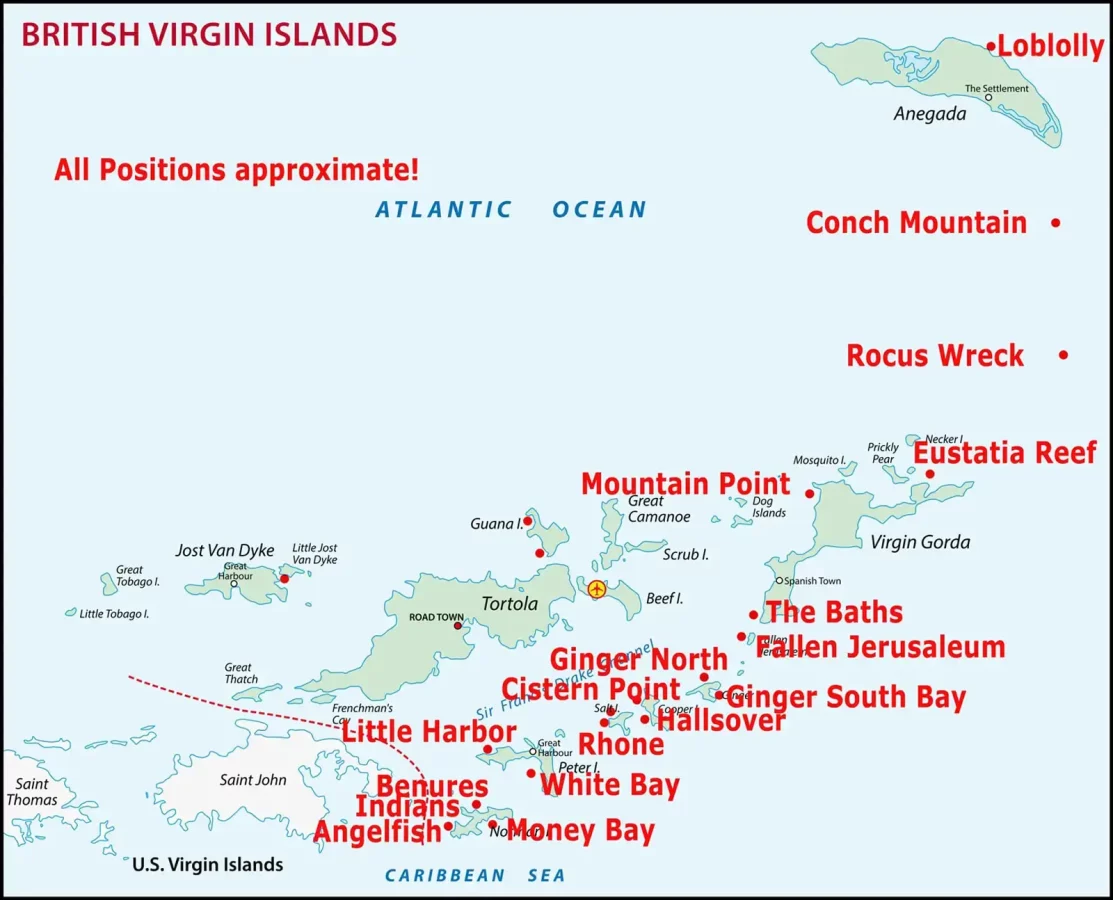
The BVI spreads across 60 square miles of water — this map shows where the best snorkeling sits relative to your anchorage each night.
Ready to Plan Your BVI Charter?
We’ve been snorkeling and diving these waters since before some of our clients were born. If you have questions about specific sites, what to expect at different times of year, or how to build an itinerary that puts you in the water at the right spots on the right days — just ask.
Our main collection features a hand-picked selection of truly exceptional yachts — chosen for their quality, crew, and overall charter experience. If you’d like to explore a broader range of yachts across additional destinations, you can view our full worldwide charter portfolio.