The Best Scuba Dive Sites in the BVI: A Charter Diver’s Guide

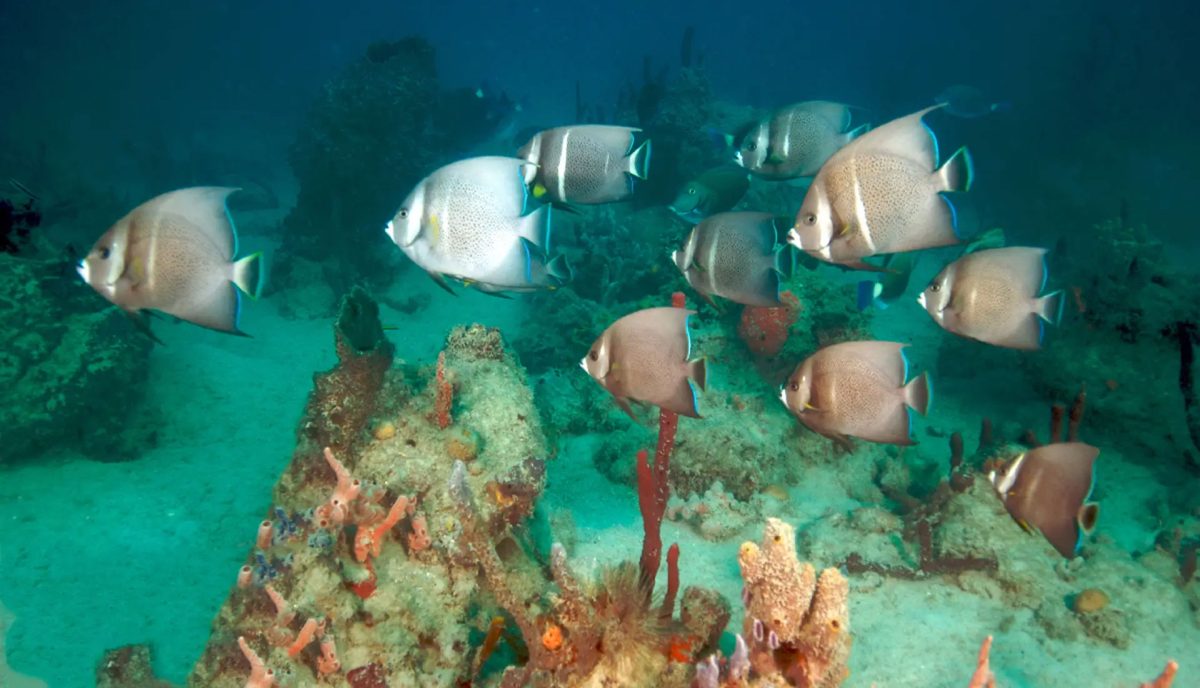
School of angelfish swimming above a coral reef in the Caribbean.
The BVI's clear water and steady visibility make every dive a visual experience as much as an adventure.

Scuba dive sites in the BVI range from shallow reef gardens perfect for beginners to historic wrecks that draw serious divers from around the world. Scuba diving in the British Virgin Islands is something we know firsthand. Our team holds PADI and NAUI certifications at Instructor and Divemaster level, and between us all we have logged well upward of 5,000 dives in these waters.

We have dived every site on this list — some of them dozens of times. The BVI has hundreds of dive sites. What follows are the ones that matter most: the sites that reward divers at every level, the wrecks with real history, and a few that only charter yachts can realistically reach. We have noted the depth, the experience level, and — where it counts — what most dive guides do not bother to tell you.

All you need to get started is proof of your PADI, NAUI, or SSI open water certification. No certification yet? Ask us about Discover Scuba options through your charter crew or a rendezvous operator.

Back to the BVI Scuba Diving Guide

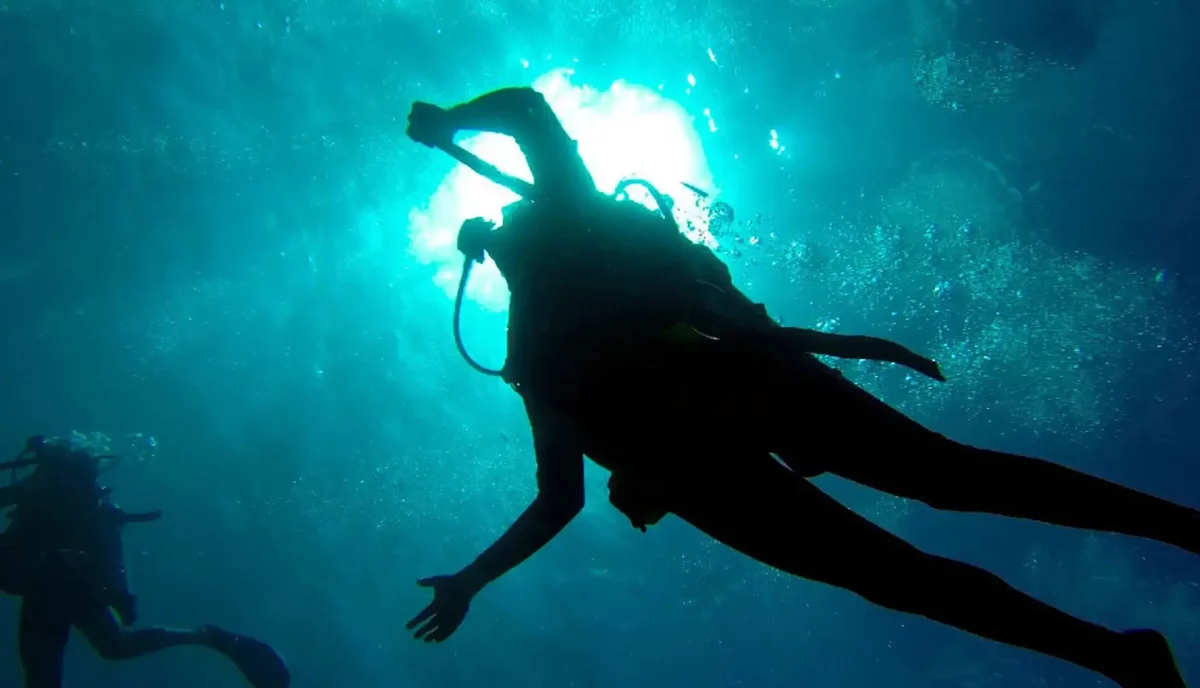
Scuba diver silhouetted against sun rays underwater in the British Virgin Islands
Scuba diving in the BVI — clear water and steady visibility make every dive a visual experience as much as an adventure.

Reef Dives

Painted Walls — Dead Chest Island

Depth: 20–40 ft | Level: Novice | Mooring ball on site

There is a mooring ball on the south side of Dead Chest Island — pick it up, suit up, and drop in. Painted Walls is one of those sites that consistently surprises people who expect a typical Caribbean reef and instead find something that looks like it was painted by hand.

Four canyons run into the island, their walls encrusted top to bottom in corals and sponges in every colour you can think of. Cup corals, encrusting sponges, fan corals — it is dense and vivid in a way that photographs well but looks even better in person. One of the gullies opens into a natural arch leading to a shallow pool with schools of fish stacked up in the light.

Nurse sharks sleep under the larger boulders. If you find one, move slowly and you can get within a few feet without disturbing it. The dive runs about 45 minutes, starting at the furthest gully and working back. Depth stays shallow throughout, which makes it a good first dive of the day or a strong option for newer divers in the group.

The Indians — Norman Island

Depth: 35–50 ft | Level: Novice/Intermediate | Mooring ball on site

Four rocky pinnacles rising straight out of the water just off Norman Island’s western tip — the site is visible from the surface, which gives you a sense of what you are getting into before you even gear up. Below the waterline, each pinnacle is draped in coral growth and surrounded by fish.

The main draw is the 15-foot swim-through tunnel near the base of the central formation. It is wide enough for two divers side by side, and the light at the far end creates a genuinely dramatic effect. There is also a cavern system on the north side worth working into your dive plan.

What sets the Indians apart from most shallow BVI reef dives is the density of fish life. Schools of French grunts, goatfish, sergeant majors, and the occasional eagle ray moving through the blue water off the edge. Work the pinnacles slowly and you will find cleaning stations, moray eels in the cracks, and small coral formations that most divers swim past. This is a site that rewards divers who slow down.

Angelfish Reef — Norman Island

Depth: 20–45 ft | Level: All levels | Accessible by charter yacht

The name is accurate — French and queen angelfish are everywhere on this site, along with the triggerfish, lobster, and moray eels that have set up residence along the canyon edges. The reef here slopes and drops off in ridges, with large barrel sponges marking the deeper sections.

The standard approach is to descend to the deepest point first and work your way up through the small canyons as the dive progresses and your air consumption increases. Visibility is typically very good. It is a forgiving site in terms of navigation and a strong option for divers of all experience levels who want solid fish life without a demanding dive profile.

Vanishing Rocks — Cooper Island

Depth: 25–45 ft | Level: Novice/Intermediate | Accessible by tender

A rocky pinnacle on the west side of Cistern Point on Cooper Island. The pillar coral formations here are among the healthiest in the BVI — dense, upright stands that rise from the sandy bottom and attract a constant population of reef fish. Green moray eels live in the crevices around the base.

The dive is a circular route around the pinnacle, which you can knock out in 30 minutes or extend into a more thorough exploration of the rock faces. Barracuda tend to hang in the water column nearby. The site’s shallow profile makes it a good second dive option after a deeper morning site.

The Playground — Green Cay

Depth: 25–45 ft | Level: Intermediate | Accessible by tender

Find the mooring on the south side of Green Cay, next to Sandy Spit. The site is built around a large pillar coral formation and a series of boulders on the exposed north side — covered in fans, soft corals, and sponges that have been building up for decades.

Schools of barracuda patrol the outer edges. Turtles and nurse sharks come through the pinnacles regularly. The overhangs are worth checking with a dive light — smaller reef fish pack into every gap, and the colours underneath are considerably more vivid than what you see at ambient light on the open reef faces.

The Chimney — Great Dog Island

Depth: 25–50 ft | Level: Intermediate | Accessible by charter yacht

Named for the chimney-like gap formed by two converging rock formations, this is one of the more unusual structural dives in the BVI. The passage itself is the centrepiece — wide enough to swim through comfortably, lined with cup corals and sponges that glow under a dive light.

Beyond the chimney, the site opens into a series of canyons, ledges, and overhangs that take a full dive to properly explore. Bring a light if you have one — the colours in the overhangs are the kind that make photographers immediately wish they had a wider angle lens.

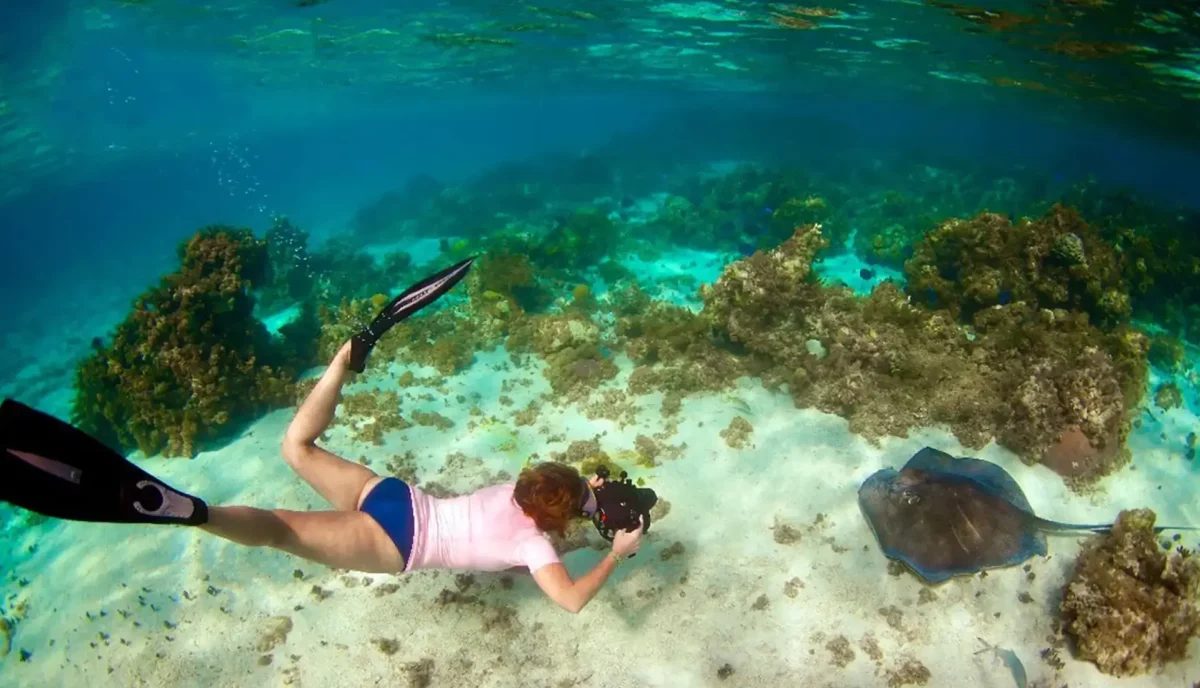
Female scuba diver photographing a southern stingray on a shallow reef in the British Virgin Islands
Southern stingrays are a highlight of BVI diving — and a favourite subject for underwater photographers.

Wreck Dives

The BVI has centuries of maritime history on the seafloor. The wrecks below range from a 19th-century Royal Mail steamer to a Korean fishing vessel to a Pearl Harbor survivor repurposed as an underwater art installation. All of them are worth your time. Two of them are among the best wreck dives in the world.

RMS Rhone — Salt Island

Depth: 20–80 ft | Level: Intermediate/Advanced | National Park mooring balls on site

The Rhone is the BVI’s signature dive and one of the most famous wreck dives in the Caribbean. The 310-foot Royal Mail Steam Packet Company ship sank on October 29, 1867, during a catastrophic hurricane — the same storm that destroyed most of the fleet anchored throughout the islands. Of the 143 people on board, only 23 survived. The wreck is now a national marine park.

Two dives are standard. The first takes you to the bow section at 75 feet — intact enough that you can still make out the machinery, the anchor gear, and the structural lines of the hull. The second covers the shallower stern section, where the bronze propeller sits at around 20 feet and can be free-dived by snorkellers. Between the two sections, there is a debris field worth picking through slowly.

The wreck is encrusted with coral and absolutely teeming with fish. A large barracuda known as Fang has been a resident for years. Eels, octopus, lobster, hawksbill turtles — the Rhone functions as much as a reef as it does a wreck at this point. There is still a brass porthole with the glass intact that divers have been polishing for decades. Look for the silver teaspoon embedded in the gearbox.

Mooring balls are managed by the National Parks Trust. If your boat is over 60 feet, pick up a ball and check proximity to your neighbours — some balls are placed for small dive boats, not charter yachts. If none are available, anchor in the bay at the settlement and dinghy around.

Read the full RMS Rhone story

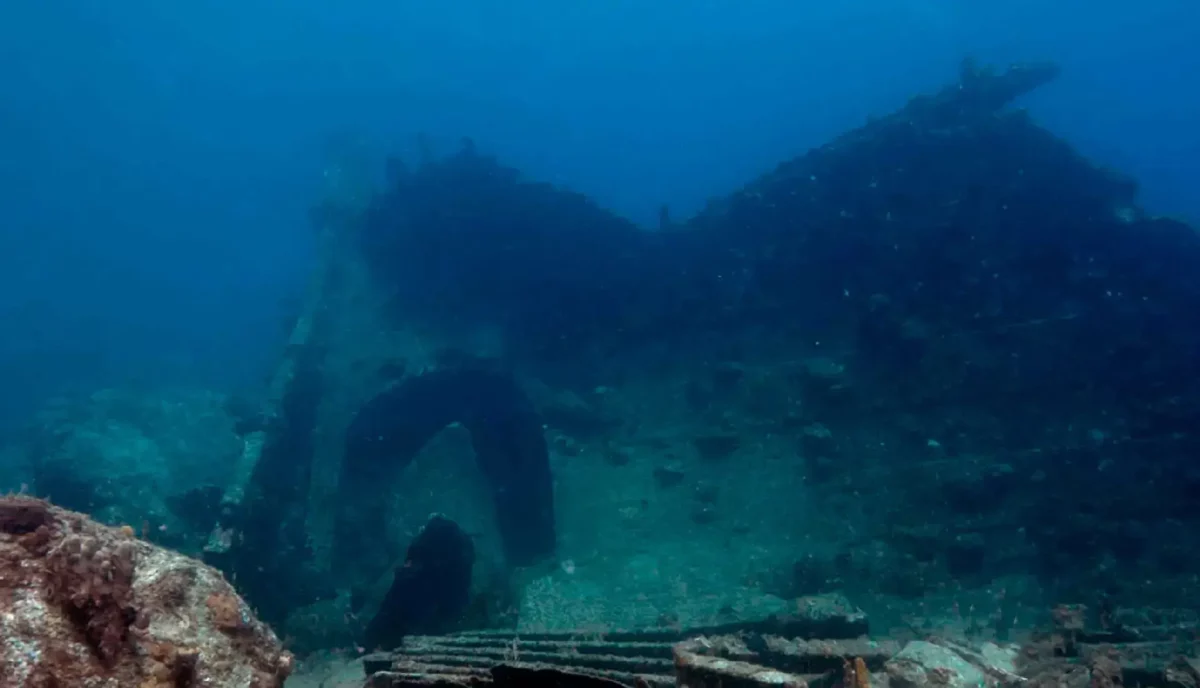
Wide view of the shallow section of the RMS Rhone wreck hull in the British Virgin Islands
The shallow stern section of the Rhone — the propeller sits at just 20 feet, accessible to snorkelers as well as divers.

Chikuzen Wreck — Anegada

Depth: 45–80 ft | Level: Intermediate/Advanced | National Parks mooring ball on site | Calm conditions only

Often listed as the second-best dive in the BVI after the Rhone. In terms of sheer fish life, nothing else comes close.

The Chikuzen is a 246-foot Korean fishing vessel — the M.S. Chikuzen Maru, built in Japan in 1960. She spent her last years as a cold storage facility tied to a dock in St Maarten. In September 1981, a storm threatened the harbour and the harbormaster ordered her moved. The owner took her to sea, opened the sea cocks, and tried to sink her. She did not sink. He set her on fire. She still did not sink. Abandoned and trailing smoke, she drifted 70 miles to the BVI and threatened to run up on Marina Cay before a tug finally got a line on her. The tow rope snapped under load, shattering a crewmember’s legs. She was abandoned again and sank close to where she now lies — on her port side, starboard rail coming up to about 45 feet.

She sits 7.5 miles northwest of Tortola in the middle of a desert of sand flats. That isolation is exactly why the fish life is extraordinary. The moment you descend the mooring line, you are surrounded. Literally hundreds of barracuda hang in the water column above the wreck — thick enough that you swim through them on the way down. Goliath grouper in the hundreds-of-pounds range live on the wreck. Horse jack, almaco jack, lookdowns, pompano, king mackerel, Atlantic spadefish, and cobia off the stern. Large southern stingrays cruise the sand around the hull. Whale migration paths pass directly over the site.

She lies on her port side with her railings, winches, and two massive masts extending almost parallel to the seafloor. The refrigerated holds that were a highlight before 2017 collapsed in Hurricane Irma but the structure that remains is still dramatic.

This site can only be dived in genuinely calm conditions. There is no protection from sea swell, and even a moderate swell makes the dive uncomfortable and the mooring pickup difficult. The upside: because the conditions requirement is strict, and because the location is only realistically accessible by a vessel with range and time, the Chikuzen rarely sees divers. When you drop in, you are often the only group on the wreck.

GPS: N18°37.143 W064°30.969

Read the full Chikuzen story

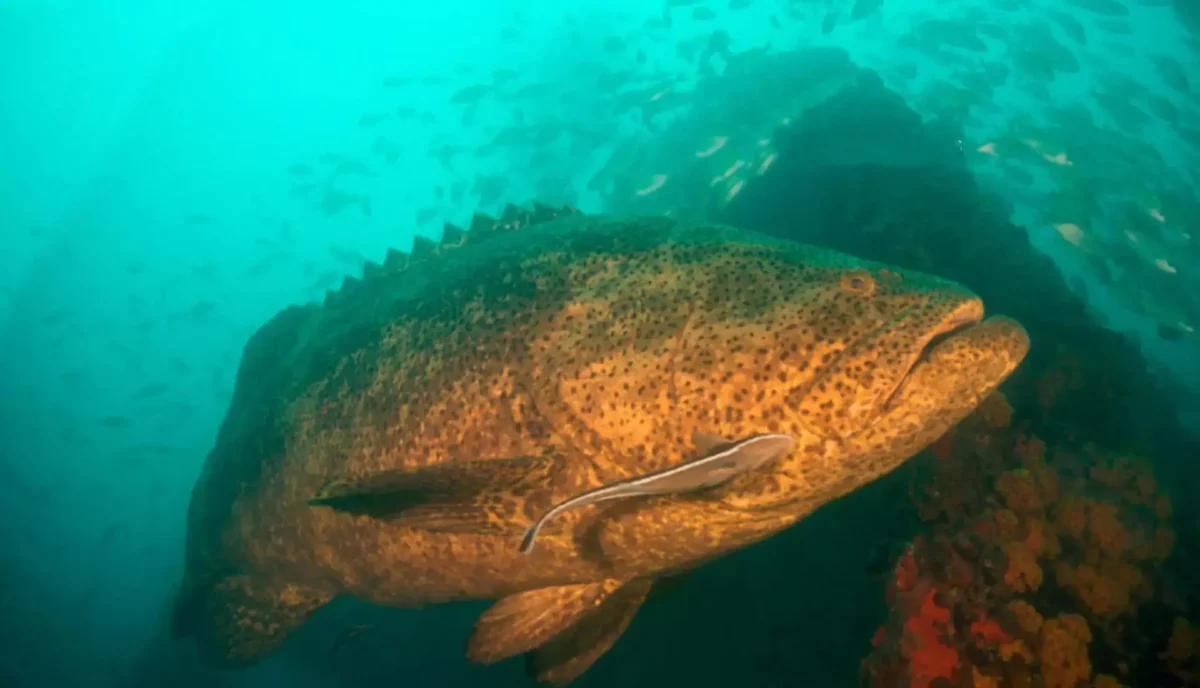
Large goliath grouper resting near the Chikuzen wreck in the British Virgin Islands
Goliath grouper are among the most striking residents of the Chikuzen wreck — curious, unhurried, and completely unfazed by divers.

The Kodiak Queen — Virgin Gorda

Depth: 55–65 ft | Level: Intermediate | Accessible by charter yacht

The newest dive site on this list and one of the most interesting. The Kodiak Queen was launched in 1940 as a US Navy fuel barge — one of only five ships that survived the attack on Pearl Harbor. She was eventually repurposed as a fishing vessel and spent years working the Caribbean before ending up rusting in a Road Town junkyard.

In 2012, historian Mike Cochran started a campaign to save the ship. Owen Buggy, a photographer connected to Sir Richard Branson, saw the project and suggested sinking her as an artificial reef off Virgin Gorda’s Long Bay. In March 2017, the Kodiak Queen was sunk with a giant kraken sculpture added to the hull as an underwater art installation.

She now sits at 55–65 feet, already well colonized with coral growth and resident fish populations. The combination of history, the art installation, and the relatively accessible depth makes her one of the more unusual dives in the BVI.

Coral Gardens — Great Dog Island (The Airplane)

Depth: 35–45 ft | Level: Novice/Intermediate | Accessible by charter yacht

In 1993, Atlantic Air BVI’s Shorts 360 made an aborted takeoff from Virgin Gorda’s airport. The aircraft ended up in the water about 200 feet off the end of the runway. Rather than salvage it, the BVI’s National Parks Trust sank it deliberately as part of the ongoing artificial reef programme. It now sits in a sand patch at about 40 feet on the south side of Great Dog Island, minus its wings and tail.

It is a compact dive — you can circle the fuselage and explore the interior in a single tank — but it is an unusual one. The coral gardens surrounding the wreck are worth swimming through before or after the main attraction, and the site pairs naturally with Angelfish Reef for a two-dive day in the Dogs area.

Rocus Wreck — Anegada

Depth: 20–50 ft | Level: Intermediate | Accessible by charter yacht

Less talked about than the Chikuzen but worth the trip. The Rocus is another Anegada wreck sitting on a sand flat, and like the Chikuzen it benefits enormously from its remote location — the fish life is good precisely because the site sees so few divers.

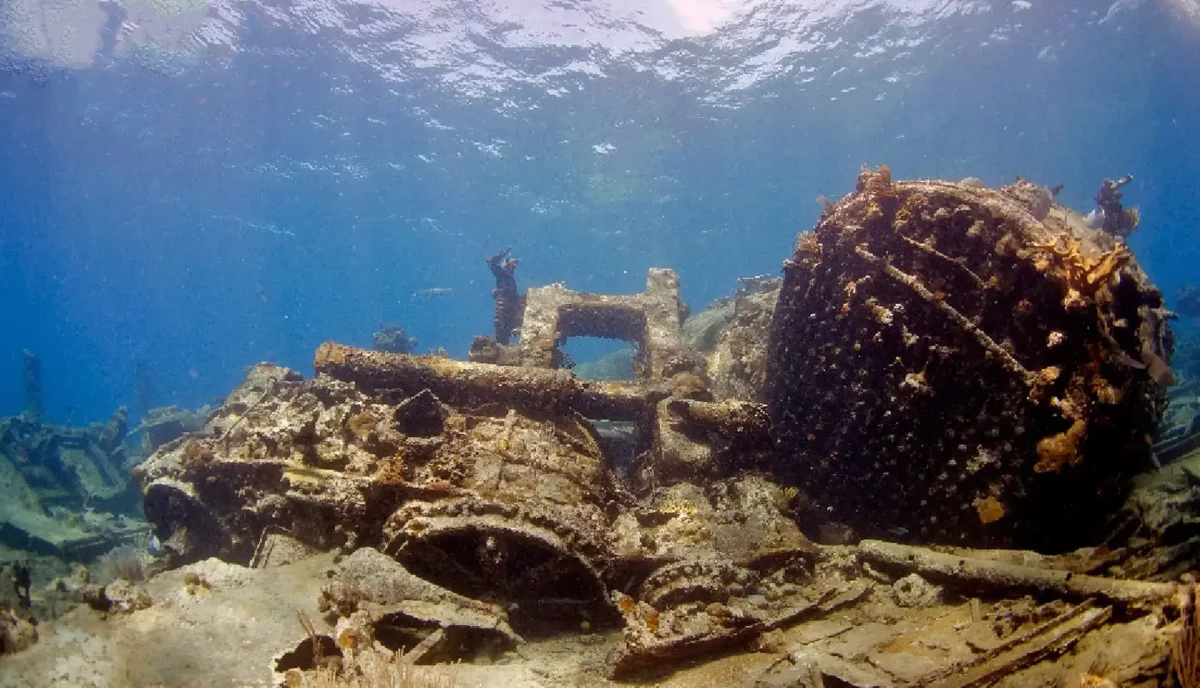
The structure is partially broken up compared to the Chikuzen but the boiler and several sections of hull make for an interesting dive, and the surrounding sand flats typically hold stingrays and the occasional nurse shark. If you are making the trip to Anegada for the Chikuzen, adding the Rocus as a second dive the same day or the following morning is an easy decision.

Local knowledge is required.

Read the full Anegada wreck story

Coral-encrusted boiler from the Rocus wreck dive site near Anegada in the British Virgin Islands
The Rocus wreck off Anegada — its coral-covered boiler is one of the most photogenic structures in BVI wreck diving.

Planning Your Dive Week Around These Sites

Most of these sites fall naturally into a geographic circuit that works well as a week-long charter itinerary. A practical approach:

Days 1–2: Tortola area and Sir Francis Drake Channel — Painted Walls, the Rhone, Vanishing Rocks on Cooper Island.

Days 3–4: The Dogs and Virgin Gorda — Angelfish Reef, the Chimney, Great Dog airplane, Kodiak Queen. The North Sound makes an excellent anchorage base for this section.

Day 5: Anegada — the Chikuzen in the morning in flat conditions, Rocus in the afternoon if conditions hold. Overnight at Setting Point.

Days 6–7: Return south via Norman Island — the Indians, Wreck Alley, the Caves. Finish near Tortola.

Conditions and your group’s pace will shape the actual week. Your captain will adapt the plan as needed. The flexibility to wait for the right morning to dive the Chikuzen, to add a site, to drop anchor somewhere new — is one of the real advantages of a private charter over a shore-based dive operation.

See our full sail and scuba BVI itinerary

A Note on Dive Conditions

BVI water temperatures run around 85°F in summer and the high 70s in winter — a 3mm shorty is ample for divers who get cold in winter, and many people dive in a rash guard in summer and winter. Visibility averages 60–80 feet across the reef sites and can be exceptional on the wrecks when conditions are right.

The sites in the Sir Francis Drake Channel are generally protected and diveable in a wider range of conditions than the north-facing and offshore sites. The Chikuzen specifically requires calm weather — if there is any swell running, do not attempt it. Your captain will know when the window is right.

Night diving is available on dedicated scuba charter yachts. The BVI is excellent for it — octopus, lobster, spotted morays hunting, and bioluminescence in the water column on a dark night. Ask us and we will find the right vessel and anchorage.

Finding the Right Charter for Your Diving Goals

Not every charter yacht in the BVI offers the same scuba capability. Some carry onboard compressors and a divemaster or Instructor as part of the crew — these are your dedicated dive vessels, built around getting divers in the water. Others can accommodate casual diving with tanks refilled ashore. And on any yacht, rendezvous diving through a local operator is always an option.

We match divers to the right vessel based on your group’s experience levels, how much of the week you want to centre around diving, and what else you want to do between dives. Tell us what matters and we will do the matching.

Back to the BVI Scuba Diving Guide

Author Bio

Kerry Hucul is a yacht charter specialist with Epic Yacht Charters and a PADI/NAUI certified Instructor with more than 5,000 dives logged in the British Virgin Islands, Caribbean, Galapagos and North America. Every site on this list has been personally dived and recommended.

Travel Agents
Scroll to Top

Looking for more options?

Our main collection features a hand-picked selection of truly exceptional yachts — chosen for their quality, crew, and overall charter experience. If you’d like to explore a broader range of yachts across additional destinations, you can view our full worldwide charter portfolio.