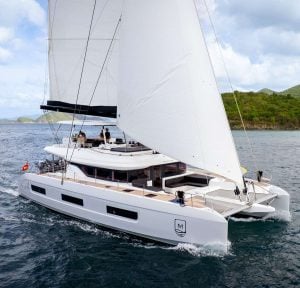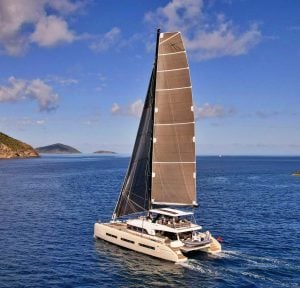
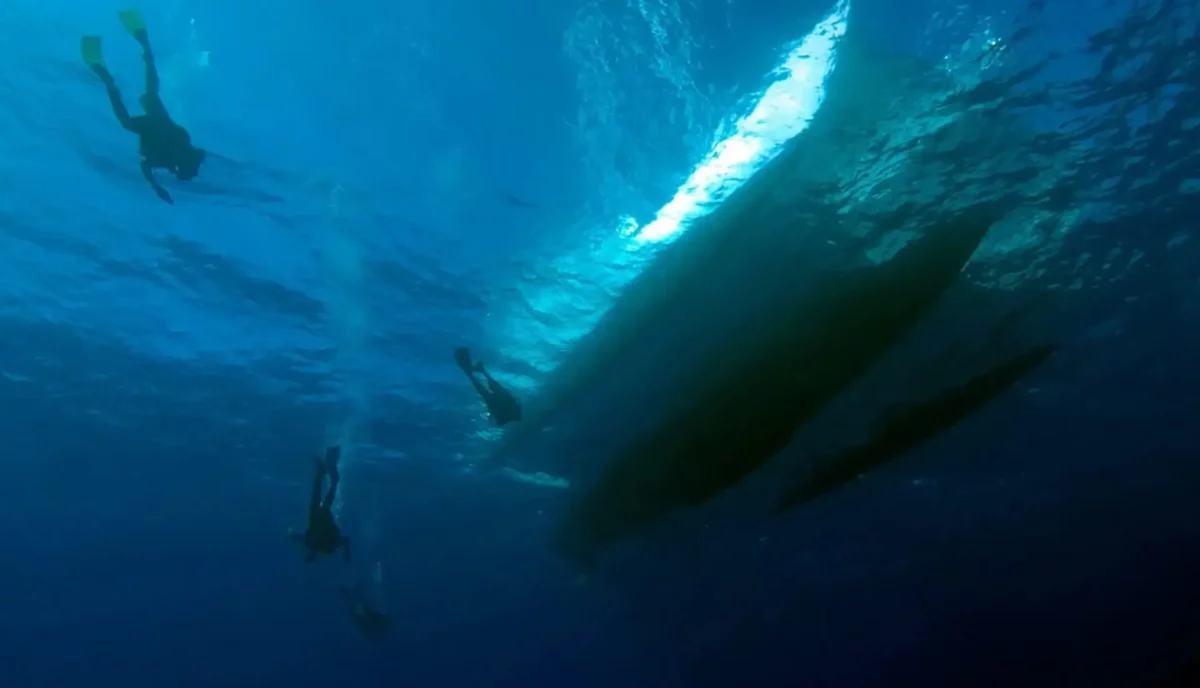
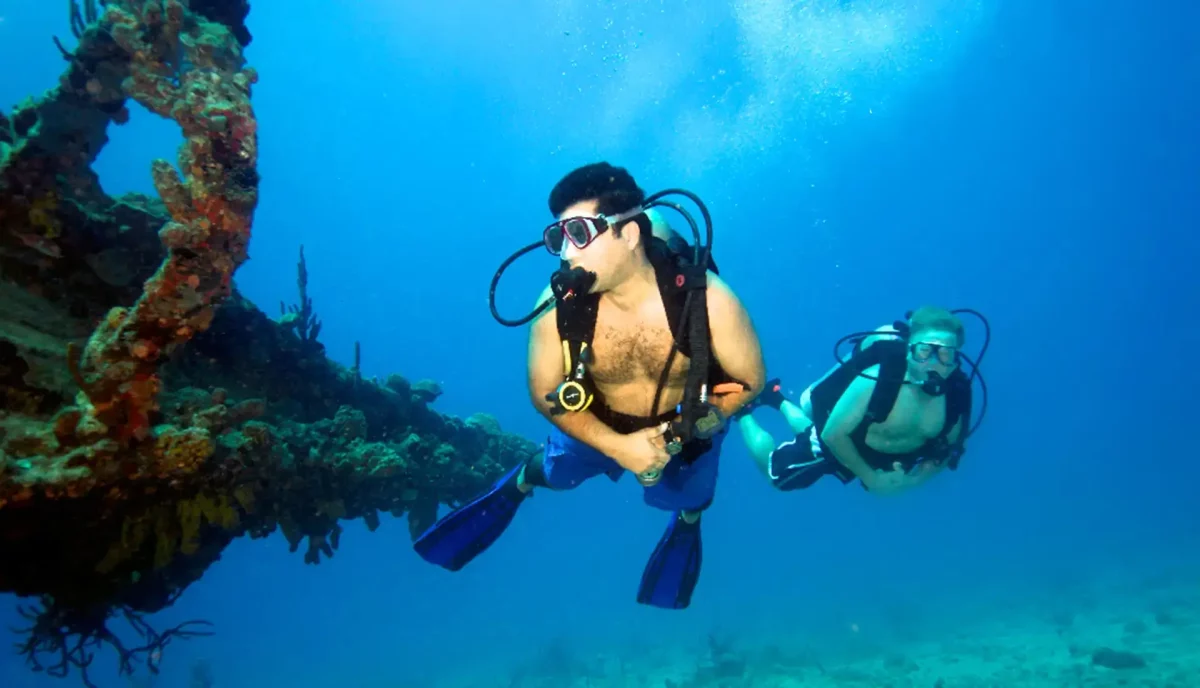

BVI sail and scuba diving go together better than almost anywhere else in the Caribbean — and this itinerary is built around doing both properly. I have spent over 400 weeks sailing and diving in the British Virgin Islands. This itinerary is one I put together for clients who want a genuine dive focus without sacrificing the sailing, the beaches, and the evenings that make a BVI charter what it is.
It runs seven nights and eight days, embarking and returning from Road Town, Tortola. It covers the Sir Francis Drake Channel wrecks and reefs, the Dogs and Virgin Gorda, Anegada for the Chikuzen, and Norman Island on the way home. Every dive site on this itinerary has been personally dived — most of them many times.
The itinerary below is a framework, not a contract. Weather, conditions, and your group’s pace will shape the actual week. The Chikuzen especially requires flat calm — if the weather doesn’t cooperate on Day 4, your captain will adjust and find the window later in the week. That flexibility is one of the real advantages of a private charter over a shore-based operation.
Day 1 — Road Town to Norman Island
Embark from Road Town in the morning. Clear customs, stow gear, get settled, and motor or sail south — Norman Island is about an hour away depending on wind.
Norman Island is famed for its connection to buried treasure and Robert Louis Stevenson’s Treasure Island. Anchor at Privateer Bay and use the afternoon for a check-out dive at Angelfish Reef on the south side of Norman Island — a shallow, forgiving site that lets everyone confirm their gear is set up correctly and gets newer divers comfortable in BVI conditions before the more serious diving begins.
In the evening, take the tender to the William Thornton — the Willy T — a converted Baltic trader now permanently moored as a floating bar and restaurant. Cold beers, fresh fish, and a jumping-off platform from the upper deck for those who need it. This is a BVI institution.
Overnight: Privateer Bay or the Bight, Norman Island.
Dive: Angelfish Reef check-out dive. Depth 20–45 ft, all levels.
Day 2 — Salt Island: The RMS Rhone
This is the centrepiece of the first half of the week. Sail east along the Sir Francis Drake Channel — Dead Chest to port, Peter Island to starboard — and pick up a mooring ball off Salt Island.
The Rhone gets two dives and both are necessary to cover the full wreck.
The morning dive takes you to the bow section at 75 feet. This is the deeper, more dramatic half — the hull structure is largely intact and the fish life is extraordinary. Fang, the resident barracuda, has been a fixture at this site for years. Hawksbill turtles rest on the hull. The brass porthole with intact glass is worth finding, and look for the silver teaspoon embedded in the gearbox — a detail that surprises people every time.
Surface interval ashore at Salt Island. It is a tiny, quiet community with salt ponds that locals have harvested for centuries. Worth a walk.
The afternoon dive covers the shallow stern section. The bronze propeller — the second ever produced and the oldest in existence — sits at around 20 feet. Strong snorkellers can free-dive it. The debris field between the two sections rewards slow exploration.
If the group has energy and conditions are right, Painted Walls on Dead Chest Island is an excellent third dive or a strong first dive of the day before moving to the Rhone — it is five minutes away and the canyon walls are worth seeing.
Overnight: Manchioneel Bay, Cooper Island. Cooper Island Beach Club for dinner — book ahead.
Dives: RMS Rhone bow (75 ft, intermediate/advanced), RMS Rhone stern (20 ft, all levels). Optional: Painted Walls (20–40 ft, novice).


Day 3 — Virgin Gorda: Kodiak Queen and the Baths
Sail north through the channel and up to Virgin Gorda. Morning dive on the Kodiak Queen off Long Bay — the Pearl Harbor survivor turned artificial reef, now sitting at 55–65 feet with a giant kraken sculpture on the hull. An unusual and interesting dive that pairs well with the Rhone from yesterday as a wreck comparison.
Afternoon at the Baths. The granite boulder formations on Virgin Gorda’s southern tip are one of the BVI’s most photographed landscapes. Walk through Devil’s Bay, swim through the boulder passages, and have lunch at Top of the Baths restaurant above the beach.
If there is time and energy, the North Sound makes an excellent late afternoon sail — Bitter End, Saba Rock, and Leverick Bay are all good options for the evening.
Overnight: North Sound, Virgin Gorda (Bitter End or Gun Creek anchorage).
Dive: Kodiak Queen (55–65 ft, intermediate).
Day 4 — The Dogs: Angelfish Reef, The Chimney, The Airplane
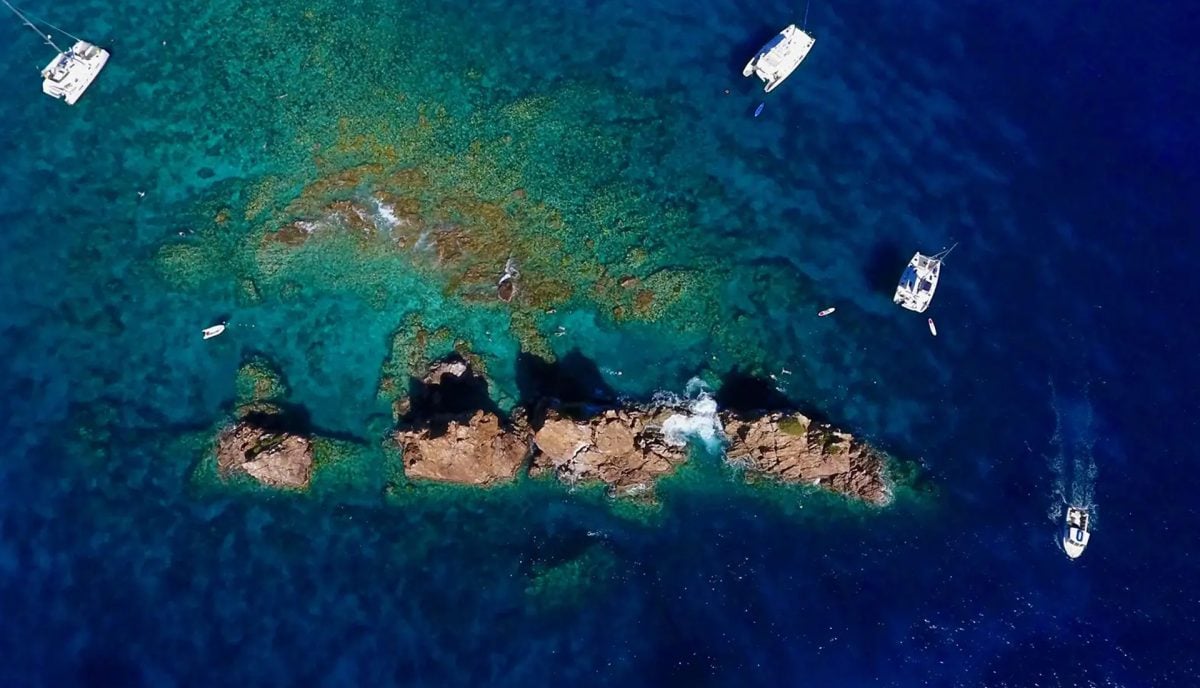
The Dogs — a cluster of small uninhabited islands between Tortola and Virgin Gorda — hold some of the best reef diving in the BVI and are most efficiently reached by charter yacht.
Morning dive at the Chimney on Great Dog Island. The chimney-like gap between two rock formations creates a swim-through lined with cup corals and sponges. Beyond the chimney, a series of canyons and overhangs worth a full dive to explore. Bring a light.
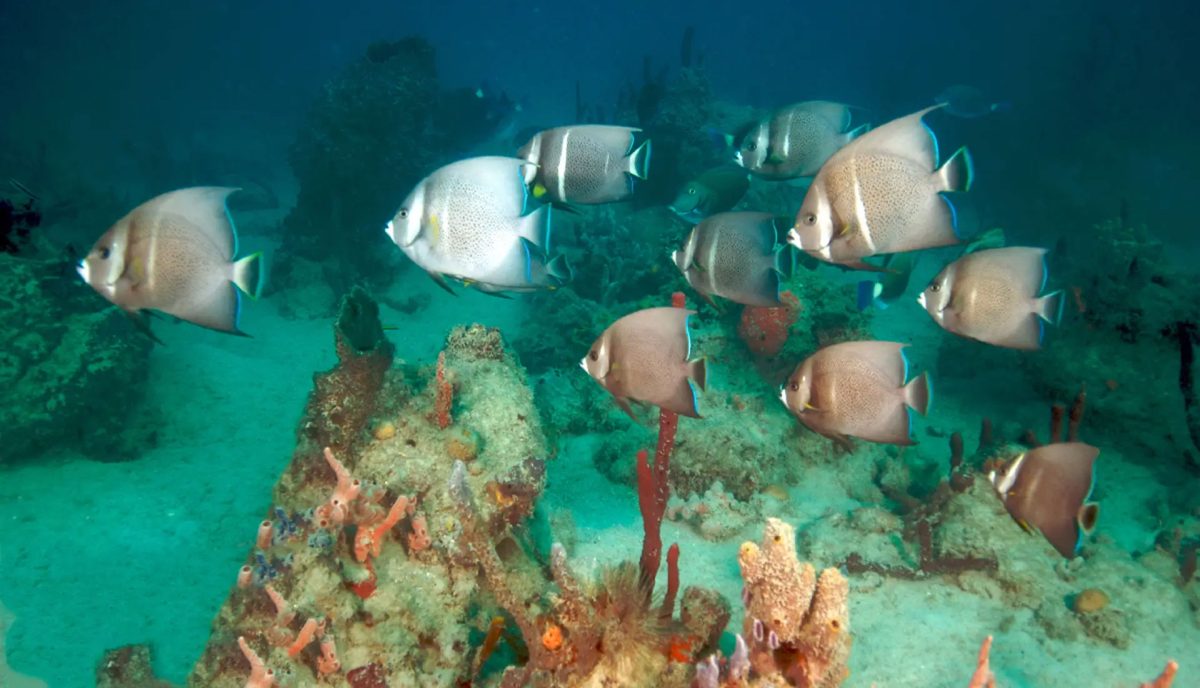
Second dive: Angelfish Reef, also on Great Dog Island. French and queen angelfish throughout, large barrel sponges along the drop-off, moray eels in the crevices. The standard approach is to start deep and work up through the canyons as your air consumption increases.
Optional third dive in the afternoon: the Great Dog airplane — the Shorts 360 that aborted takeoff from Virgin Gorda airport in 1993 and now sits in 40 feet of sand minus its wings and tail. Compact but unusual, and it pairs naturally with Angelfish Reef.
Overnight: anchor off Great Dog or sail back toward Guana Island (Muskmelon Bay is excellent — calm, protected, beautiful).
Dives: The Chimney (25–50 ft, intermediate), Angelfish Reef (20–45 ft, all levels), optional airplane (35–45 ft, novice/intermediate).
See the full dive site guide →


Day 5 — Anegada: The Chikuzen
This is the second day the itinerary is built around. Wake early, check the conditions with your captain, and if the forecast is right — flat seas, no swell — make the passage north to Anegada.
The Chikuzen sits 7.5 miles northwest of Tortola in the middle of open sand flats. The passage takes around two hours in a charter yacht. You will know the conditions are right when the sea surface is glassy — if there is any swell running, do not attempt it. The mooring pickup in any sea state is difficult and the dive is significantly less enjoyable.
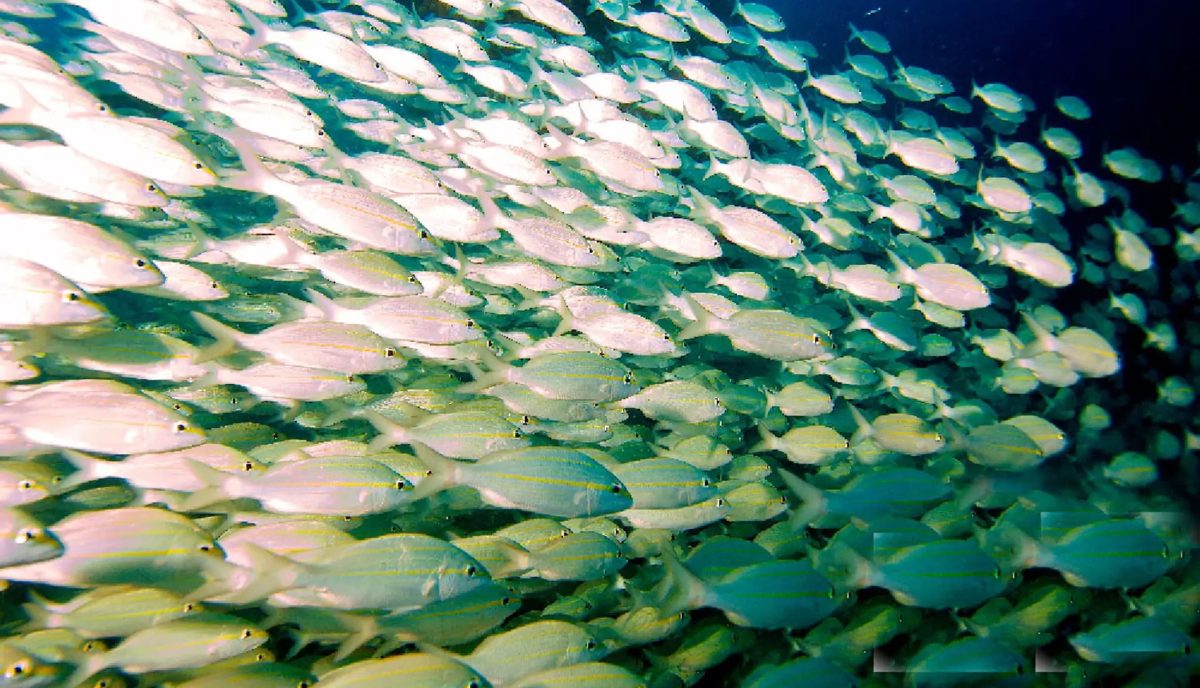
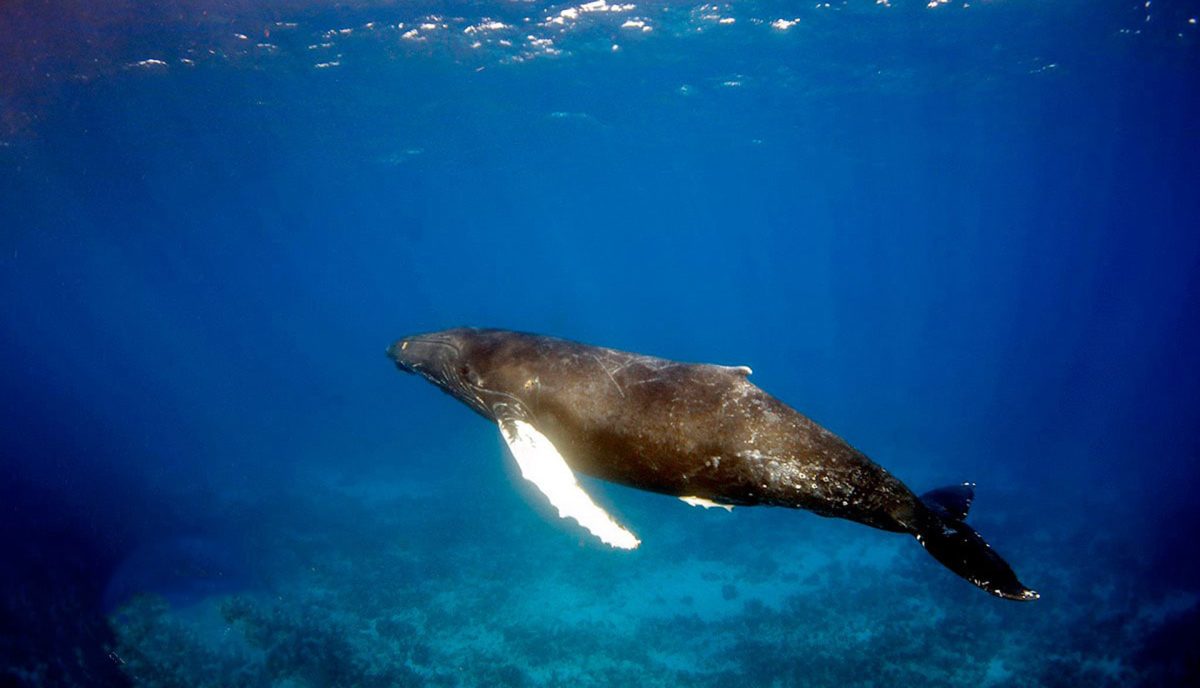
When conditions are right, nothing in the BVI compares. Descend the mooring line through a cloud of barracuda — hundreds of them hanging in the water column above the wreck. Goliath grouper in the hundreds-of-pounds range live on the hull. Horse jack, almaco jack, spadefish, cobia, and king mackerel off the stern. Southern stingrays on the sand flats. The whale migration path passes directly overhead — if you are lucky with timing, you will hear them.
One dive is standard. The wreck is 246 feet long and there is enough to see in a single tank if you work it methodically.
After the dive, sail east to Anegada’s Setting Point for the afternoon and evening. Anegada lobster is the reason most people anchor here. Book a table at Neptune’s Treasure or Cow Wreck Beach Bar well in advance — they fill up. Rent scooters and ride across the island to the north shore beaches, which are among the finest in the BVI.
Overnight: Setting Point, Anegada.
Dive: Chikuzen wreck (45–80 ft, intermediate/advanced, flat conditions only).


Day 6 — Anegada to Guana Island
After the Rocus morning dive, sail southwest. Guana Island is a natural halfway stop between Anegada and Jost Van Dyke — Muskmelon Bay on the south side is one of the most protected and beautiful anchorages in the BVI. Calm, quiet, and almost always uncrowded.
Afternoon dive at Grand Central Station — the rocky pinnacle system off Guana Island’s southern tip with its signature cleaning stations where large fish queue up for the resident shrimp and wrasse. Eagle rays are a regular presence here. The site gets its name from the constant traffic — fish coming and going in every direction. Depth runs 25–60 feet, intermediate level, and the marine life density rewards slow patient divers who pick a spot and watch rather than swim through.
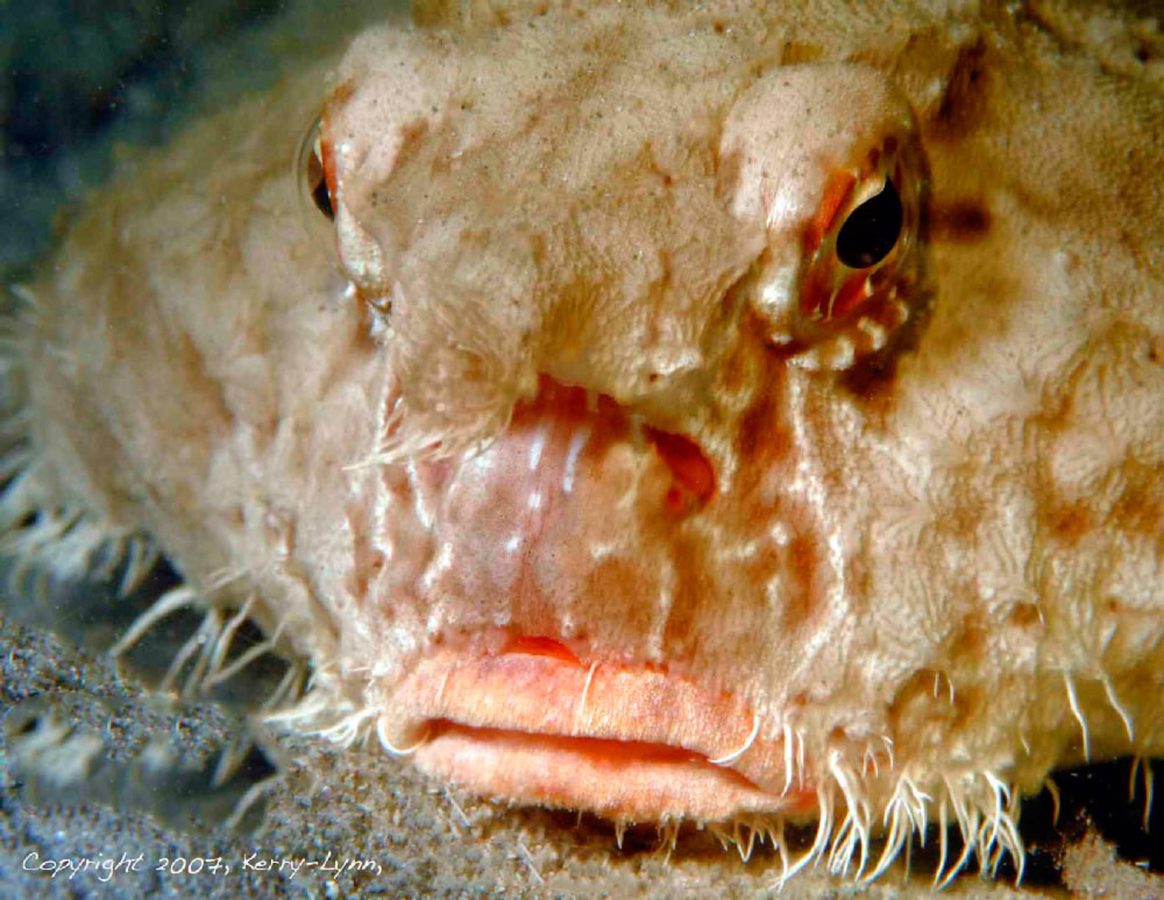
If the group wants a night dive, Muskmelon Bay itself is excellent after dark. Batfish, octopus, lobster, and the bioluminescence in the water column make it worth the late entry.
Overnight: Muskmelon Bay, Guana Island. Quiet evening on the boat — this anchorage has no bars or restaurants ashore. It is a fabulous night dive.
Dive: Optional Rocus wreck (5–40 ft), Grand Central Station (25–60 ft, intermediate), optional night dive at Muskmelon Bay.


Day 7 — Jost Van Dyke
Morning sail from Guana Island to Jost Van Dyke — under an hour. Anchor at White Bay.
Any dive today must be finished by noon — that gives you a full 24 hours before a noon departure on Day 8, or well over 24 hours before any afternoon flight. If the group wants one final dive, Green Cay is a natural stop on the way to Jost Van Dyke — no detour required. The Playground dive site on the south side of Green Cay offers pillar coral formations, schooling barracuda, turtles, and nurse sharks through the pinnacles. Finish by noon and continue the short sail around to White Bay.
Spend the afternoon on one of the finest beaches in the BVI. Swim ashore to the Soggy Dollar Bar — no dock at White Bay, which is why the bar is named what it is — and order a Painkiller. Coconut rum, pineapple juice, orange juice, cream of coconut, nutmeg on top. Repeat as required. Ivan’s Stress Free Bar at the far end of the beach is worth the walk.
For dinner move around to Great Harbour and try Foxy’s — live music most evenings and a genuinely good kitchen. A fitting final evening.
Overnight: White Bay or Great Harbour, Jost Van Dyke.
Optional dive: The Playground, Green Cay (25–45 ft, novice/intermediate) — finish by noon only.


Day 8 — Return to Road Town
Late afternoon sail on Day 7 or early morning on Day 8 back to Road Town — 1.5 to 2 hours from Jost depending on wind and your departure time.
Disembark Road Town. Transfer to Beef Island Airport (EIS) for connections via San Juan or St Thomas.
No diving today. Your last dive was no later than noon on Day 7 — that gives you a full 24 hours before any same-day or next-morning departure.
Optional Alternative Routing — Days 6 and 7
If your group wants to keep diving through Day 6 and the weather cooperates, there is a strong alternative to the Guana-to-Jost routing above.
After the Chikuzen on Day 5, sail south rather than staying at Anegada overnight. On Day 6 morning,
Sail to Cooper Island and dive Vanishing Rocks — the pillar coral formations on the west side of Cistern Point with their resident moray eels and barracuda.
Then dive The Indians off Norman Island’s western tip — the four rocky pinnacles with the 15-foot swim-through tunnel, dense fish life, and the cavern system on the north side. One of the best shallow reef dives in the BVI and a natural complement to the wreck-heavy week you have had.
Day 7 becomes a relaxed sail toward Jost Van Dyke — stop at the Soggy Dollar for a Painkiller on the way, then continue to Road Town for the evening or early morning departure.
This routing works best when the Anegada passage on Day 5 is done early enough to allow a southern return sail that afternoon. Discuss it with your captain on Day 4 once the Chikuzen conditions are confirmed.


Dive Summary
Day 1: Angelfish Reef check-out dive — Norman Island
Day 2: RMS Rhone bow and stern — Salt Island. Optional: Painted Walls
Day 3: Kodiak Queen — Virgin Gorda
Day 4: The Chimney, Angelfish Reef, optional airplane — Great Dog Island
Day 5: Chikuzen wreck — Anegada (conditions permitting)
Day 6: Optional Rocus, Grand Central Station — Guana Island. Optional night dive
Day 7: Optional Playground — Green Cay (finish by noon)
Total: 7–11 dives depending on conditions, options taken, and group energy. Three to five dives is a realistic target for most groups — the itinerary builds in flexibility so the best sites get priority when conditions align.
Practical Notes
Embark/disembark: Road Town, Tortola. Fly into Beef Island Airport (EIS) — connections from Miami, New York, and other US hubs via San Juan or St Thomas.
Best time of year: November through June for most reliable conditions. July through October is hurricane season — charters operate but weather is less predictable.
Water temperature: 85°F summer, high 70s winter. A 3mm shorty or rash guard covers most divers most of the time.
Visibility: 60–80 feet on average, often better on the offshore wrecks in settled conditions.
Flying after diving: Minimum 24 hours surface interval before flying after multiple days of diving. Plan your final dive accordingly — finish by noon on your last diving day if you have a noon or later departure the following day.
Night diving: Available on dedicated scuba charter yachts. Muskmelon Bay, the Rhone area, and Norman Island are all excellent after dark.
Anegada lobster season: Closed August 1 through October 31. Restaurants remain open but serving frozen product during this period.
Planning Your Dive Charter
This itinerary works best on a dedicated scuba charter yacht with an onboard compressor, full rental gear, and a divemaster or instructor on crew. It can be adapted for casual diving with rendezvous operators for the reef sites, though the Chikuzen and Rocus are best approached with your own vessel and crew who know the conditions.
Tell us your group’s dive experience levels, what else you want from the week beyond diving, and your budget range. We will match you to the right vessel and refine this itinerary around your group.
AUTHOR’S BIO
Kerry Hucul is a yacht charter specialist of Epic Yacht Charters and a PADI/NAUI certified Instructor with more than 5,000 dives logged in the British Virgin Islands, Bahamas, Galapagos, North America and Caribbean. Every scuba charter yacht in the Epic fleet has been personally reviewed.