Why an 80ft Power Catamaran Feels Nothing Like an 80ft Motor Yacht
One of the most common questions we get from charter guests is: “Should I choose a motor yacht or a power catamaran?” It’s a fair question. After all, if two yachts are both 80ft long, surely the experience onboard is going to be pretty similar? Not quite.
In reality, an 80ft power catamaran and an 80ft motor yacht can feel completely different once you’re onboard. One prioritises space, stability, and relaxed living. The other focuses on service, style, and the classic luxury yacht experience.
Neither is better than the other. The right choice simply depends on how you want to spend your week.
So before you decide which yacht to charter, here’s what you should know.
The Biggest Difference? Space.
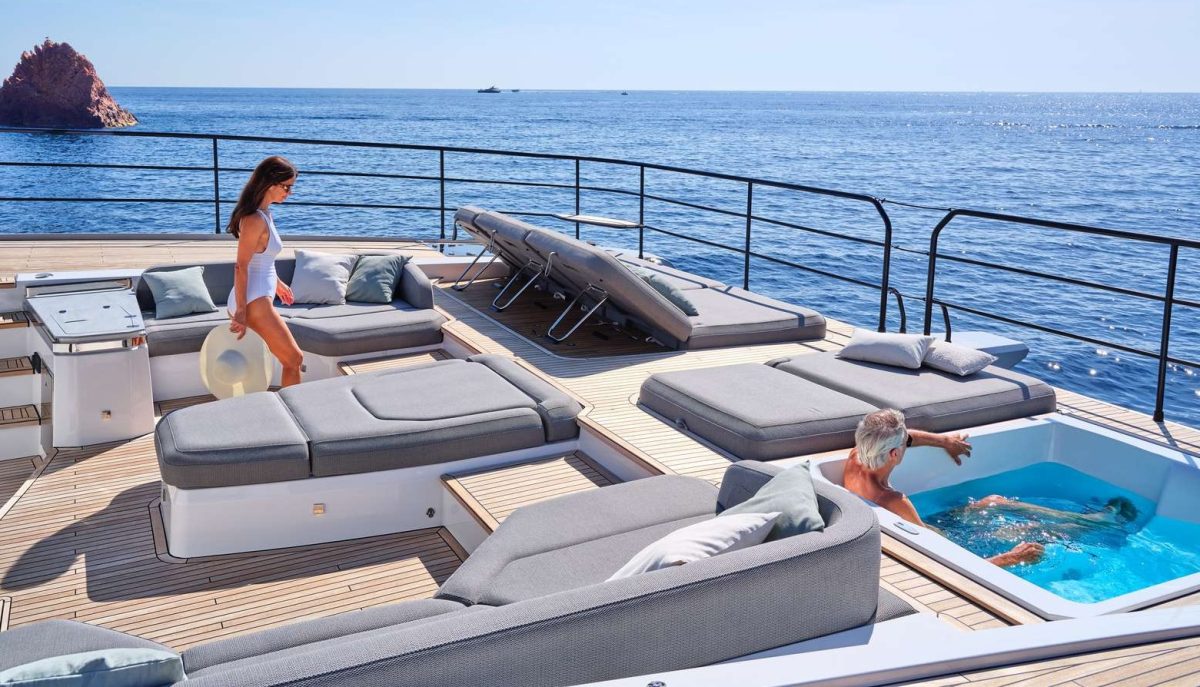
This is where power catamarans really begin to shine. Many first-time charter guests assume that if two yachts are the same length, they’ll offer a similar amount of living space. In reality, an 80ft power catamaran can often feel more comparable to a 100–120ft motor yacht than to an 80ft motor yacht. Why?
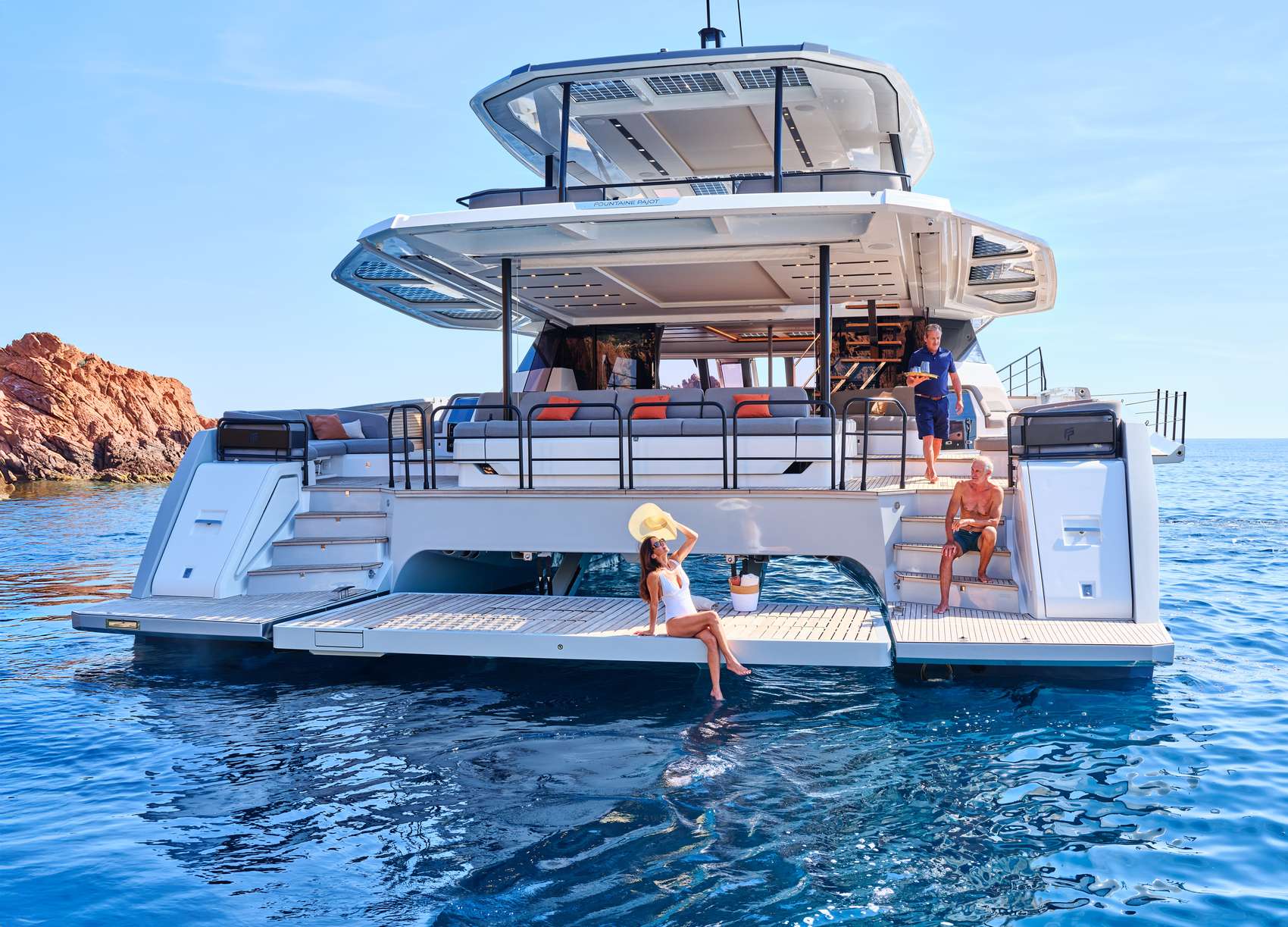
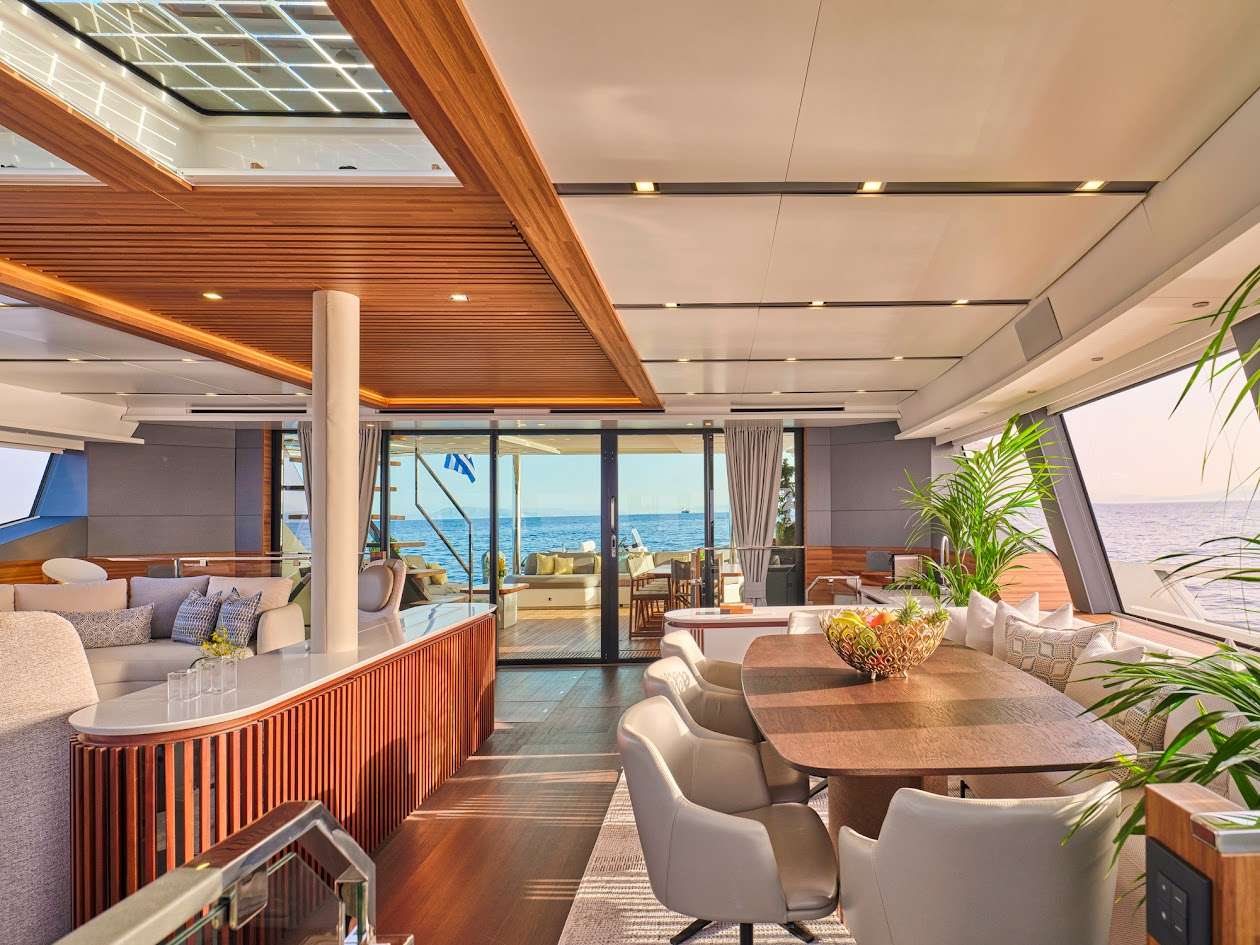
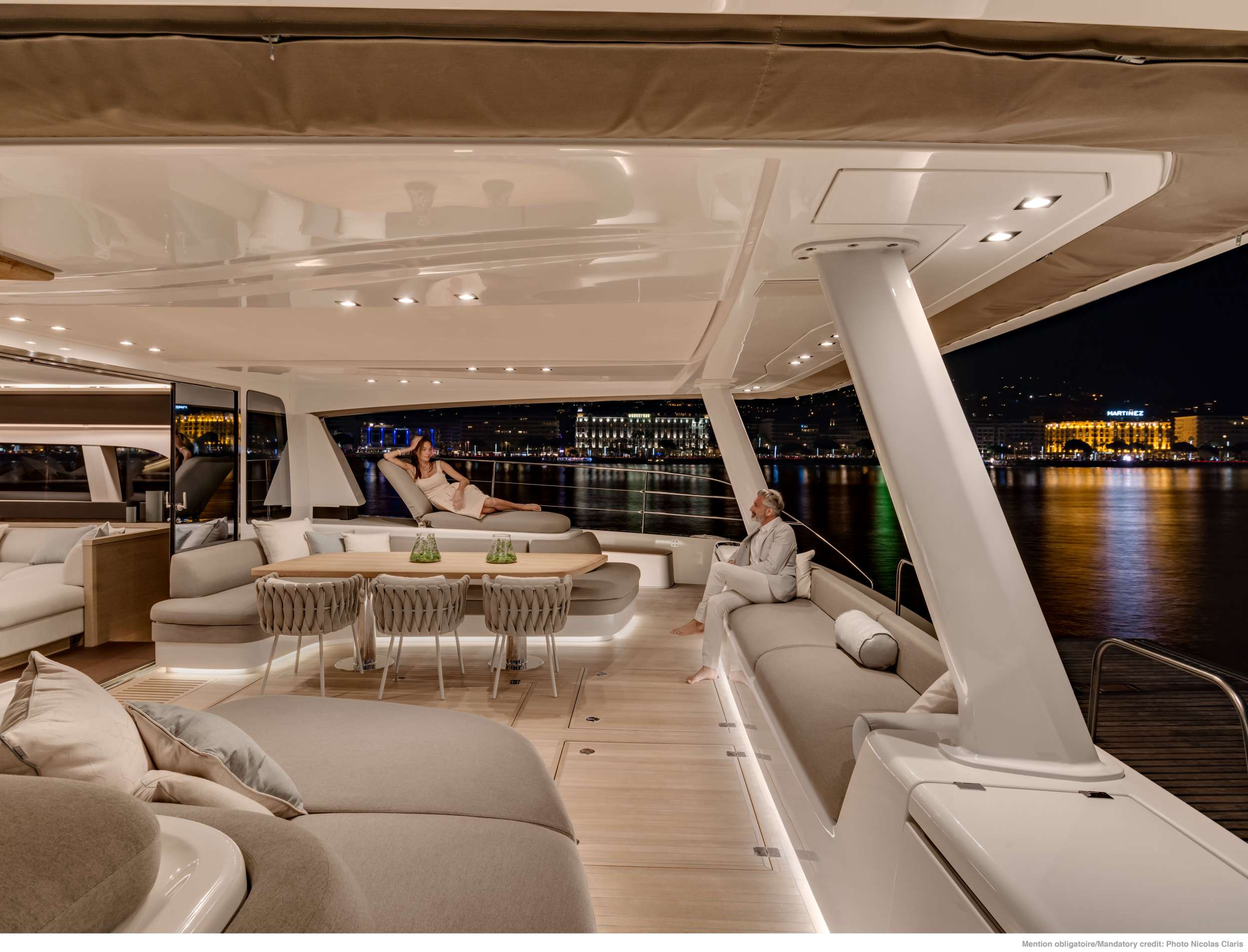
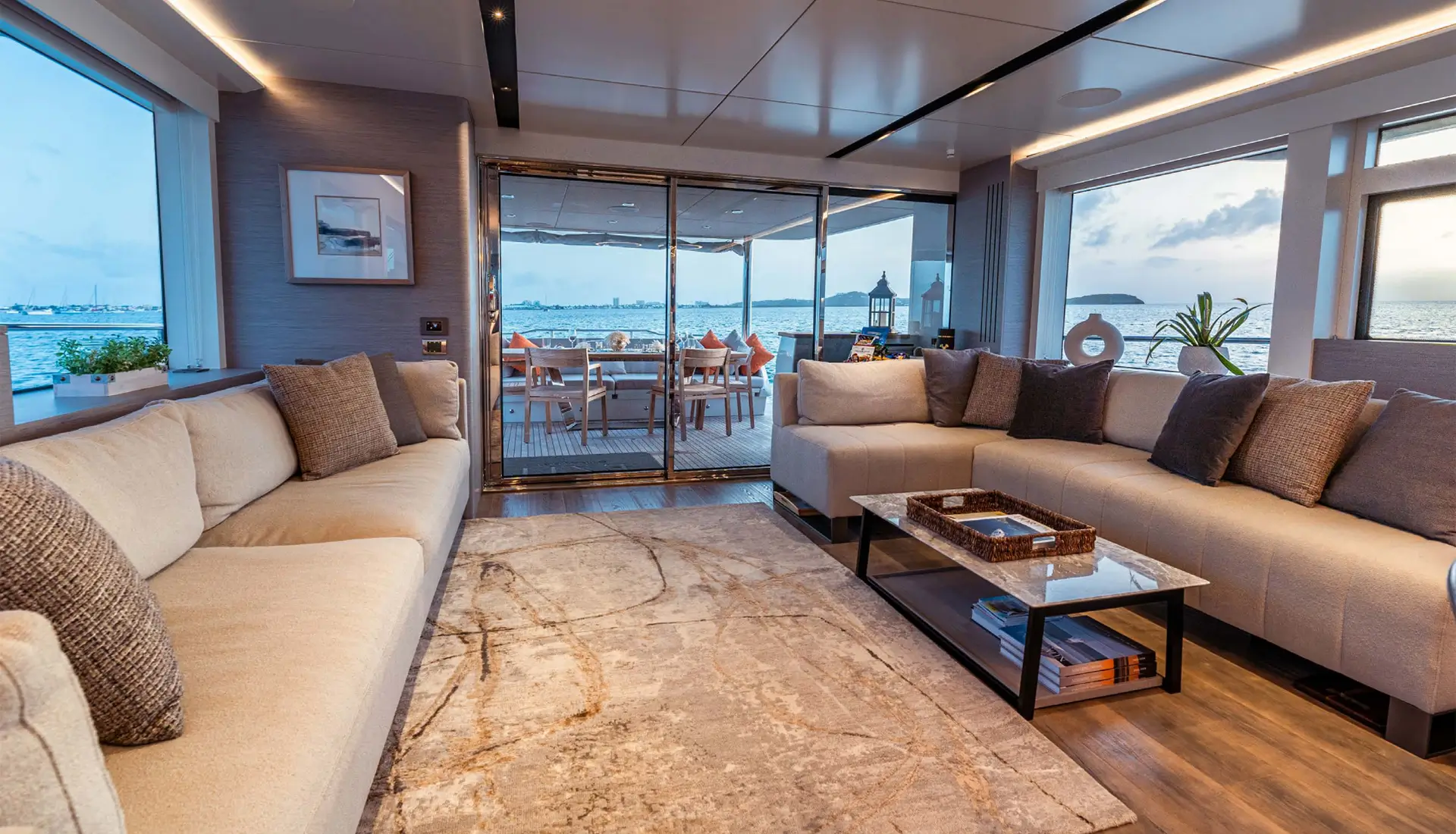
Because instead of one hull, a power catamaran has two. The additional width creates enormous saloons, larger outdoor entertaining areas, expansive aft decks, and a feeling of space that surprises many guests. Imagine putting eight guests onboard both yachts.
On a motor yacht, guests are spread vertically across multiple decks. On a power catamaran, guests are spread horizontally across a platform that can be nearly twice as wide.
The result is a completely different onboard experience.
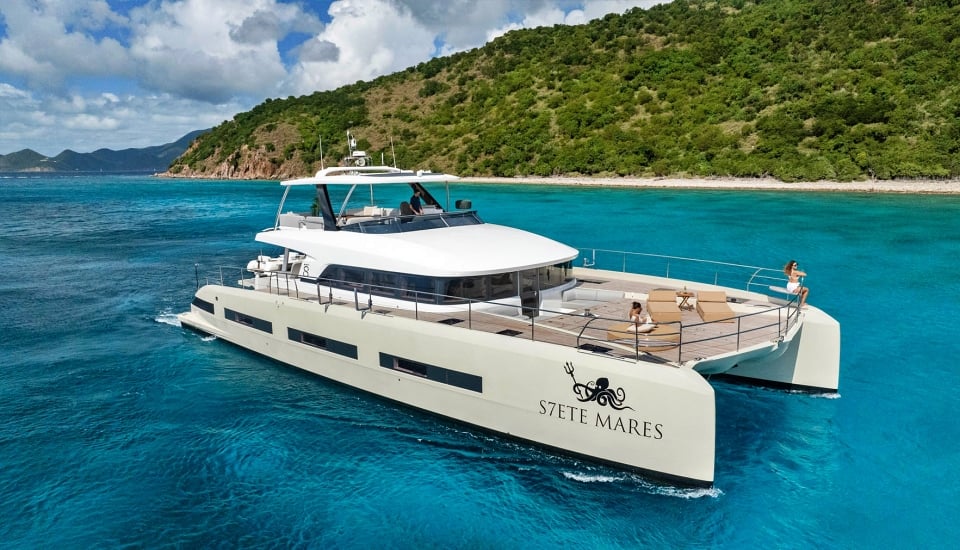
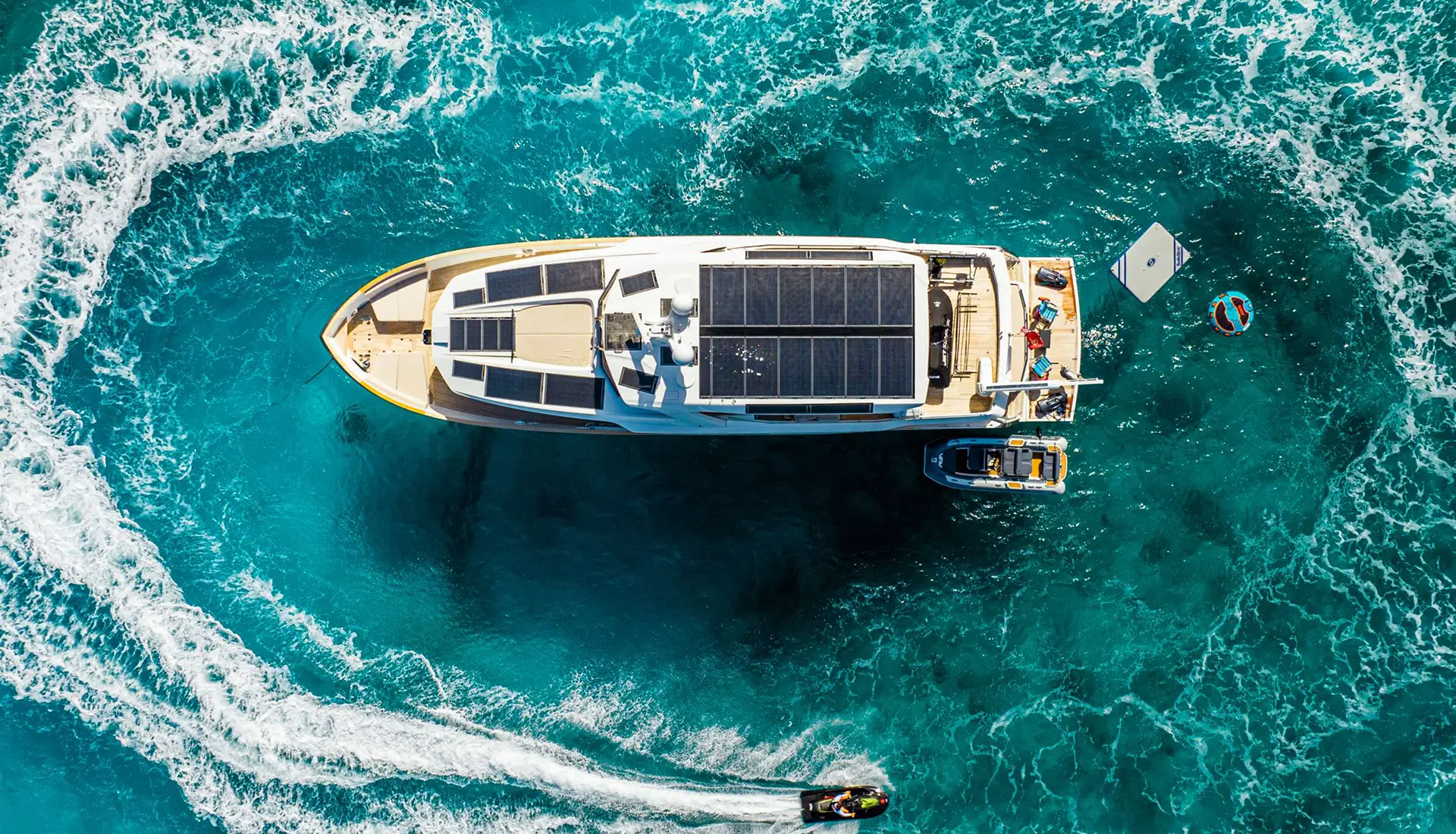
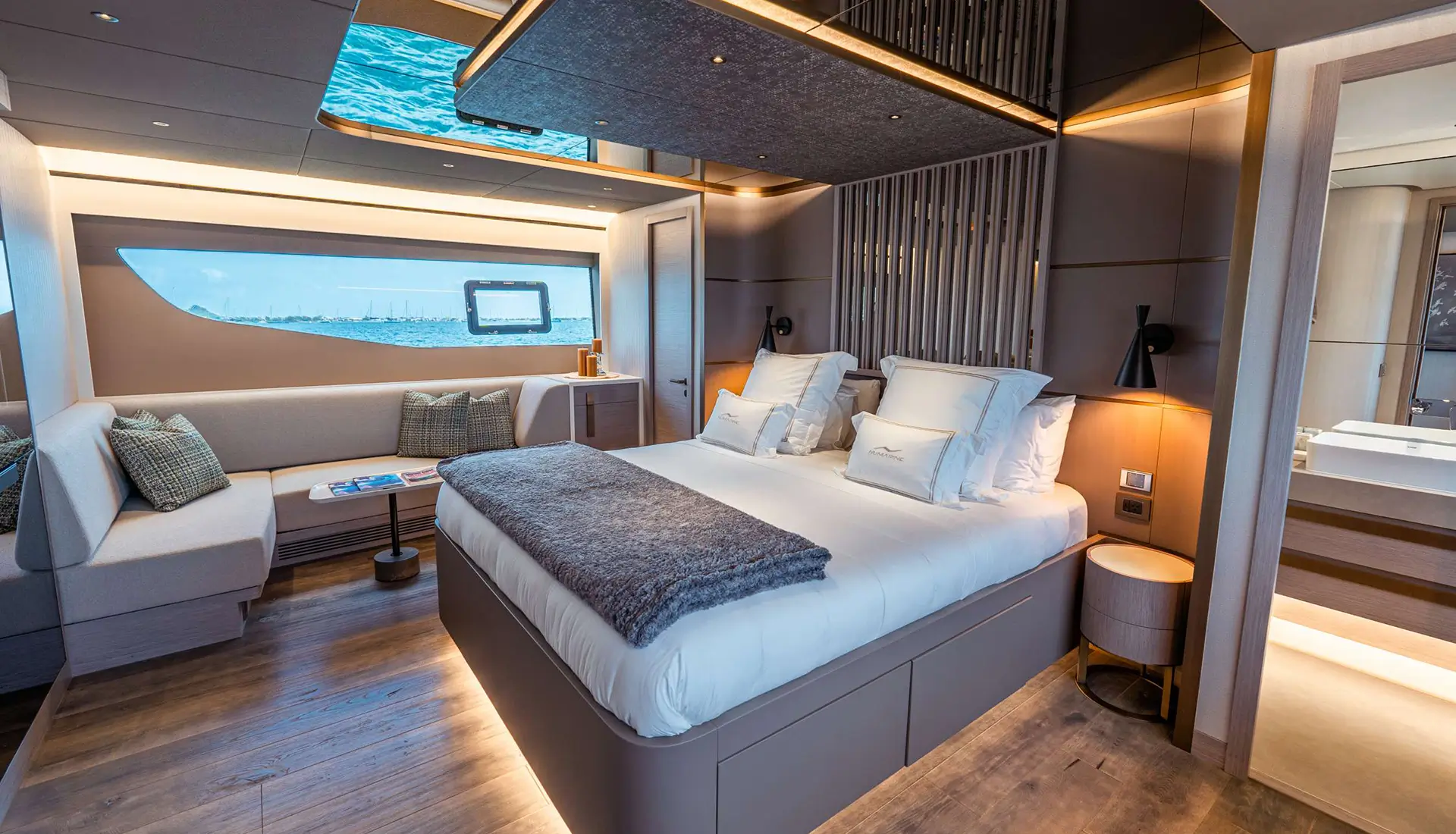
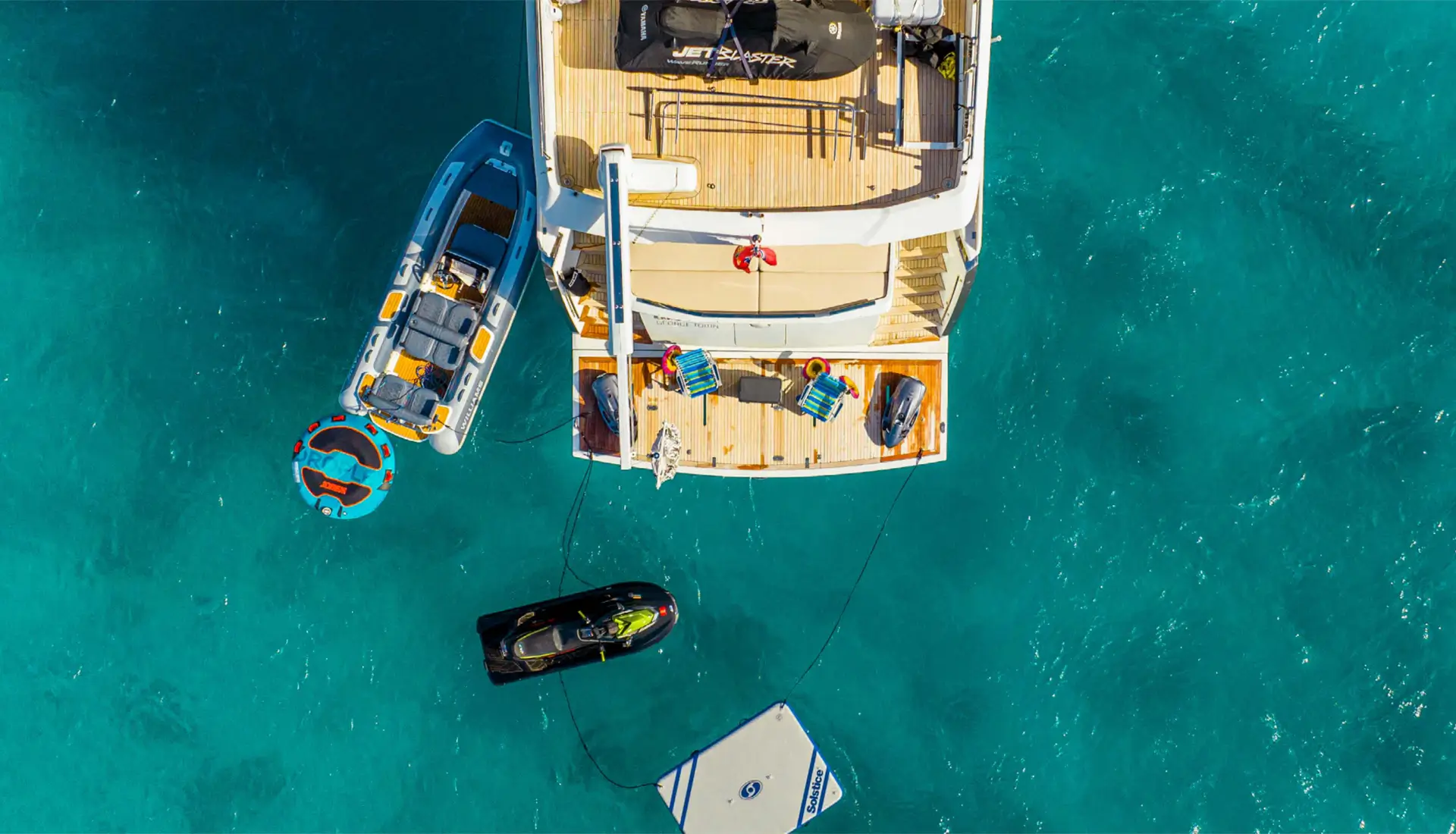
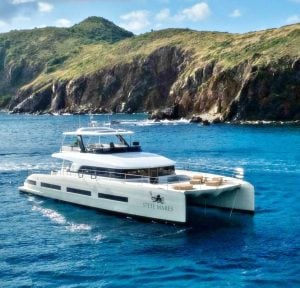
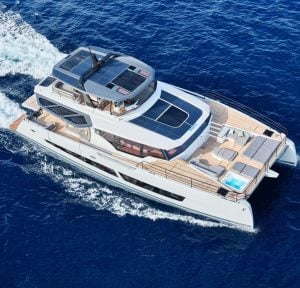
Yachts such as Alina and Siete Mares are excellent examples of how much usable space modern power catamarans can offer. Large social areas, spacious cabins, and seamless indoor-outdoor living make them particularly popular with families and groups who plan to spend plenty of time onboard.
Stability: It’s Not As Simple As You Think
Another common assumption is that catamarans are always more stable. The reality is a little more nuanced.
Power catamarans are incredibly stable thanks to their twin-hull design. At anchor, they generally experience less rolling than a traditional monohull yacht, which many guests find reassuring—particularly if they are new to yachting. However, catamarans are not immune to movement. A side-on swell can still create rolling, especially at anchor.
Motor yachts approach stability differently. Most modern motor yachts are equipped with stabilisers that dramatically reduce rolling both underway and at anchor. In rougher conditions, they can often handle weather exceptionally well.
For charter guests, both options offer a comfortable experience. They simply achieve it in different ways.
Service & Atmosphere
One of the biggest differences between a power catamaran and a motor yacht isn’t the yacht itself—it’s the atmosphere onboard.
Motor yachts generally carry larger crews than power catamarans of a similar size. More crew often translates into a highly service-oriented experience, with someone available throughout the day to assist with meals, drinks, activities, and guest requests.
Power catamarans typically operate with smaller crews. The service is still exceptional, but the experience often feels more personal and relaxed. It’s less about the quality of service and more about the style of service.
Some guests love the polished luxury and seamless attention that comes with a larger motor yacht crew. Others enjoy building relationships with a smaller crew who quickly become part of the experience.
Both approaches have their appeal.
Where Are You Chartering?
The destination itself can sometimes make the decision easier. In destinations such as the Bahamas, power catamarans enjoy a significant advantage thanks to their shallower draft—the amount of yacht sitting below the waterline.
The Bahamas are famous for their crystal-clear shallow waters, sandbars, and beaches. Because power catamarans sit higher in the water, they can often anchor closer to shore and access areas that larger motor yachts simply can’t reach.
That doesn’t mean a motor yacht can’t charter successfully in the Bahamas. Far from it. But guests who dream of anchoring just steps from a white-sand beach often find power catamarans particularly appealing.
In many Mediterranean destinations, however, both vessel types work equally well and the decision becomes more about the onboard experience than the destination itself.
What Surprises Guests Most?
After years of working in yachting, we’ve noticed that guests are often surprised by different things depending on the yacht they choose.
On power catamarans, it’s usually the space. Guests step onboard expecting a yacht and instead find something that feels closer to a floating villa. The amount of outdoor living space and room to spread out often exceeds expectations.
On motor yachts, it’s usually the atmosphere. Multiple decks, larger crews, elegant interiors, and dedicated spaces for dining, entertaining, and relaxing create a sense of occasion that many guests associate with the classic luxury yacht experience.
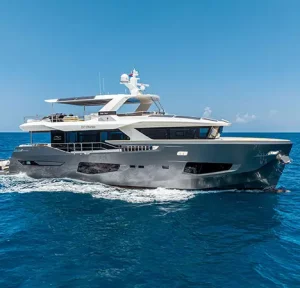
Take Exit Strategy as an example. Sleek, stylish, and beautifully designed, she delivers exactly the type of experience many people picture when they imagine chartering a luxury motor yacht.
Which One Would We Recommend?
The honest answer? It depends entirely on who is travelling.
First-Time Charter Guests
We often find ourselves recommending power catamarans to first-time charter guests. The combination of stability, space, and value makes them an incredibly approachable introduction to yachting. The smaller crew also creates a highly personalised experience that many guests love.
Multi-Generational Families
This is where power catamarans really shine. The wider layout provides plenty of communal living space while still allowing family members to spread out when they want privacy. For grandparents or guests who may not love navigating multiple staircases, the large main living area can also be easier to enjoy.
Families With Young Children
Interestingly, this one can go either way. A motor yacht’s larger crew often means more hands available to help keep children entertained, while a power catamaran’s lower profile and easy access to the water can make life onboard feel more relaxed and family-friendly.
Groups of Couples
Power catamarans often surprise people here. Because guest accommodation is spread across two hulls, it’s usually easier to find cabins of a similar standard. For groups splitting the charter cost equally, that can be a significant advantage. Motor yachts can absolutely work too, but they often have a more obvious hierarchy of cabins.
Watersports Enthusiasts
Many guests assume power catamarans automatically win here, but that’s not always the case.
Larger motor yachts often carry more crew, allowing different activities to happen simultaneously. While some guests are diving, others might be jet skiing, paddleboarding, or relaxing onboard.
Couples Celebrating Something Special
This could honestly go either way. A motor yacht tends to deliver the glamorous luxury yacht experience many people imagine, while a power catamaran offers a more personal atmosphere and exceptional living space.
Neither is more romantic. They’re simply romantic in different ways.
Final Thoughts
The best charters aren’t defined by the yacht itself. They’re defined by choosing the right yacht for your group.
A power catamaran offers extraordinary space, stability, and value. A motor yacht delivers glamour, service, and the timeless luxury yacht experience.
Neither is better. They’re simply different. And if you’re still unsure which one is right for you, that’s exactly where a good charter broker comes in.
In fact, as we discussed in our recent article, What Matters More Than the Yacht?, the yacht itself is only one piece of the puzzle. The people you charter with, the destination you choose, and the type of experience you’re hoping to create can have just as much impact on the success of your trip.
One thing we’ve learned after arranging charters all over the world is that guests rarely finish a week onboard talking about beam measurements, stabilisers, or yacht specifications.
They talk about the sunset they watched from the flybridge. The beach they had all to themselves. The chef who somehow knew exactly what they wanted before they asked. The family memories they made together.
That’s why choosing between a motor yacht and a power catamaran isn’t really about the yacht.
It’s about choosing the experience that’s right for you. And that’s where we’re here to help.
From $65,000/week
Plus Expenses or APA (Advanced Provisioning Allowance)
The charter rate shown includes the use of the charter yacht, professional crew and onboard equipment.
All other daily expenses, that are not included in the base rate, will be covered with an Advanced Provisioning Payment (APA). This is collected before the charter commences.
APA expenses include fuel for both the yacht and tender, provisions, dockage, moorings, airport transfers, cruising permits and taxes, scuba diving and onshore excursions.
The APA payment is typically 20%-25% of the base charter rate for sailing yachts and 30%-35% for motor yachts. Your captain will purchase provisions, taxes, fuel etc for the charter using the APA and will keep all receipts along with a running log of expenses. This can be viewed at any time during your charter.
Any APA that has not been spent will be returned to you at the end of the charter. If during the charter, expenses exceed the APA, additional funds will need to be submitted. Your captain will update and advise you if any further payment is required. This will need to be paid before you disembark.
Crew Gratuity is separate and is typically 15%-20% of the charter rate. This should be given to your captain at the end of your charter.
Wow! What an incredible week in Sardinia and Corsica…. the four of you brought the magic of warmth in hospitality from knowing all 8 of our morning barista orders, find the perfect snorkeling coves, anti-fogging our masks to Uber dinghying us ashore. You never missed a moment-even in the motorized donut. We can't thank you enough. The food was exceptional!!! Beyond! Every meal was better than the meal before. Better than any restaurant on land with the best view. The stewardess was a master of many wellness talents. Flavored water to your mixology with myrthe, to an any yoga to start our mindful day. You are multi-talented. The captain's stealthily changed course to get us to the calmer waters and best spots, to cheering on Spain in the World Cup. Your Captain energy is the best! Thank you for the best trip of our lives!
From $69,000/week
All Inclusive
The charter rate shown includes the use of the charter yacht with professional crew and onboard equipment.
Also included are all meals and snacks onboard, all beverages from the yachts fully stocked bar along with tea, coffee and non-alcoholic drinks. All water sport activities provided by the yacht and fuel for both the yacht and tender.
Excluded in the rate are airport transfers, shore activities such as shopping, dining or special off yacht activities, port fees, park permits and fishing permits in certain locations. Any premium liquor, wines and champagne that not normally stocked and excessive alcohol consumption will be an additional charge.
Crew Gratuity is separate and is typically 15%-20% of the charter rate. This should be given to your captain at the end of your charter.
From €70,000/week
Plus Expenses or APA (Advanced Provisioning Allowance)
The charter rate shown includes the use of the charter yacht, professional crew and onboard equipment.
All other daily expenses, that are not included in the base rate, will be covered with an Advanced Provisioning Payment (APA). This is collected before the charter commences.
APA expenses include fuel for both the yacht and tender, provisions, dockage, moorings, airport transfers, cruising permits and taxes, scuba diving and onshore excursions.
The APA payment is typically 20%-25% of the base charter rate for sailing yachts and 30%-35% for motor yachts. Your captain will purchase provisions, taxes, fuel etc for the charter using the APA and will keep all receipts along with a running log of expenses. This can be viewed at any time during your charter.
Any APA that has not been spent will be returned to you at the end of the charter. If during the charter, expenses exceed the APA, additional funds will need to be submitted. Your captain will update and advise you if any further payment is required. This will need to be paid before you disembark.
Crew Gratuity is separate and is typically 15%-20% of the charter rate. This should be given to your captain at the end of your charter.
Related Articles
-
What Are the Advantages of Chartering Power Catamarans?
Leaning toward a catamaran? This goes further into what makes them work so well: space, shallow draft, speed and comfort.
-
What Are the Different Types of Yachts Available for Charter?
Still not sure either option is quite right? Here's the full range of charter yachts compared side by side.
-
Do You Prefer Sailing on Monohull Yachts or Catamarans?
Thinking about sail instead of power? The same space-and-stability trade-offs, once there's a mast involved.
-
What Is a Motor Sailer?
A third option worth knowing about, and a favourite for larger groups in the Mediterranean and Croatia.
-
Yacht Charters, Explained: What Matters More Than the Yacht?
The crew, the destination and the fit for your group shape your week far more than one hull or two.
Leaning toward a catamaran? This goes further into what makes them work so well: space, shallow draft, speed and comfort.
Still not sure either option is quite right? Here's the full range of charter yachts compared side by side.
Thinking about sail instead of power? The same space-and-stability trade-offs, once there's a mast involved.
A third option worth knowing about, and a favourite for larger groups in the Mediterranean and Croatia.
The crew, the destination and the fit for your group shape your week far more than one hull or two.
FAQs
Not automatically. They achieve stability differently. A power catamaran’s twin hulls resist rolling naturally and generally move less at anchor than a monohull, which reassures guests new to yachting. But a catamaran is not immune to motion, and a side-on swell can still cause rolling. Most modern motor yachts use stabilisers that sharply reduce roll both underway and at anchor, and often handle rough conditions exceptionally well.
They can. Power catamarans are notably steadier than monohulls at anchor, but a swell arriving side-on to the yacht can still produce rolling. The twin-hull design reduces motion, it doesn’t eliminate it.
Yes, significantly. An 80ft power catamaran often feels closer to a 100 to 120ft motor yacht in usable space. Because it has two hulls, the added beam creates much larger saloons, wider aft decks and bigger outdoor entertaining areas. On a motor yacht eight guests are spread vertically across decks; on a power catamaran they spread horizontally across a platform nearly twice as wide.
A power catamaran has two hulls, while a motor yacht has one. That single design difference drives everything else: the catamaran’s extra width creates far more living space for its length, while the monohull motor yacht spreads guests vertically across multiple decks and typically carries a larger crew for a more service-oriented, formal experience. Neither is better – they suit different groups.
Both offer excellent service. The difference is style, not quality. Motor yachts usually carry larger crews for their size, producing a highly service-oriented experience with someone available throughout the day for meals, drinks and activities. Power catamarans typically run smaller crews, so the experience feels more personal and relaxed, and guests often build a close relationship with the crew over the week.
Power catamarans are often the easiest introduction to yachting. The combination of stability, generous space and value makes them approachable, and the smaller crew creates a highly personal experience that first-timers tend to love. Guests who specifically want the classic, polished luxury yacht experience may still prefer a motor yacht.