How Much Should I Tip My Yacht Crew?

When you start to plan your crewed yacht charter, the crew’s tip is an important aspect to consider in your charter budget. 

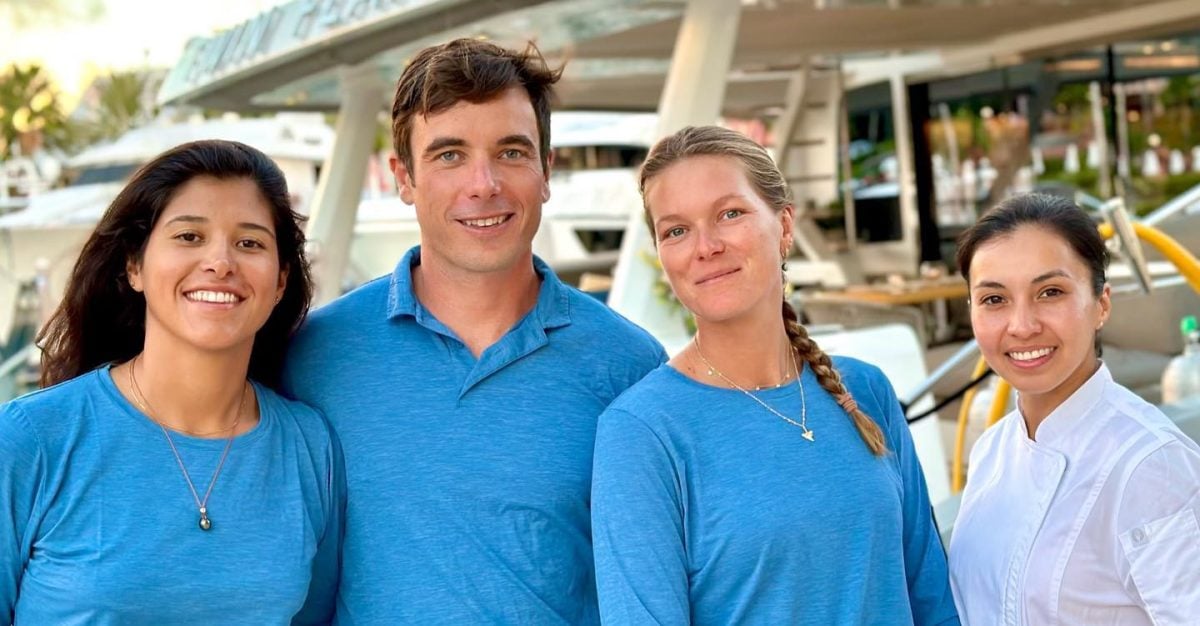
Tipping is common practice in the charter industry and it is important to show your appreciation to your crew, it shows recognition for their hard work and exceptional service.  

In the Caribbean and Bahamas, tipping is typically 15% – 20% of the charter rate and 10% – 15% of the charter base rate in the Mediterranean

Crew Tip

Your crew will be working for you from the moment they receive your preference sheets to the moment you disembark. There is a lot of preparation that goes into creating an unforgettable yacht charter. Your chef will be planning the menu taking into consideration any allergies, likes, and dislikes. Food and drink orders will be placed for delivery to the yacht and your chef will go shopping for fresh items and specialized requests. Your captain will be planning an itinerary to include the places you wish to go and the things you would like to do. They will organize any excursions you would like to go on and book any SCUBA diving that you would like to partake in if the yacht does not offer that onboard. The yacht will have been fully provisioned, cleaned, serviced, and maintained ready for your arrival. 

Tipping is a way to acknowledge and reward your crew for their service, attention to detail, and professionalism throughout your charter experience. The crew will work hard for the whole of your charter to give you the best experience possible. The crew often goes above and beyond their regular duties to make sure you are enjoying yourself and are comfortable. They may organize special events such as birthday parties and anniversary dinners, theme nights, prepare personalized meals, or arrange unique experiences for you. 

Category: Booking

During Your Charter:

  • The captain maintains detailed expense records
  • All receipts are retained for documentation
  • On longer charters (7+ days), mid-week accounting updates are common
  • If APA runs low, captain will discuss with you before requesting additional funds

Final Day of Charter:

  • Captain prepares comprehensive expense report
  • Review shows all expenditures with supporting receipts
  • Remaining APA balance is calculated
  • You receive complete accounting documentation

What If APA Runs Out?

This is uncommon with proper planning, but if you’re exceptionally active, travel extensively, or make numerous premium requests, the APA may be insufficient. In these cases:

  • Captain notifies you when APA reaches approximately 20% remaining
  • You discuss options: reduce expenses or add funds
  • Additional payment can be made via wire transfer or credit card
  • Charter continues without interruption

Good communication with your captain about preferences and activities helps prevent APA shortfalls. An experienced charter broker helps you estimate appropriate APA amounts during booking.

Sample APA Accounting

Here’s an example of typical APA expenses for a $40,000/week charter with $12,000 APA:

Fuel and Dockage:$3,800

  • Diesel fuel for yacht and tenders: $2,400
  • Marina fees (3 nights): $900
  • Mooring balls and harbor fees: $500

Provisions:$4,200

  • Groceries and fresh provisions: $2,800
  • Alcoholic beverages: $1,100
  • Specialty items and dietary requirements: $300

Activities and Services:$2,100

  • Scuba diving (2 tanks per person): $800
  • Shore excursion to ruins with guide: $600
  • Special dinner celebration setup: $400
  • Water toy rentals (jet ski half-day): $300

Communications and Miscellaneous: $600

  • Starlink internet usage: $350
  • Laundry service: $150
  • Special provision delivery: $100

Total Expenses: $10,700, APA Provided: $12,000, Refund to Guest: $1,300

This accounting is provided with all supporting receipts, showing complete transparency in how your APA was utilized.

Category: Booking

Understanding the difference between these two pricing models helps you choose the right option for your vacation style.

Plus-Expenses Charter (APA Model)

How it works:

  • Pay charter fee plus APA upfront
  • Captain tracks actual expenses
  • Receive accounting and any refund at charter end

Best for:

  • Guests who want transparency in expenses
  • Variable itineraries with flexible plans
  • Groups with specific preferences or special requests
  • Longer charters where expenses may fluctuate
  • Destinations with diverse provisioning options

Advantages:

  • Complete transparency—see exactly where money goes
  • Flexibility to adjust preferences during charter
  • Pay only for what you actually consume
  • Unused funds returned to you
  • Premium provisions and experiences available

Considerations:

  • Requires APA payment upfront (larger initial outlay)
  • Final cost unknown until charter ends
  • Need to discuss preferences and budget with captain

All-Inclusive Charter

How it works:

  • Single price covers charter fee AND typical operating expenses
  • Specific inclusions outlined in contract
  • No additional charges unless you exceed package terms

Best for:

  • Budget-conscious guests wanting no surprises
  • Simpler vacation planning with fixed costs
  • Shorter charters (4-7 days) where expenses are predictable
  • Groups comfortable with standard provisioning
  • First-time charterers seeking simplicity

Advantages:

  • Know total cost upfront
  • Simplified budgeting and planning
  • No APA payment or final accounting
  • Often includes standard bar and provisions

Considerations:

  • Premium or special requests may incur extra charges
  • Less flexibility for custom experiences
  • Includes budget limitations on provisions
  • Still need to pay crew gratuity separately

Typical All-Inclusive Coverage:

  • Standard fuel allowance (limited cruising hours)
  • House wine, beer, and basic spirits
  • Three meals daily with standard provisions
  • Standard water toys and equipment
  • Local cruising within specified area

Common All-Inclusive Exclusions:

  • Premium wines and all champagnes
  • Top-shelf spirits or specialty cocktails
  • Excessive fuel use (extended cruising or high speeds)
  • Shore dining at restaurants
  • Special activities (scuba diving, guided tours)
  • Crew gratuity

Which Model is Right for You?

Choose APA (Plus-Expenses) if you:

  • Want complete control over your provisions and experiences
  • Plan diverse activities or premium dining
  • Prefer transparency and detailed accounting
  • Are comfortable with variable final costs
  • Value flexibility during your charter

Choose All-Inclusive if you:

  • Want a fixed, predictable total cost
  • Prefer simplicity in vacation planning
  • Are comfortable with standard provisions
  • Plan relatively straightforward cruising
  • Want to avoid final accounting process

Most luxury crewed charters in prime destinations like the Mediterranean, Caribbean, and Bahamas operate on the APA model because it provides the flexibility and transparency that discerning charterers expect. All-inclusive options are more common for budget-friendly or charters in the Virgin Islands.

Category: Booking

The charter fee is the base price for renting the yacht, crew, and standard equipment for your voyage. This fee covers:

  • The yacht itself – exclusive use of the vessel for your group
  • Professional crew – captain, chef, deckhands, and stewardesses (crew size varies by yacht)
  • Standard water toys and equipment – typically includes paddleboards, snorkel gear, basic fishing equipment, and kayaks
  • Yacht insurance and maintenance – the operational costs of running the vessel
  • Basic linens and amenities – bedding, towels, and standard onboard supplies

The charter fee does NOT typically include fuel, food, beverages, dockage, special activities, or crew gratuity. These variable expenses are covered through the APA, which we’ll explain in detail below. An exception to this is the fully crewed and inclusive catamarans most of the time in the Caribbean.

Charter fees vary significantly based on yacht size, season, destination, and vessel amenities. A 50-foot sailing catamaran in the Caribbean might start around $20,000 per week, while a 150-foot luxury motor yacht in the Mediterranean could exceed $200,000 weekly during high season.

Category: Booking

The 25-40% range covers most standard charters, but consider these factors:

Higher APA (35-40%) recommended for:

  • Motor yachts with high fuel consumption
  • Extensive cruising itineraries covering long distances
  • Frequent dining on board
  • Active water sports programs with rentals
  • Remote destinations with higher provisioning costs
  • Large groups requiring abundant provisions

Lower APA (25-30%) may suffice for:

  • Sailing catamarans with minimal fuel needs
  • Shorter cruising distances in one area
  • Primarily dining aboard with chef-prepared meals
  • Standard water toys without rentals
  • Well-provisioned charter bases with competitive prices
  • Smaller groups with modest consumption

Lower APA (5-10%) works for:

  • Larger All- inclusive catamarans often ask for an extra amount for fine wines, transfers and unexpected expenses

Your charter broker can help you estimate appropriate APA based on your specific itinerary and preferences. It’s always better to have excess APA (which is refunded) than to run short mid-charter. Any extra APA can be returned or given to the crew toward gratuity.

Category: Booking

Understanding the payment schedule helps you budget properly for your yacht charter vacation.

Standard Payment Schedule

At Booking (Contract Signing):

  • 50% of the charter fee as a deposit
  • This secures your yacht and dates
  • Payment typically due within 5-7 days of signed agreement

8 Weeks Before Charter:

  • Remaining 50% of charter fee
  • Full APA amount (25-35% of charter fee)
  • Any VAT (Value Added Tax) of the charter fee
  • Delivery Fees (if any)

During Charter:

  • The captain manages the APA account and tracks expenses
  • Mid-week update is standard on longer charters, daily if you request.
  • Additional APA payment if original amount proves insufficient (rare with proper planning)

End of Charter:

  • Captain presents detailed expense accounting
  • Unused APA funds returned to you (typically via wire transfer within 2 weeks)
  • Crew gratuity paid separately (industry standard is 15-20% of charter fee)

Payment Methods Accepted

  • Wire transfers (preferred for large amounts)
  • Credit cards (may incur 3-5% processing fee)
  • Certified checks (requires advance timing)
  • Digital payment platforms for some brokerages

International charters may involve currency exchange considerations. Confirm the currency of payment with your broker—some Caribbean charters price in USD, while Mediterranean charters often use EUR. Your charter agreement will specify the currency and payment methods.

Security Deposits

Unlike the APA, most yacht charters do NOT require a separate security deposit. The charter fee and APA structure covers normal operational expenses, and yacht insurance protects against major damage. However, some charter yachts may require:

  • Additional deposit for extremely high-value vessels or for special events
  • Damage waiver fees as an alternative to deposits
  • Always clarify deposit requirements with us during booking.
Category: Booking

Yes—absolutely. The APA is YOUR money held in trust for operating expenses, not additional payment to the charter company or yacht.

Category: Booking

While not part of APA, crew gratuity deserves mention as it’s a significant payment consideration.

Industry Standard: 15-20% of the charter fee

For a $40,000 charter, expect to budget $6,000-$8,000 for crew gratuity. This is:

    • Paid separately from charter fee and APA
    • Distributed among all crew members
    • Typically given to the captain at charter end (cash, bank transfer, Credit card, Zelle, Venmo (each yacht can be different)
    • Based on service quality (you determine the amount)
    • Expected but not mandatory—it reflects your satisfaction

The 15-20% range is standard, but you may adjust based on service quality. Exceptional service warrants the higher end or above, while standard service might merit the lower range. Discuss gratuity expectations with your broker during planning—this helps you budget accurately for the complete charter cost.There are slight geographical variances that your charter broker will make you aware of.

Category: Booking

If you’re chartering internationally, currency exchange rates may impact your final costs.

Mediterranean Charters (EUR):

      • Most Greek, Croatian, Italian, French charters price in euros
      • USD fluctuations affect dollar-equivalent costs
      • Consider exchange rate timing for payments
      • Some brokerages offer USD pricing for American clients

Caribbean Charters (USD):

      • Most BVI, Bahamas, St. Martin charters price in dollars
      • Simplified for American charterers
      • Some destinations may have local currency considerations for shore expenses

Other Destinations:

      • Confirm charter currency in your agreement
      • Ask your broker about exchange rate considerations
      • Factor currency fluctuation into budgeting
      • Wire transfer fees and exchange fees may apply

Your charter broker can advise on currency strategy and timing for international charters.

Couple sitting on yacht swim platform looking at water toys during a luxury charter.
Guests relaxing on the yacht swim platform while enjoying water toys.

Yacht Charter Booking | Epic Yacht Charters

Booking a luxury yacht charter is a straightforward process when you understand the steps involved. Our yacht charter booking guide explains everything from destination selection and yacht choice to contracts, deposits, and final payments. Whether it’s your first time booking or you’re a seasoned charter guest, these details will help you plan with confidence.

1. Yacht Charter Booking Process
Initial Steps

  • The first stage of yacht charter booking is deciding where and when you want to travel:
  • Destination selection – Choose from popular regions such as the Caribbean, Bahamas, Mediterranean, or Greece.
  • Yacht choice – Decide between motor yachts, catamarans, trimarans, or sailing yachts, depending on your group’s preferences.
  • Personal consultation – Work with an experienced charter specialist who can recommend the best yachts based on your budget, group size, and preferred style of travel.
  • Preliminary itinerary planning – Discuss possible routes, anchorages, and highlights to ensure the yacht matches your desired experience.

Timing Guidelines

  • Booking early is always recommended:
  • Peak season (Caribbean holidays, Mediterranean summers): Reserve 6–12 months in advance.
  • Holiday bookings (Christmas & New Year’s): Book 12+ months ahead, as prime yachts fill up quickly.
  • Off-season: Booking 3–6 months ahead is usually sufficient.
  • Last-minute bookings: Sometimes possible depending on yacht and crew availability.

2. Financial Terms & Payments
Deposit Requirements

  • A 50% deposit is required at the time of signing your yacht charter contract.
  • For Caribbean all-inclusive charters, sometimes 25% is accepted if booking more than six months in advance.
  • The remaining balance is due 60 days before the charter.
Guests enjoying dinner service aboard a luxury catamaran yacht.
Dining alfresco with attentive crew service on a luxury catamaran.

APA (Advance Provisioning Allowance)

  • For yachts operating under MYBA or Mediterranean terms, an APA (usually 30–40% of the charter fee) is collected in advance to cover expenses such as fuel, food, beverages, and dockage. Any unused funds are refunded at the end of your charter.

What’s Included & Excluded

  • Included: The yacht, crew services, onboard amenities, and insurance for the vessel.
  • Excluded: Food, beverages, fuel, dockage fees, communication charges, and crew gratuity (typically 15–20% of the base charter fee).

3. Yacht Charter Contracts

  • Charters are secured with industry-standard contracts such as:
  • MYBA Contract – Used for most Mediterranean charters.
  • CYBA or AYCA Contracts – Often used in the Caribbean and North America.
Yacht charter contract document with black pen on desk.
A charter contract is the foundation of a smooth yacht booking process.

These contracts clearly outline:

  • Charter dates and location
  • Payment schedule and cancellation terms
  • Insurance requirements
  • Crew responsibilities and guest obligations
  • Your charter broker will review all contract details with you to ensure clarity before you sign.

4. Why Book Early?

Booking your yacht charter early provides several benefits:

  • Greater yacht selection – Prime yachts and best crews are reserved quickly.
  • Better itinerary planning – Early bookings secure dockage in popular marinas.
  • Peace of mind – Time to finalize preferences, travel logistics, and insurance.
Guests lounging on yacht deck with sea breeze during charter.
Relaxation and comfort are at the heart of every yacht charter.

5. Insurance & Cancellation Protection

  • Because yacht charters are a significant investment, we strongly recommend travel insurance:
  • Cancel For Any Reason (CFAR) coverage – Gives maximum flexibility.
  • Trip cancellation/interruption insurance – Protects against illness, weather disruptions, or other emergencies.
  • Medical and evacuation coverage – Important for international travel.
  • 6. Working with a Yacht Charter Specialist

A professional broker ensures that every aspect of your booking is handled with care:

  • Yacht recommendations based on personal inspections and industry connections.
  • Transparent pricing with no hidden fees.
  • Preference sheet guidance to match food, drink, and activity options to your group.
  • Ongoing support before, during, and after your trip.
Illuminated luxury motor yacht docked at night in a glowing harbor
A luxury yacht glowing at night, showcasing the elegance and exclusivity of private yacht charters.

Final Thoughts on Yacht Charter Booking

The yacht charter booking process is designed to make your vacation seamless. From choosing the right yacht and destination to securing contracts, deposits, and provisioning, our team at Epic Yacht Charters is here to guide you through every step.

Whether you are planning a family yacht charter in the Caribbean, a luxury motor yacht in the Mediterranean, or a catamaran sailing adventure in Greece, early planning and expert guidance ensure the best experience.

Sunset view with cocktail glass and reflections on a yacht table.
Sunset cocktails on deck, one of the highlights of luxury yacht life.

📞 Contact Epic Yacht Charters today to begin planning your yacht charter booking and enjoy a stress-free journey to your dream vacation at sea.

Category: Booking

There a various ferry services that can transport you from St Thomas to Tortola (BVI). The following companies offer direct routes from Charlotte Amalie or Red Hook across to either Road Town or West End:

  • Native Son
  • Road Town Fast Ferry
  • Smiths Ferry
  • Aquatic Rentals Ferry Service

Getting to the Ferry Terminal

After collecting your baggage at the St. Thomas airport, you’ll find a taxi dispatcher outside. Tell them you’re headed to the Charlotte Amalie Ferry Dock. Here’s a money-saving tip: opt for a shared taxi instead of a private one. While a private taxi costs around $80, sharing with other passengers only costs $10 per person.

Journey Time

The ferry crossing itself takes approximately 50 minutes. However, be sure to budget extra time for immigration and customs upon arrival in Tortola. During busy periods (especially high season or when multiple ferries arrive simultaneously), the immigration and customs process can take up to an additional 50 minutes.

Ferry Schedules and Tickets

You can check the latest ferry schedules on the official BVI Ports Authority website at bviports.org/ferry. Ferry times can vary by season and company, so it’s always good to verify the current schedule before your trip. We always recommend buying your tickets in advance. 

Remember that each piece of checked luggage requires an additional fee. You’re allowed one carry-on bag at no extra charge. If you’re traveling with charter provisions or specialized equipment, factor in these extra baggage costs.

Pre-Departure Tips

If you have extra time before your ferry departs, head upstairs to the Petite Pump Room. This hidden gem offers great views of seaplanes in the harbor
while you have a drink and a bite to eat (you can take beverages onto the ferry, but no glass bottles). A relaxing spot to wait for your departure.

Security and Waiting Area

After purchasing tickets, you’ll proceed through security into an outdoor waiting area. Remember to stay within the clearly marked red box area.
The ferry loads from the front right-hand side by the benches – a prime spot if you want first choice of seating

On the Ferry

Choose between air-conditioned indoor seating or outdoor areas. For the best views of passing islands and ports, select a seat on the left (port) side. Bathroom facilities are available onboard. Keep your travel documents easily accessible for arrival.

Remain seated during docking in Tortola. Luggage will be unloaded before passengers. When you disembark follow the correct immigration line:

Left line: Visitors and tourists
Right line: Residents and belongers

Customs and Immigration

Collect your luggage before proceeding to customs. Declare any purchases, especially alcohol or food and have receipts ready for duty calculations.

If you owe duty fees pay at the cashier’s window near the exit.

Final Transportation

You will find taxi drivers waiting outside. Let them know which marina you’re headed to, and they’ll get you there. Most marina are just a short ride from the ferry terminal in Road Town. Your crew can also organise one of their preferred taxi’s to come and meet you.

While this ferry route is one way to reach your crewed yacht in the BVI, it’s just one of several options. Getting to The BVI 

Category: Booking

Malani Sunreef 80' Sailing CatamaranGenerally crewed yacht charters in the Caribbean can start any day of the week, so long as the calendar allows. However, during Christmas and New Year’s, the yachts will have set 7 night dates.

As the Mediterranean has a shorter season, the yachts like to make the most out of the weeks available. This could mean that you would have to take dates that would leave a 24 hour gap between already booked charters. Yachts maybe more flexible out of high season.

Category: Booking


  • Larger motor yachts will have a laundry service onboard.
  • Large catamarans may have washing facilities for a few items of clothing throughout the charter.
  • Smaller Catamarans will not have the space to have any facilities.
Category: Booking

Brac island Croatia

Crewed yacht charters in Croatia run from April through to the end of October. The best time to go is during shoulder season – May, June, and September.

Chartering in Shoulder Season (May, June and September)

Pros

  • Comfortable temperatures
  • Fewer crowds to enable a more authentic experience
  • Lower prices

Cons

  • Water is still cool in the beginning of May
  • Weather less predictable

Chartering in summer season (July and August)

Pros

  • Warmer weather and hottest days
  • Warm water great for snorkelling, swimming and water sports
  • Fun atmosphere with many events and festivals

Cons

  • Most expensive time to charter
  • Large crowds

Chartering in off- season (April and October)

Pros

  • Significantly lower prices
  • Less crowded
  • Ideal for sailers who like stronger winds

Cons

  • Cooler seas temperatures
  • Less attractions will be open
  • Weather can be less predictable

Temperatures

  • High Season – July – August  – Average 85 °F  (29 °C)
  • Mid-Season – June – September – Average 77 °F  (25 °C)
  • Low Season –  April, May and October – 71 °F  (22 °C)
Category: Booking

7 nights is the typical length of a crewed yacht charter. Most yachts will charter a minimum of 5 nights up to any duration you would like. Some yachts have a standard 7 night minimum.


  • Location – A five night charter would in a location such as the British Virgin Islands, as the distances to travel between islands are fairly short. Destinations such as Greece, Croatia and Bahamas, where the island are further apart, we would suggest 7 nights.
  • Season – During high season in the Mediterranean (July and August) the minimum number of nights is 7. Also during Christmas, New Years and some yachts, Thanksgiving in the Caribbean.
  • Availability – Yachts may offer less than 5 nights during slow season or if it is a last minute request.

Category: Booking

Flying over CroatiaCroatia has 9 international airports including Split (SPU), Zadar (ZAD) and Dubrovnik (DBV), which are all close to the coast. Direct flights are available from Chicago, New York, Dallas, Miami and Houston as well as from many locations across Europe.

Split – Many yacht charters start and end in split and so this would be the most convenient airport. This is a great city to spend some time in before your charter. Most yachts are based in Marin Kastela which is a 15-minute taxi ride from Split Airport.

Dubrovnik – You may wish to charter one way from Dubrovnik to Split or Vice Versa. Dubrovnik is a great place to explore before or after your crewed yacht charter.

Zadar – A great option if your charter is based in the northern region. 


Categories: Booking What to Bring

No visa is required to enter the British Virgin Islands. You are allowed to stay for up to one month provided you meet the entry requirements.

  • Please make sure you have a valid passport  and at least one blank page
  • Complete the online portal 36 hours before your arrival. Customs and Immigration Form
  • You will need to have details of accommodations
  • You may be asked to provide proof of your return flight/ferry
Categories: Booking What to Bring

No. The barefoot rule is there to keep the decks undamaged, carpets from getting stained and soles from marking the clean decks. If you need to have shoes on for medical reasons you can wear white soled shoes that have not been worn outside. Shoes specifically designed for yachts or soft sports sandals, with a good grip on the sole, would be an option. Here is more information on What to Pack
For most Caribbean charters that are all inclusive: Not included are crew gratuities of 15-20%, optional marina docking/berthing for an overnight stay, excursions, and meals ashore, special requests for top-shelf liquor, wine, or excessive alcohol consumption, and transfers to and from the airport.

For Mediterranean charters or APA charters “plus expenses”: APA expenses include fuel for both the yacht and tender, provisions, dockage, moorings, airport transfers, cruising permits and taxes, scuba diving and onshore excursions.

The APA payment is typically 25%-30% of the base charter rate for sailing yachts and 30%-45% for motor yachts. Your captain will purchase provisions, taxes, fuel etc for the charter using the APA and will keep all receipts along with a running log of expenses. This can be viewed at any time during your charter.If you do not use all of the APA this will be returned to you at the end of your charter. If you exceed the APA you will need to settle your account before you disembark.

Mediterranean and APA charters charters do not include crew gratuity, which is typically 10%-15% of the charter cost.

The standard gratuity for yacht crew ranges from 10–20% of the charter fee, depending on the destination and level of service. In the Caribbean and Bahamas, gratuities are typically 15–20%, while in the Mediterranean and Europe, the standard is 10–15%.

👉 For a detailed breakdown of tipping practices by region, visit our full Yacht Crew Gratuity Guide
.


Caribbean – Once you decide on the yacht you would like to book, we will put a complimentary hold on your dates. while the hold is in place we will draw up a contract for you to sign along with details of how to pay your deposit. If you are more than 6 months away from your charter, a 25% deposit is required (50% if under 6 months). Payments of 25% at 6 months out, and the final 50% will be due 60 days before the charter. Your monies are held in escrow and the yacht owner is paid right before your charter.

Bahamas – Same payment terms as Caribbean except the VAT and Charter Tax is added to your final payment along with any APA (Advance Provisioning Allowance). Some yachts in the Bahamas include the APA in their rate.

Mediterranean – Once you decide which yacht that you would like to charter you need to be ready to sign your contract and submit your deposit as soon as possible. The deposit is 50% of the charter fee. 2 months before your charter we will invoice you for the other 50%, the VAT and the APA (Advance Provisioning Allowance)

Far Niente motor yacht cruising at sunset with sailboats nearby

Crewed yacht charters range from $25,000 per week to $100,000 per week, all inclusive, for a large catamaran or small motor yacht. Luxury motor yachts start closer to $70,000.00 per week, plus expenses. Rates will depend on the size, age, amenities (jacuzzi, jet skis), how many crew etc

Size and Type of Yacht

Larger more luxurious motor yachts will be more significantly more expensive to charter than a smaller catamaran.

Season

Yachts in the Caribbean will have higher rates for Christmas, New Years and some also have increased rates for Thanksgiving and Easter. In the Mediterranean, larger motor yachts will have higher rates for July and August, with smaller yachts and catamarans typically having a high, mid, and low season.

Location

VAT is added to yacht charters in locations in the Mediterranean and also in The Bahamas. VAT ranges from 5% up to 22%, depending on which country your charter is in.


Category: Booking

What to packWhat Should I Pack for My Yacht Charter?

Packing for a luxury yacht vacation is different from packing for a typical resort stay. Space is limited onboard, but your crew will provide many essentials like beach towels, linens, and snorkeling gear. To help you prepare, we’ve created a practical packing guide so you bring everything you need—without overpacking. Browse Our Luxury Charter Fleet to see what’s already included onboard.


Essential Wardrobe

  • Multiple swimsuits for daily water activities
  • Light, breathable clothing to wear over swimwear
  • 2–3 casual dinner outfits for onboard dining
  • 1–2 smart casual outfits for restaurants ashore
  • Light jacket or sweater for evening breezes
  • Comfortable, non-marking deck shoes or sandals
  • Sun Protection
  • High-quality polarized sunglasses
  • Sun hats or caps with secure straps
  • Reef-safe sunscreen and lip protection
  • UPF-rated rash guards for extended water activities

Personal Items

  • Prescription medications in original containers
  • Seasickness remedies if prone to motion sensitivity
  • Personal toiletries and hygiene items
  • Small camera or GoPro for capturing memories
  • Lightweight backpack or dry bag for shore excursions
  • Electronics & Documents
  • Passport and travel documents
  • Credit cards and small amounts of local currency
  • Power adapters if traveling internationally
  • Phone and charger (most yachts offer WiFi)
  • Downloaded playlists, e-books, or podcasts for offline use

Entertainment & Extras

  • Books, e-readers, or magazines
  • Portable waterproof speakers (optional)
  • Travel journal or sketchbook
  • Small gifts or souvenirs for crew (optional)

Practical Packing Tips

  • Choose soft-sided luggage that can be folded and stowed under beds—avoid large hard-shell suitcases.
  • Pack versatile items that mix and match easily.
  • Avoid overpacking; storage space is efficient but compact.
  • Most yachts supply beach towels, linens, and water sports equipment—confirm with your broker before bringing extras.

For more planning advice, visit our Yacht Charter FAQ Hub

Final Advice

Your yacht crew will help you feel at home and can provide personalized recommendations for your specific destination and season. If you’re unsure about packing certain items, ask your charter broker for guidance.

For personalized packing suggestions or help planning your trip, call 1-954-271-3005 or Explore Yacht Charter Destinations
.

Caribbean yachts (not large motor yachts) are all-inclusive with a professional captain and private chef. Larger vessels may have additional crew such as deckhands and steward(ess). All meals, snacks, standard ship’s bar (liquor, wine, beer, and soft drinks), fuel for the vessel and tender, insurance for the vessel and crews, all water sports activities, and SCUBA diving on some vessels are part of your package.

Not included are crew gratuities (15%-20%), optional marina docking/berthing for an overnight stay, excursions and meals ashore, port fees in the BVI, special requests for top-shelf liquor, wine, or excessive alcohol consumption, and transfers to and from the airport.

Mediterranean yachts include the use of the charter yacht, professional crew, and onboard equipment and water Sports gear and activities.

All other daily expenses will be covered with an Advanced Provisioning Allowance (APA). This is typically 25%-40% of the charter fee, which can vary according to the yacht type, itinerary, and possible charter requests and requirements. The APA payment is collected with the final balance

APA expenses include fuel for both the yacht and tender, provisions, marina fees, moorings, airport transfers, cruising permits, canal fees, scuba diving, onshore excursions, electronic communications, and local taxes

Your yacht will be fully fuelled and provisioned, according to your preferences, when you step onboard. The Captain will keep all receipts, along with a running log of expenses, which can be viewed at any time during your charter

Any APA that has not been spent will be returned to you at the end of the charter. If expenses exceed the APA during your charter, additional funds will need to be submitted. Your captain will update and advise you if any further payment is required. This will need to be paid before you disembark

Crew Gratuity is separate and is typically 10%-15% of the charter rate. This should be given to your captain at the end of your charter


Category: Booking

You can fly commercial or private into Nassau (airport code NAS). After a taxi ride, your yacht will pick you up at the marina. You may wish to fly into the Exuma Cays, on a small plane, to start your sailing vacation there and then you can depart from Nassau when you leave.

Makers Air provides daily direct flights from Fort Lauderdale, Florida to Staniel Cay and other locations in the Bahamas to make your trips quick and stress-free. A Cessna Caravan is popular for island hopping by air. It is also possible to fly by waterplane and fly straight to your yacht at anchor in the Cays from Nassau.

Category: Booking

The best way to get to this beautiful Caribbean island is St. Maarten’s Princess Juliana International Airport (PJIA), the second-busiest airport in the eastern Caribbean. It is very modern and from here you can taxi it to the marina where your crew will meet you.

The much smaller L’Espérance Airport, in Grand Case on French St. Martin, caters largely to inter-island commuter airlines and small private aircraft. Your charter yacht can pick you up at the small dock nearby.

Category: Booking

There are multiple ways to get to the BVI

Fly direct to Tortola (EIS) and take a taxi to your crewed yacht charter or hotel. The Tortola airport has many flights daily from Miami with American, and from Puerto Rico and St Maarten via Cape Air, Seaborne, and Liat Airlines.

Fly into St Thomas and take a scenic 45-minute ferry ride into the BVI. The ferry will depart from either Charlotte Amalie or Red Hook and go to West End or Road Town on Tortola. Your crew can arrange transportation for you from the ferry terminal to the marina. Ferry Guide

Fly into St Thomas and take a private water taxi to your yacht. A taxi will pick you up form the airport and take you to Red Hook. There you will meet your water taxi. The journey across to Tortola is around 30 minutes. You will first stop in West End to clear customs and immigration and then get taken to your hotel or crewed yacht. Water Taxi Guide 


Category: Booking

usvi yacht vacationsThere are various airlines flying directly into St. Thomas. Airport (code STT). Flights are also daily from Puerto Rico (code SJU). Most international flights depart in the afternoon, which is convenient since your yacht charter ends at noon. Once in the USVI, short flights will take you to St. Croix.

In the unlikely event of you canceling your charter, all payments are forfeited. However, if the yacht can re-book a different charter for the same dates, there is a chance of a partial refund. In some cases, a future date can be chosen, and the deposit can be held.

The cancellation terms may depend on what contract is used for your charter. Contact us for more information. We would always recommend purchasing trip insurance.
Category: Booking

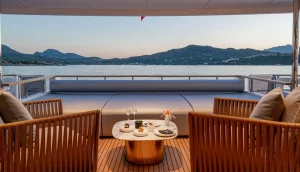
Aft deck lounge with drinks and ocean backdrop at sunset

Travel insurance is always a good idea. Major travel insurance companies can cover cancellations due to extreme weather or an Act of God, emergency medical issues, and other specific situations.  Please inquire with your preferred travel insurance company.

Category: Booking

Crewed yachts will have internet access for you to use while onboard. Some locations have better wi-fi than others but on the whole in the Caribbean and Mediterranean you will have access. Some yachts now come equipped with Starlink.



Category: Booking

Spacious cabin on Almosta Road with large bed, shelving, and windows

Yes yachts are fully air-conditioned. Generators provide power to run all systems when required. Some yachts have solar panels also.

Each cabin will have individual controls so that you can set the temperate for your comfort.

Category: Booking

Your private yacht chef caters to most special diets and allergies. We will send you a preference sheet 2 months before your charter for you to complete. Here you can list any special diets or allergies anyone in your group may have. We will forward this to your chef and then he/she can plan a menu. It is not uncommon to have several special diets on one charter. If this is a need, Epic Yacht Charters will inquire with yachts during the search process and discuss it with the chef.

Category: Booking

Your cell phone should work in most places while on your crewed yacht charter. Set your phone to internet calling and messaging and connect to the yachts WiFi.

Make sure you give our information to someone at home so that we can reach out to the crew if they are unable to contact you.

All yachts have a VHF radio.

Category: Booking

The BVI charter yacht season runs from November through July. Here are some things to take into consideration when planning what time of year to take your crewed yacht charter.

  • Temperatures are around 79°F from December to March and around 84°F from May to October.
  • Expect to pay slightly higher rates during holiday weeks – Christmas, New Years and Thanksgiving
  • Christmas and New Year’s weeks are booked up to 18 months in advance.
  • The busiest months are December to April. Enjoy warm sinner weather, less rainfall and lower humidity.
  • March and April are busy with spring break charters. These weeks get booked up so make sure you start to think about your charter at least 9 months to a year in advance to get the best selection.
  • If you are wanting smaller crowds May, June and July will be quieter on the water.
  • The driest months are usually February to April
  • Increased rainfall will be May – November. This will short bursts, followed by hot sunshine.

Contact us to help you plan you next Epic Yacht Charter 

Blog banner
Travel Agents
Scroll to Top

Looking for more options?

Our main collection features a hand-picked selection of truly exceptional yachts — chosen for their quality, crew, and overall charter experience. If you’d like to explore a broader range of yachts across additional destinations, you can view our full worldwide charter portfolio.